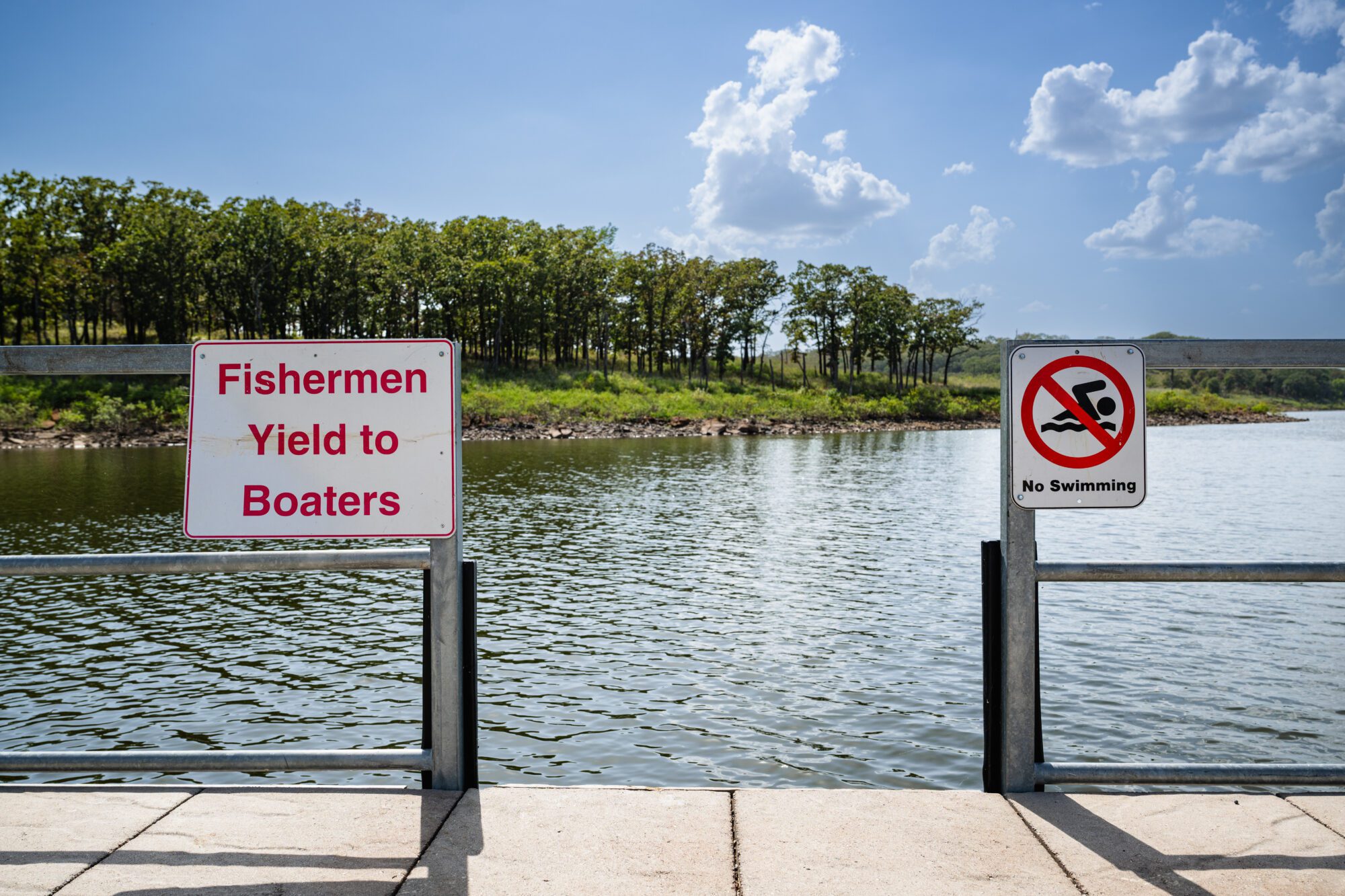
Oklahoma added four lakes to its mercury advisory list on November 18, expanding a warning that now covers 75 bodies of water across the state.
The Oklahoma Department of Environmental Quality flagged lakes Bell Cow, Overholser, Fuqua and Ponca after routine testing with the Oklahoma Department of Wildlife, The Frontier reported. Thirty-four of the listed lakes sit in northeastern Oklahoma, where decades of lead and cadmium mining have left a contamination legacy that includes the Tar Creek Superfund site.
Mercury moves up the food chain from invertebrates to the large predatory fish people most often target for the table, said George Russell, who leads DEQ’s water quality division. “It can kind of work its way up the food chain,” Russell said. “Starting with the small little invertebrate animals, and then as the fish eat those, they kind of work their up.”
“If you like catching big fish, let them go free and have babies. Just don’t eat them.”
said Rebecca Jim, executive director of the LEAD Agency in Miami, Oklahoma. Jim told The Frontier that a 2013 study the LEAD Agency assisted the Harvard School of Public Health and the University of Oklahoma Health Sciences Center on found participants could lower their mercury levels by switching to smaller fish and smaller portions.
The advisory hits hardest in rural and Indigenous communities where locally caught catfish and crappie are dietary staples. Matt Gamble, senior manager of wildlife conservation for the Choctaw Nation, told The Frontier that fish fries remain a popular option across southeastern Oklahoma, where 25 lakes carry active advisories — some dating back to 2010, when only 16 lakes were on the list.
“For southeastern Oklahoma in general, if you go to any kind of gathering or celebration, a lot of times fish fries are a pretty popular option,” Gamble said.
The LEAD Agency study uncovered a counterintuitive risk: fish from small farm ponds carried higher mercury concentrations than fish from lakes or rivers. “The thing that we learned that was the scariest was people that don’t fish in the rivers and don’t fish in the lake,” Jim said.
“They stay at home and they fish in their farm pond, and fish in their farm pond is higher in mercury than any of lakes, see, any of the rivers, see, because it is trapped water.”
In February, the Environmental Protection Agency said it would roll back mercury and air pollution standards and monitoring requirements for coal-fired power plants that were put in place in 2024 under President Joe Biden. The Trump administration has also prioritized upgrading coal units slated for retirement.
Three Oklahoma units are slated for upgrades: two at OG&E’s Sooner Generating Station in Red Rock and one at the Grand River Dam Authority’s Grand River Energy Center in Choteau, less than a hundred miles downstream on the Neosho River from Jim. A proposed aluminum smelter near Inola on the Verdigris River may soon be another source of mercury pollution.
Mercury exposure can affect the kidneys and brain and cause learning disabilities in children. Symptoms include loss of peripheral vision, “pins and needles” sensations, lack of coordination of movements, impairment of speech, hearing and walking and muscle weakness.
Gamble said the advisories won’t stop mercury from showing up in fish, but they give people the information to eat safely. “It’s kind of a personal preference type situation where, as long as you know what the risks are and you know warning signs and symptoms if you do consume too much, you know what to do,” he said.

Seattle Mayor Katie Wilson Warns Council Budget Plan Risks 2028 Deficit After Committee Rejects Measure
Seattle Mayor Katie Wilson warned Monday that the city council’s budget committee had set the city on a...

Vermont Police Records System Valcour Offline After Security Incident at Vendor CrossWind Technologies
"Vermonters can continue to call 911 to report emergencies," Public Safety Commissioner Jennifer Morrison and Interim Digital Services...

Utah Royals Extend Del Fava Through 2030 After USWNT Debut
Utah Royals FC announced a contract extension on Wednesday that keeps defender Kate Del Fava in Salt Lake...

Houston Knocks Off No. 1 Florida 86-76, Advances to Players Era 8 Title Game
Houston knocked off top-ranked Florida 86-76 Wednesday at Michelob Ultra Arena, avenging the 2025 national championship loss and...