
An Oklahoma law took effect Nov. 1 letting property owners sue cities that fail to clear homeless encampments.
House Bill 3985, signed by Gov. Kevin Stitt, applies to municipalities with populations exceeding 130,000 — Oklahoma City, Tulsa and Norman, according to World Population Review. Under the statute, property owners and triple-net leaseholders may pursue yearly reimbursement for specific property-related costs or damages, limited to the property taxes paid to the municipality in the prior tax year, The Journal Record reported.
David McLeod, who directs the University of Oklahoma’s school of social work and is a former SWAT operator and detective, said large commercial property owners could use the law to seek payments from cities.
“What if you got a big corporate conglomerate that owns most of an entire neighborhood or apartment complex and could make a rational argument that any encampments even relatively close to that area create a fiscal or monetary threat to their bottom line as a corporation?” McLeod said. “They could bankrupt a city.”
Supporters say the bill protects private property rights. Jenna Bentley, director of government affairs for the Goldwater Institute, which drafted a similar Arizona measure, Prop. 312, told The Journal Record the law is not designed to solve homelessness.
“This act is not meant to fix homelessness. That’s sort of a separate issue. The first step is to make sure that people’s property rights are being protected,” Bentley said.
Critics say it sets a financial trap that leaves the real problem untouched. McLeod said imposing hefty court fines on cities does nothing to create new shelter beds or expand access to mental health facilities.
“If you don’t increase housing and treatment capacity, then you’re just shifting the problem from one neighborhood to another, from one jurisdiction to another,” McLeod said. “It’s a band-aid trying to fix broken bones.”
McLeod likened the state’s shortage of inpatient mental health and addiction care to a house left unattended for four decades.
“It’s like deferred maintenance on a system,” he said.
“If you leave a house unattended for 40 years, the roof falls out.”
Oklahoma City Mayor David Holt questioned the bill’s effectiveness, saying earlier this week that House Bill 3985 is “sort of a nothing burger” that will prove largely unenforceable.
McLeod said state officials have left municipalities with few options beyond displacing unhoused residents across city lines or repeatedly arresting and releasing them from county jails.
“When we force a decision that we don’t want, we’ll get an outcome that we don’t want,” McLeod said. “So there’s not a way for the cities to actually solve the problem. They’ll have to avoid the pain without the solution.”

DeSantis Pushes for Special Session for Amendment 3 Before Leaving Office
Florida Gov. Ron DeSantis renewed his push Monday for a special legislative session to implement Amendment 3 before...

Nevada Sports Net Names 2026 All-North Football Teams
Nevada Sports Net has released its 2026 All-North high school football teams, honoring the top performers across all...
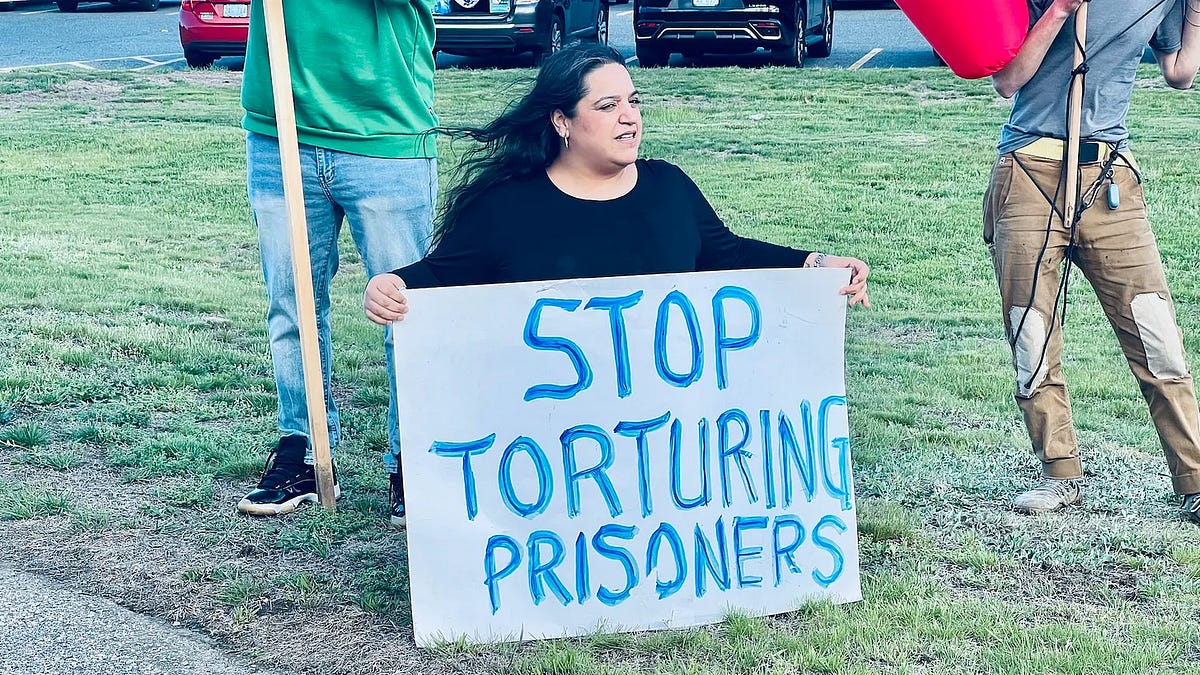
Advocacy Groups Demand Reform After Eighth Rhode Island Prison Death This Year
Advocacy groups say Fernando Lopez died on November 18 while held in restrictive confinement at the Rhode Island...

Augusta Regional Airport Reopens Long-Term Lot, Adding 50 Spaces Before Thanksgiving
Augusta Regional Airport reopened its rehabilitated Long-Term Vehicle Parking Lot A on Monday, adding roughly 50 spaces ahead...