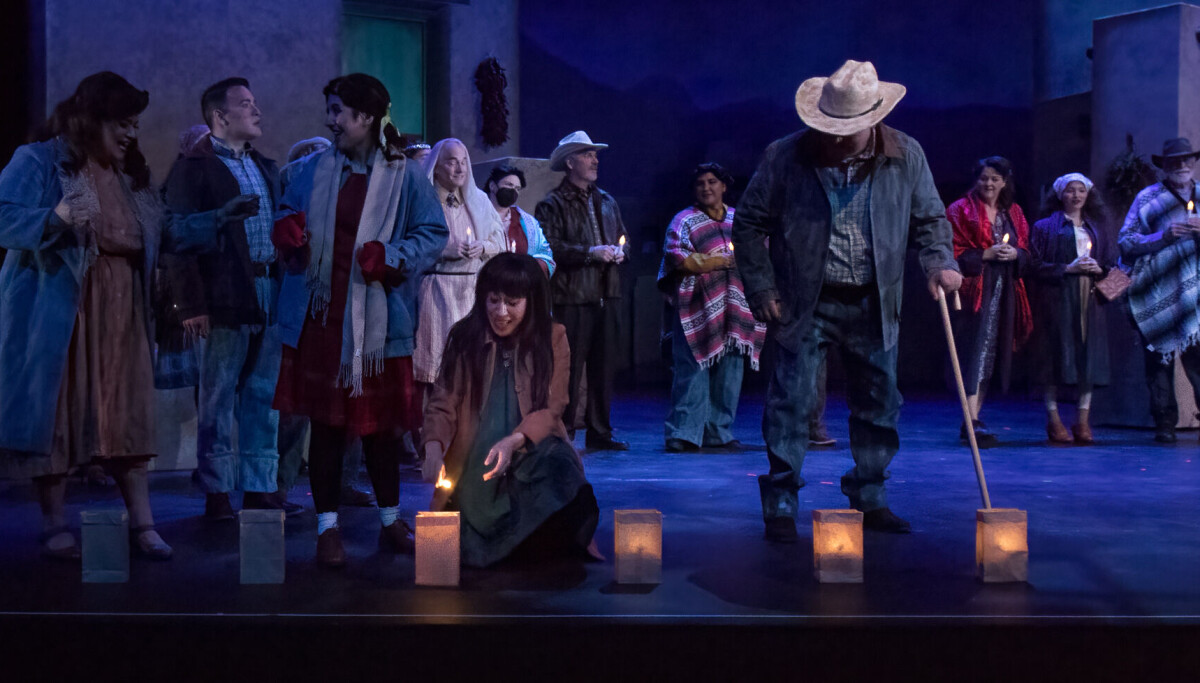
Opera Southwest revives “The Farolitos of Christmas” for four afternoon performances at the National Hispanic Cultural Center on Dec. 5 and 6, returning after a 2025 world premiere that turned a one-off commission into an intended annual tradition for New Mexican families.
Tickets run $25–$65 with discounts for qualified buyers, abqjournal reported.
The one-act opera, set in northern New Mexico during World War II, dramatizes a fictional origin of the farolito — paper lanterns also called luminarias — through a girl named Luz whose father is at war and whose grandfather falls too ill to cut piñon wood for Las Posadas bonfires.
Composer Héctor Armienta, commissioned in 2025 by Opera Southwest, wove New Mexican folk motifs, mariachi references and traditional Las Posadas songs into a score sung in English and Spanish with projected translations, according to Opera Southwest’s site as cited by hoodline.com.
A score that sounds like home
Soprano Cristina Bakhoum Sanchez, reprising the role of Dolores after the 2025 premiere, said Armienta’s music avoids the dissonance she often braces for in contemporary opera. “Héctor Armienta gets all the props in the world. This is a beautiful score. … You can tell that he is influenced by (Giacomo) Puccini, so the orchestration is rich. There are tunes that the audience walks away humming or singing,” she told abqjournal.
Bass-baritone Javier Ortiz, new to the production this year in a double role as Abuelo and the grocer, called the score “heartwarming” and “enveloping,” sang in Armienta’s 2018 adaptation of Anaya’s “Bless Me, Ultima,” and met the author at that production.
Community resonance, not just repertoire
Bakhoum Sanchez, who grew up in Texas with a Mexican mother, said she did not know the farolito tradition before arriving in New Mexico.
“Everyone, and I mean everyone, from the gas stations to the local shops, cafés, restaurants and wherever I went in town — the moment I said, ‘I’m here doing a world premiere for “The Farolitos of Christmas,”’ they said, ‘Oh my gosh, that is so exciting! I grew up with that book. We read that book every Christmas season.’” she told abqjournal.
The connection turned personal at the curtain call. “People were just so appreciative — and truly touched with the story. I lost count how many people I hugged,” Bakhoum Sanchez told abqjournal. “Some had tears in their eyes because seeing our tenor Ángel (Vargas), who plays the role of the dad in the uniform returning from war, reminded them of when their dad returned from war.”
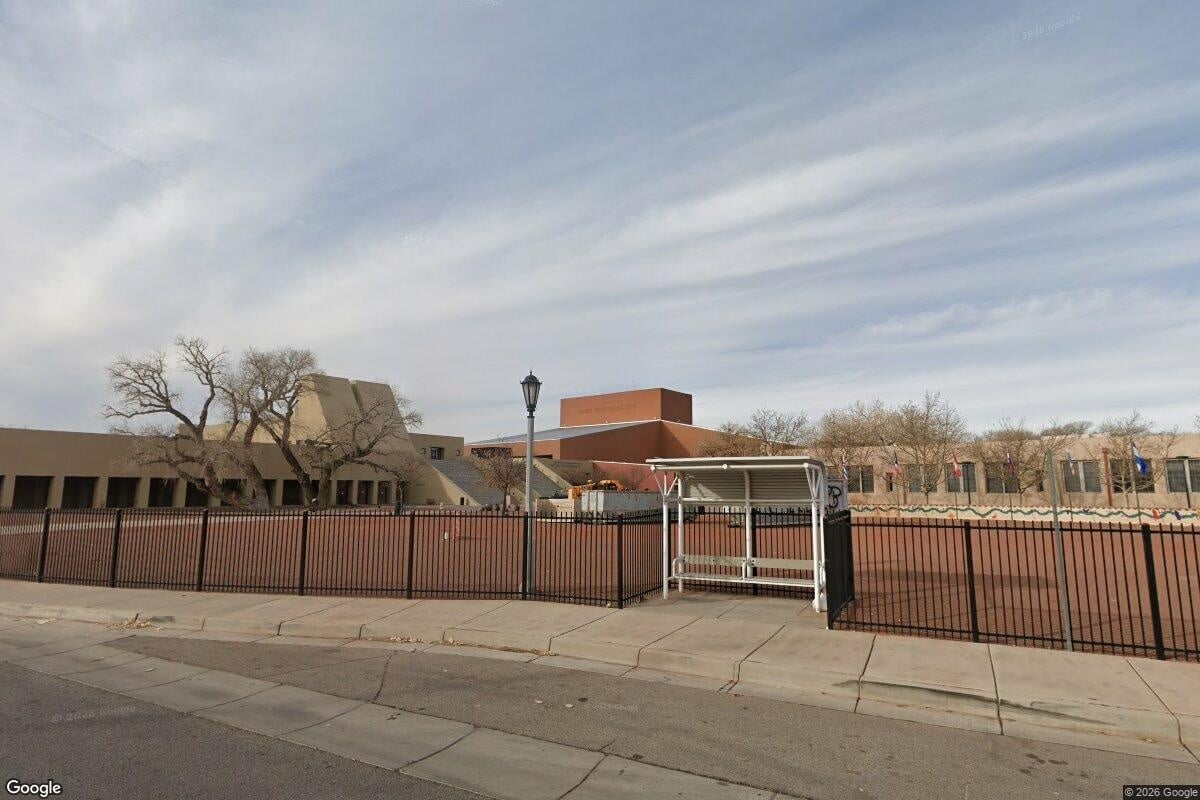
Ortiz framed the work as a point of regional pride. “If I could say anything, it’s that New Mexico is one of the best places to be from, and this story is so New Mexican,” he told abqjournal. “We’re doing it here at Opera Southwest, and it’s about (life) here and it’s such a beautiful story.”
Lowering the barrier, keeping the standard
Both singers emphasized the production’s family-friendly design: daytime start times at 2 and 4 p.m., casual dress encouraged, and a runtime that keeps children past neither dinner nor bedtime.
“The new wave of opera companies, we’re trying to … let people know that (opera) is not elitist,” Bakhoum Sanchez told abqjournal. “There’s an older mindset … that you need to be in gowns and tuxes and bowties and diamonds. But that is just not the reality.”
Composer Héctor Armienta, commissioned in 2025 by Opera Southwest, created “The Farolitos of Christmas” by weaving New Mexican folk motifs, mariachi references and traditional Las Posadas songs into a bilingual score.
His earlier work includes the 2018 world premiere of “Bless Me, Ultima” at the National Hispanic Cultural Center with Opera Southwest, adapting Rudolfo Anaya’s novel with corridos and Llano-inspired orchestration, and “Zorro,” produced at Fort Worth Opera and Opera Santa Barbara. Armienta, founder of Ópera Cultura, draws on Mexican American cultural traditions across his operas, earning six NEA grants and a 2022 CCSRE Arts Mellon Fellowship at Stanford University.
Executive Director Tony Zancanella told abqjournal last December that the company intends to produce the opera every year because families have asked to make it a holiday tradition. The 2026 run marks the second annual staging at the National Hispanic Cultural Center, hoodline.com noted.
Worth a look

Major Chains Closed Thanksgiving; Parish-by-Parish Hours for Open New Orleans Stores
Major grocery chains including Walmart, Target and Costco will stay closed on Thanksgiving Day, leaving a handful of...

Gillibrand Eyes 60-Seat Senate Majority in 2028, Says DSCC Supports All Nominees
Senate Democrats could reach a filibuster-proof 60-seat majority in 2028, DSCC Chair Kirsten Gillibrand told NBC News on...

Chargers Claim CB Avery Smith Off Waivers From Seahawks
The Los Angeles Chargers claimed cornerback Avery Smith off waivers Tuesday, returning the undrafted rookie to the organization...

U.S. Army Detonates Lead Azide in Iowa, Declares Success
The U.S. Army detonated nearly five tons of degraded lead azide at the Iowa Army Ammunition Plant in...