
The Pennsylvania State Board of Education voted 9-5 Thursday to reject a plan that would have lowered the score needed to earn an “advanced” rating on state math and reading tests, a decision that keeps existing proficiency bars in place but leaves Philadelphia families still waiting for spring results they need by a Dec. 16 school-selection deadline.
The vote came after the Pennsylvania Department of Education pushed for immediate adoption of new cut scores for the PSSA and Keystone exams, arguing the update was overdue and aligned with the state’s first year of fully online testing.
Board members, including state Sen. Lindsey Williams, D-Pittsburgh, said 2026 was the wrong baseline because of widespread technical glitches during that online rollout, and that neither the board nor the public had enough time to weigh the implications. Board member Sandra Dungee Glenn said the change would be “more appropriate to do it next year.”
Democrats for Education Reform, which had urged the board to reject the proposal, applauded the outcome. “The State Board kept the bar where it belongs, and Pennsylvania students are better off for it,” said Jorge Elorza, CEO of DFER.
“An advanced score should reflect advanced work. Students took these tests in the spring, and Philadelphia families need the results to choose a school by Dec. 16. We urge the department to get those results to families on the existing scale as quickly as possible.”
The numbers behind the debate
Under the current standards, about one in eight Pennsylvania students in grades 3 through 8 scored advanced in English language arts in 2025, and about one in six did so in math, according to DFER.
The department’s proposal would have lowered the minimum score for “advanced” in nearly every grade, and projections showed it would have shifted the share of students rated proficient as well. Over 800,000 students take the PSSAs and Keystone exams annually.
PDE Deputy Secretary Amy Lena told the board the change was meant “to ensure that performance labels accurately reflect what students know and can do, but not to make assessments easier or harder.”
Brian Campbell, director of the Bureau of Curriculum, Assessment and Instruction, said new descriptors would give teachers a “direct link now that a teacher can use to develop the lesson plans and the instruction around the performance-level descriptors.” The department said Keystone cut scores were last recalibrated in 2012 and PSSAs in 2015.
Philadelphia’s high-stakes wait
The practical fallout lands hardest in Philadelphia. The school district has already delayed its school-selection window twice for admission into criteria-based high schools, most recently to Dec. 16. Families applying to selective schools still do not know whether their children qualify for admissions lotteries because the department had planned to release final school-level results within days of approving new cut scores, with statewide results expected in early 2027.
Now, PDE must re-run the spring tests under the existing scale. “It’s unclear how long that might push back the release of that information.” The department has not yet provided a new timeline for when schools and families can expect the 2026 results, which are typically released in August.
Opposition rooted in national trends
Critics of the proposal argued Pennsylvania would be following a national pattern of lowering expectations. Mark Gleason, managing partner of The Drexel Fund and former director of the Philadelphia School Partnership, now Elevate 215, objected to what he called a lack of parent input and warned against chasing national standards when “the national trend is to lower standards when it comes to K-12 education.”
He pointed to declining student performance on national and international exams. “This is the national trend,” Gleason told the board. “I don’t think it’s what we want Pennsylvania to be participating in.”

During public comment, student Zaida Easton put it bluntly: “By cutting test scores, I think that’s missing the point. We want them to keep pushing and striving for more.”
Democrats for Education Reform, a New York-based political action committee founded in 2007, emerged to push the Democratic Party toward supporting charter schools and accountability measures. Its early influence included shaping education platforms for Barack Obama, Michael Bennet and Cory Booker ahead of the 2008 convention and preparing a transition memo for the Obama administration.
The organization has invested more than $17 million in political and policy advocacy and works with over 180 Democratic officials at the federal, state and local levels. Since 2023 it has been led by Jorge Elorza, the former mayor of Providence, Rhode Island.
The department said it respects the board’s decision and is determining how best to support students moving forward. Philadelphia families can follow updates from the School District of Philadelphia’s school selection office.
Related reading

Terri Lyne Carrington to Curate 2027 Burlington Discover Jazz Festival
The Flynn announced Thursday that Terri Lyne Carrington will curate the 44th Burlington Discover Jazz Festival, set for...
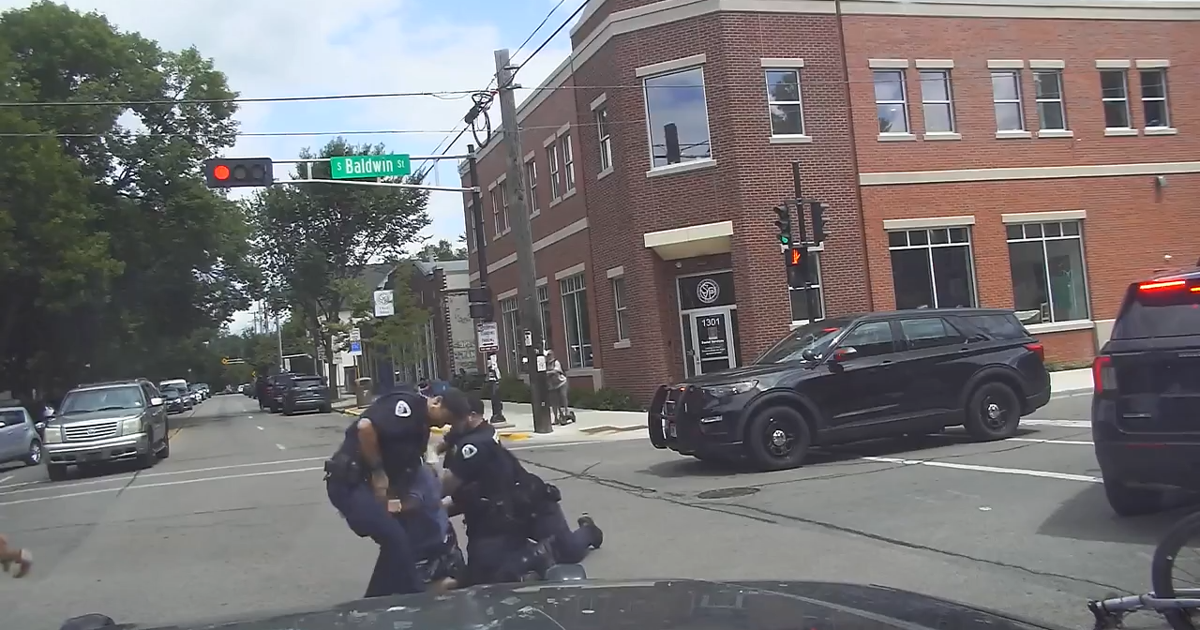
Dane County DA Announces No Charges in Corey Ruiz Shooting; DOJ Releases Dashcam Footage and Files
Dane County District Attorney Ismael Ozanne announced Thursday that no criminal charges will be filed against Madison police...

Vermont Defends Five Straight Titles at Harold Anderson Invitational; Stonehill Posts Relay Times
Vermont arrives at the Harold Anderson Invitational on Thursday defending five straight titles, a streak built on margins...
Erin Napier painted her own 1930s kitchen in Sherwin-Williams Netsuke
Erin Napier painted her own 1930s kitchen in Sherwin-Williams Netsuke, a neutral yellow with khaki undertones she describes...