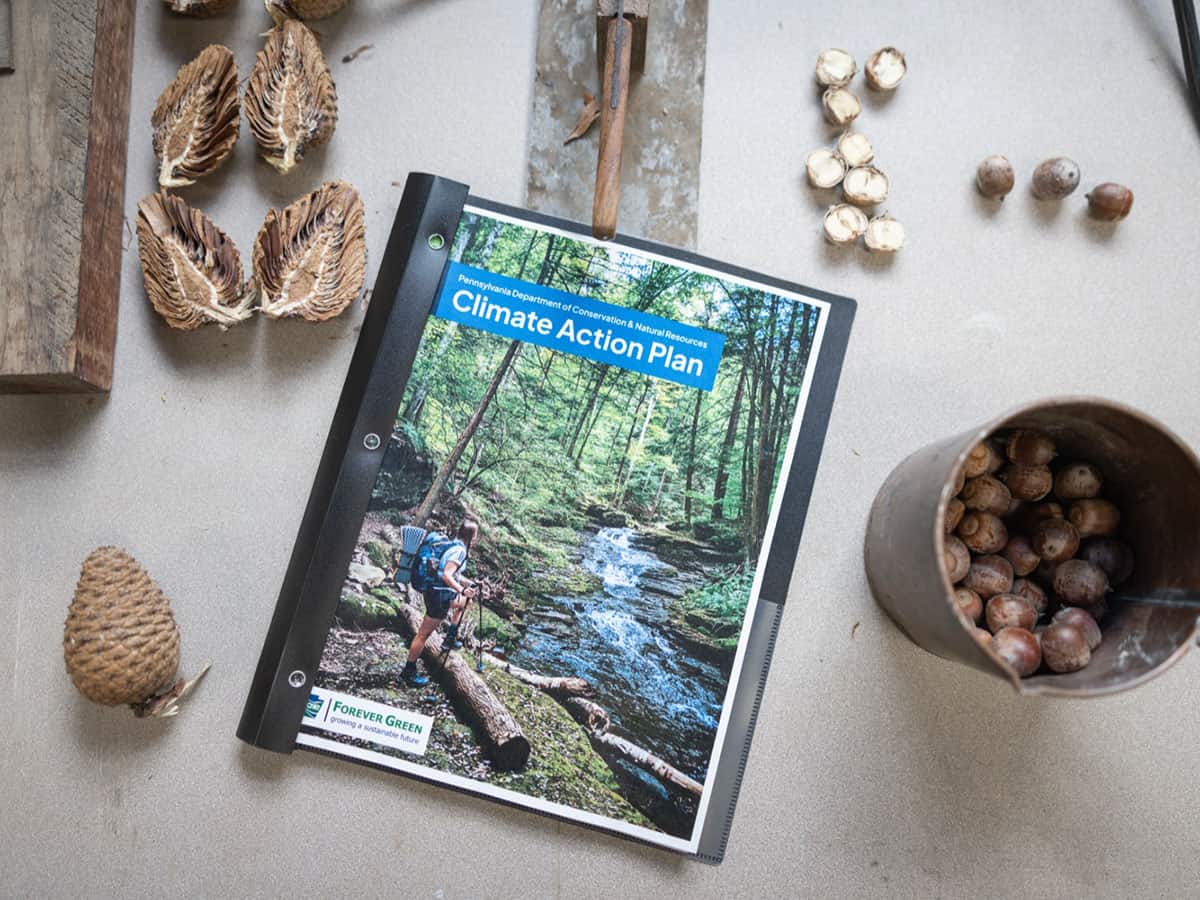
At the Mira Lloyd Dock Resource Conservation Center, the Shapiro Administration released a comprehensive roadmap to protect Pennsylvania’s public lands from extreme weather.
The 182-page Climate Action Plan sets out measurable targets through 2050. Department of Conservation and Natural Resources Secretary Cindy Adams Dunn introduced the strategy to address rising temperatures, severe flooding, and shifting seasonal patterns across state forests and parks.
“Pennsylvania’s state parks and forests are among our greatest natural resources, and we have a responsibility to protect them for generations to come,” Dunn said.
The document includes a statewide climate risk assessment, department-wide greenhouse gas inventories, and updated regional projections. It builds on previous work by Governor Josh Shapiro’s administration, which has invested approximately $315 million in more than 1,100 park and recreation projects since taking office.
Under the new strategy, DCNR committed to reducing direct greenhouse gas emissions from its operations by 80 percent by 2050. The agency also aims to generate or offset all electricity it uses from carbon-free sources by 2035.
DCNR is taking action to address climate change. Today, we released a new Climate Action Plan with clear goals to help Pennsylvania's state lands prepare for climate impacts and reduce our carbon footprint. Read the plan: https://t.co/zUkI0nux1i pic.twitter.com/WH6A9v8HZv
Staff training forms another core component of the initiative. The agency plans to provide general and specialized climate change training to all employees by 2030, alongside 60 measurable action goals and 49 bureau-led directives.
The agency has already installed 40 small-scale solar arrays, added more than 50 public electric vehicle charging stations, and built 18 high-performance LEED-certified buildings. Roughly 10 percent of the DCNR vehicle fleet now runs on electric or hybrid models.
Because more than 70 percent of Pennsylvania forests are privately owned, the plan outlines support for private landowners through county-based service foresters. These professionals offer technical guidance to maintain forest health, protect local water supplies, and manage wildfire risks.
“DCNR’s new Climate Action Plan establishes a science-based and measurable roadmap to conserve Pennsylvania’s natural resources against the most urgent threat facing people and nature,” said Lori Brennan, Executive Director of The Nature Conservancy in Pennsylvania and Delaware.
Local governments and school districts can also utilize the document’s regional projections and risk assessments. Department of Environmental Protection Secretary Jessica Shirley said that the initiative aligns with the environmental protections outlined in the Pennsylvania Constitution.
Annual progress reports will track implementation across infrastructure, grant administration, and natural resource management.
Worth a look

Jury Begins Deliberations in Naresh Bhatt Murder Trial
A Northern Virginia man went on trial for the murder of his wife, and a Prince William County...

BYU CFP Ranking Prediction After Loss to No. 3 Utah
BYU faces a critical test in the latest College Football Playoff rankings after a hard-fought road loss to...

AllModern Austin Forms New Partnership With Austin Chamber of Commerce
AllModern Austin celebrated its three-year anniversary with a new partnership with the Austin Chamber of Commerce, including a...
DSU Dual Credit Programs Give South Dakota Students College Credits
High school students in South Dakota are earning college credits and gaining hands-on technology experience through Dakota State...