“Paradox” is the 100th film in Black Public Media’s Peabody Award-winning “AfroPoP” series, closing Season 18 after premiering Nov. 9 on PBS.org and the PBS App.
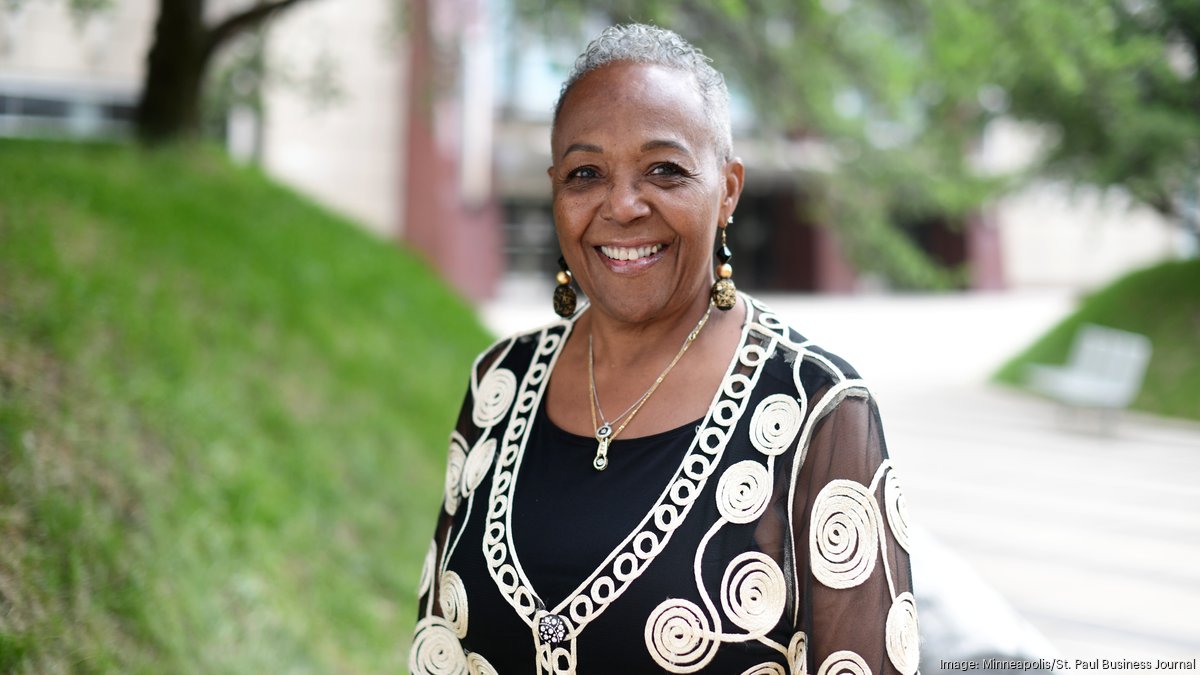
The documentary traces a century of Minneapolis policing and reform, directed and co-executive produced by Daniel Pierce Bergin. Dr. Yohuru Williams, the founding director of the University of St. Thomas’ Racial Justice Initiative, co-created and co-executive produced the film. Both spoke to the Minnesota Spokesman-Recorder before the premiere.
“It’s very local and it’s global in terms of Minneapolis being at the center in the last five years,” Bergin told the Spokesman-Recorder, “but as our film suggest, the last century really being crucial to this idea of public safety and police reform.”
Williams said the project coalesced after George Floyd’s murder. “The idea of the film really came together in 2020, post the murder of George Floyd as so many people were looking to try to make sense of what happened,” Williams told the Spokesman-Recorder. “For me, I believe that it was important for people to look backward.”
The Minnesota Spokesman-Recorder and its late founder Cecil Newman appear in the film.
“We’re fortunate in Minnesota to have the Minnesota Spokesman-Recorder,” Bergin told the Spokesman-Recorder, “that nearly a century of work has been the clarion and the voice for so many issues in our community. And Cecil Newman has been an agent of change… had the ear of a lot of the leadership of Minnesota over a couple (of) decades like Mondale and Humphrey.”
The documentary draws on deep archival research, rare footage and candid interviews with civic leaders, activists, police officers and historians. “We first did a short to try to raise funding,” Williams told the Spokesman-Recorder. “But when I saw that short, I was convinced that we had taken the right approach. We’ve been working on this documentary for four or five years.”
Bergin, a Minnesota PBS executive producer with 20 regional Emmy Awards and a Bush Leadership Fellowship, grew up blocks from where Floyd was murdered. “I’m a South Sider, born and raised, grew up in the Powderhorn neighborhood, blocks from where George Floyd was murdered,” Bergin told the Spokesman-Recorder. “We’re all connected to this issue… this was maybe one of the most complex and challenging history documentaries that we’ve ever done.”
Williams is the Distinguished University Chair and Professor of History at St. Thomas. He is a nationally recognized historian, author, co-author and editor of 11 books. Williams outlined three hoped-for takeaways. “Number one, I hope people will come away with a deeper understanding and appreciation of the history of how we got here,” Williams told the Spokesman-Recorder. “The second thing is I hope it would inspire people also to hear what we mean by reform. And third, last but not least, when you get an opportunity to work with a storyteller (and) filmmaker of the caliber of a Dan Bergin, you simply want people to appreciate the storytelling element of this.”
Black Public Media Executive Director Leslie Fields-Cruz praised the film in a press release. “As police misconduct continues to dominate the news cycle, this compelling work by Daniel and Minnesota PBS uncovers the deep and dark history behind recent events,” Fields-Cruz said.
The documentary centers on Minneapolis, the most populous city in Minnesota with a population of 429,954 as of the 2020 census, which serves as the Hennepin County seat and anchors the Twin Cities metropolitan area of 3.69 million residents.
Built on an artesian aquifer along both banks of the Upper Mississippi River, the city grew from 19th-century industrial power centered on Saint Anthony Falls — the river’s only natural waterfall — where lumber and flour milling once made it a global capital, and where the Federal Reserve Bank of Minneapolis preserves its financial influence today.
That economic history coexists with a foundation of stark racial disparities described as arguably the most critical issue confronting the city in the 21st century.
BPM was able to present Season 18 despite a $1.9 million budget cut resulting from Congress’ 2025 rescission of public media funding. “We were finishing ‘Paradox’ in the midst of the clear and impending cuts and executive orders and other really challenging and brutal treatment of public media,” Bergin told the Spokesman-Recorder. “Having Black Public Media as a funder along with the Legacy Amendment and the Friends of Minnesota Experience, we’ve got some great supporters. But having Black Public Media as a collaborator to bring this story to the world has been essential for Minnesota PBS.”
Related reading
Four Immigrants Sue GEO Group, Alleging Rape, Forced Labor and Anti-LGBTQ Abuse at Louisiana ICE Facility
Four formerly detained immigrants filed a federal lawsuit on Monday against the GEO Group, a former assistant warden...
West Virginia Awards $5.3M to WVSOM for Rural Health, Nutrition and Workforce Programs
Largest award of $4.02 million funds the WISH program across eight southern counties. Save the Children receives nearly...

Connecticut High School Football Rivalries Return for Eight Thanksgiving Week Matchups
Eight Connecticut high school football matchups return to Thanksgiving week this year, reviving city rivalries and restoring holiday...
Carson City Deputies Arrest Reno Woman for Stolen Vehicle and Drugs
Mekalynn Emily-Tylah Culbert was taken into custody near Industrial and Idaho streets after the vehicle's owner reported seeing...