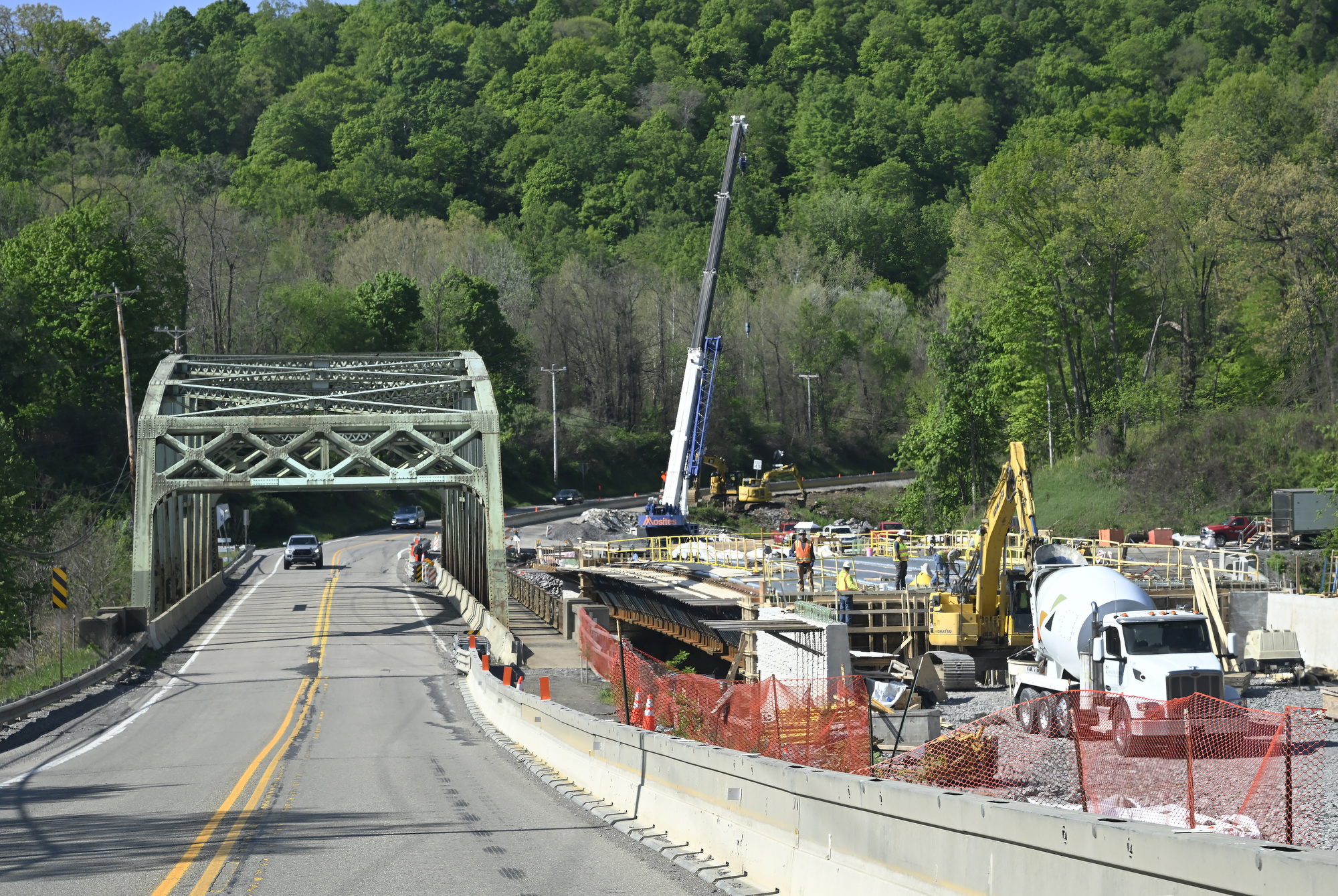
Pennsylvania earned a C– on its 2026 infrastructure report card, the American Society of Civil Engineers said Tuesday at the Capitol.
The grade is a passing mark, but the engineers behind it warned that aging water pipes and chronically underfunded transit systems are dragging the commonwealth down. “These systems also serve as the backbone of Pennsylvania’s economy,” said Brent Basom, the president of ASCE’s Central Pennsylvania section.
“When an engine is functioning as planned, it is often out of sight and out of mind. But when infrastructure encounters a critical, serious problem or a system fails, the consequences can affect people’s quality of life and have serious, widespread economic impacts.”
Justin Komp, who chaired the Pennsylvania 2026 report card, stressed the snapshot covers 17 categories assessed by civil-engineering teams. “This report is a reflection of the condition and capacity of the systems we have in place … and is not a reflection on the people and agencies who work hard to operate and maintain those systems with the resources made available to them,” Komp said.
Water systems earn D grades across the board
Drinking water, wastewater and stormwater each received a D, the second-lowest mark. Shirley Clark, a professor at Penn State Harrisburg and a technical director with ASCE, said excavators still routinely uncovered 100-year-old wooden pipes made from hollowed-out trees.
“There’s this idea that when it’s out of sight, it’s out of mind. And that has been one of the challenges,” Clark told Pennsylvania Capital-Star. “Water is interconnected. Drinking water is not separate … from wastewater. From stormwater. Because they all come together in what we call the Susquehanna or the Juniata or the Delaware or any of the other rivers in the state.”

Clark called the Susquehanna — one of the world’s oldest rivers — “one of the most flood-prone rivers in the United States,” running 300 miles inside Pennsylvania. Low-head dams along its length create circulating currents that become “drowning machines” at high water.
“We know there are ways to fix it. We know there are ways to prevent this from happening. But it takes investment,” she said. Dams were an area of improvement from the state’s l
Transit posts the worst score: D-
Transit earned the state’s lowest grade, a D-. Komp urged officials to treat transit, roads and bridges as one interconnected system. “You can’t just only fund roads and bridges, and you can’t just fund only transit,” he said. “Not everybody can take public transit, but also not everybody can drive.”

Pennsylvania has some of the nation’s oldest infrastructure, with excavators still routinely uncovering 100-year-old wooden pipes made from hollowed-out trees. SEPTA faces a funding gap exceeding $10 billion, while Pittsburgh Regional Transit carries more than $2 billion in deferred capital needs. Together, the state’s transit agencies provided 528 million passenger trips in 2024.
A $394 million transfer from the Public Transportation Trust Fund bought legislators two years to find a permanent revenue stream, a priority for the incoming Democratic trifecta. “Stopgap measures and temporary funding, though valuable, are not sustainable solutions,” Komp said. “The development of long-term funding streams for transportation would enable agencies to reliably plan for the future.”
Energy leads with a B-
Energy, aviation and hazardous waste each scored a B-, the state’s highest marks. Energy far outpaces the national D+ average. “The reason for this discrepancy is Pennsylvania’s role as one of the leading energy producers in the nation, exporting 87 million megawatt hours of electricity in 2024 and supplying nearly 20% of U.S. natural gas production,” Komp said.
The state also leads in nuclear and coal output, but rising demand — driven partly by data centers — and increasing outages mean the grid needs more resilience investment.
Federal dollars helped, but gaps remain
Presenters credited the nation’s C grade last year — the highest since ASCE report cards began in 1998 — to the $1.2 trillion Infrastructure Investment and Jobs Act signed in late 2021. That law delivered more than $22 billion to Pennsylvania, and Act 89 of 2013 generated nearly $2.4 billion over 10 years through a higher fuel tax.
Yet Carol Haddock, ASCE’s incoming national president, said closing the national investment gap to a “good repair” standard would take an estimated $3.7 trillion over the next decade. The state report does not provide a single total but includes category-level estimates.
A workforce crisis looms
“Most of the infrastructure we rely on was built in a time where we did not have an understanding of how prominent and severe flooding, wildfire and wind events would be,” Komp added. “Not only is the infrastructure old and must be modernized, but the designs must adapt to current and future weather conditions.”
“We must recognize that water is vital. Water is critical to public health and well-being,” Komp said. “While increased federal funding … was helpful, it was not sufficient to address the massive backlog of work to be done. New legislation must close the infrastructure gap through sustained capitalization and grants for small systems and disadvantaged communities.”
Related reading

Former GIANT Employee Charged With Skimming Customer Credit Cards at Harrisburg Gas Station
Harrisburg police have charged a former GIANT gas-pump attendant with using a hidden skimming device to steal banking...

Timberwolves Beat Blazers Twice in Two Nights, 106-98 and 106-105, to Bounce Back From Worst Loss of Season
The Minnesota Timberwolves beat the Portland Trail Blazers twice in two nights at Target Center, 106-98 Monday and...

NSU Demons Face No. 14 Oklahoma in Third Power-Conference Test
Northwestern State heads to Norman on Thursday for a 6 p.m. tip against No. 14 Oklahoma, the third...
Governor DeWine Announces SBA Disaster Assistance for Ohio Counties
Ohio Governor Mike DeWine secured two federal disaster declarations Wednesday for counties battered by September storms, unlocking low-interest...