
Roughly 13.5% of Pennsylvanians faced food insecurity in 2024, a figure that translates to more than 1.7 million people, according to a report from Feeding Pennsylvania and the Central Pennsylvania Food Bank.
- Child food insecurity rose from 1 in 6 to 1 in 5 children, per the 2024 Feeding Pennsylvania report.
- The program offered around 50% less food in 2026 than in 2025.
- Higher food and diesel costs mean donated dollars buy less than in prior years.
- CHOP Out Hunger is stuffing extra food into student backpacks ahead of holiday breaks and snow days.
The increase among children is the most striking shift. “So they’re coming home from school and they’re not asking, ‘hey, mom, what’s for dinner?’ It’s ‘hey, mom, is there dinner?’ And that trend is scary, and it’s continuing to grow,” said Dani Ruhf, founder of CHOP Out Hunger, in an interview with Erie News Now.
Her organization distributes food packs to students and runs a mobile pantry; ahead of the holidays, volunteers are loading backpacks with extra supplies to cover days when school lunches are unavailable.
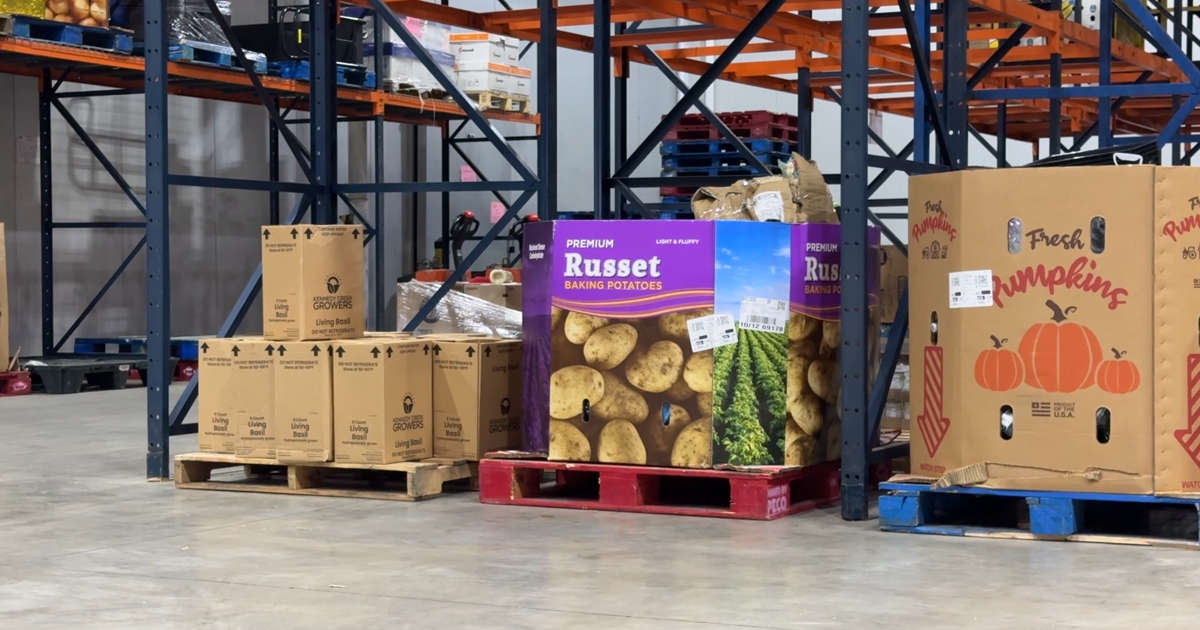
Regional food banks that supply local pantries are receiving far less federal product. The Emergency Food Assistance Program (TEFAP), operated by the U.S. Department of Agriculture, “offered around 50% less food in 2026 than in 2025,” said Julie Bancroft, CEO of Feeding Pennsylvania, which coordinates 12 regional food banks across the commonwealth.
With fewer federal commodities, banks must purchase more food on the open market — where prices have climbed. “If you’re seeing those prices increase as a consumer at the grocery store, the food banks are seeing that that when even not purchasing at scale,” Bancroft told Erie News Now. Diesel costs have also risen, stretching donated dollars further.
Ruhf said stagnant wages and high living costs strain household budgets year‑round; winter heating bills and holiday expenses add pressure. “If all of a sudden your electric bill is $300 more than you expect, something’s got to give. And you have to keep your electricity on. It’s winter. So go get the help that you need,” she told Erie News Now. “If you can go get a week’s worth of groceries from a food pantry so you can pay your electric bill or take your child to the doctor, do it. Don’t feel any shame about that. That’s why these organization exist.”
Ruhf urged people not to be overwhelmed by the scale of need. “I, I always say start in your own backyard and then expand from there. So you make sure your little neighborhood is good. Make sure your neighbors are taken care of, the elderly and the young and everybody. And then you know what? When your core group is good, then you guys can expand out to the rest,” she said. Feeding Pennsylvania notes that monetary donations allow food banks to buy in bulk at lower per‑unit cost, while food drives and direct pantry contributions also help local networks meet the holiday surge.
Worth a look

Bond Investors Face Total Loss on Two Portland Hiltons After $58M Appraisal Wipes Out $240M Debt
Bond investors in two downtown Portland Hilton hotels face a total loss after the properties were appraised at...
UConn Marching Band Still “All In” for Macy’s Parade Debut After Postponement to Saturday
The Macy's Thanksgiving Day Parade has been postponed to Saturday after severe weather forced organizers to cancel Thursday's...

Philadelphia Sheriff Rochelle Bilal Held in Contempt Over Funds
“flagrant and repeated” violations of her duties and what the judge called a deliberate effort to obstruct orders...
Wisconsin Routs Northeastern to Bounce Back From Bahamas Losses
Wisconsin committed only five turnovers after 35 combined in the previous two games. Eleven Badgers players scored; bench...