
Pennsylvania has released its first comprehensive assessment of the status of women in more than two decades, a 45-page “State of the Woman” report built on survey responses from 10,814 women across all 67 counties and 13 listening sessions attended by 252 participants.
The report, developed by the Governor’s Advisory Commission on Women, identifies ten thematic barriers — from childcare affordability and healthcare access to domestic violence, the gender wage gap, and the impact of artificial intelligence — and issues 18 policy recommendations aimed at lawmakers, employers, and community leaders. Pennsylvania has 6.63 million women, 51% of the population.
“We have made tremendous strides in the fight for women’s equality, but right now, women’s freedoms are under attack at the federal level and many of the challenges they face have intensified as a result of longstanding disparities,” said Governor Josh Shapiro. “This report – the first of its kind in over two decades – reflects the diverse perspectives of women from different backgrounds and communities across Pennsylvania and charts a path forward where women have better health care outcomes, more economic security, and are free from the epidemic of violence.”
“My Administration has worked diligently to protect and advance the cause of freedom across the Commonwealth, and ensure Pennsylvania women have more opportunities to succeed and thrive,” said Governor Josh Shapiro.
First Lady Lori Shapiro, who presented the findings at a Harrisburg event earlier this month, framed the document as a call to action. “For too long, women have carried the weight of these challenges without feeling seen, heard, or reflected in public policy,” she said. “This report elevates the voices of women from every corner of Pennsylvania and gives us a clearer understanding of the realities they face. Their stories must not only be heard; they must drive action.”
The commission’s executive director, Ashley N. Walkowiak, emphasized the consistency of the feedback. “Women were consistent about the barriers they face and the changes they believe would make the greatest difference,” Walkowiak said. “Of course, no single report can capture every experience or every challenge facing women in Pennsylvania. We could not fit every story, concern or recommendation into these pages. But across communities and life experiences, women were consistent about the barriers they face and the changes they believe would make the greatest difference.”
The survey quantified the scope of several crises. Seventy-eight percent of respondents said they or a woman they know is a survivor of violence. For women aged 25 to 54, 76% were in the workforce as of 2023, yet childcare remains a primary economic disruptor.
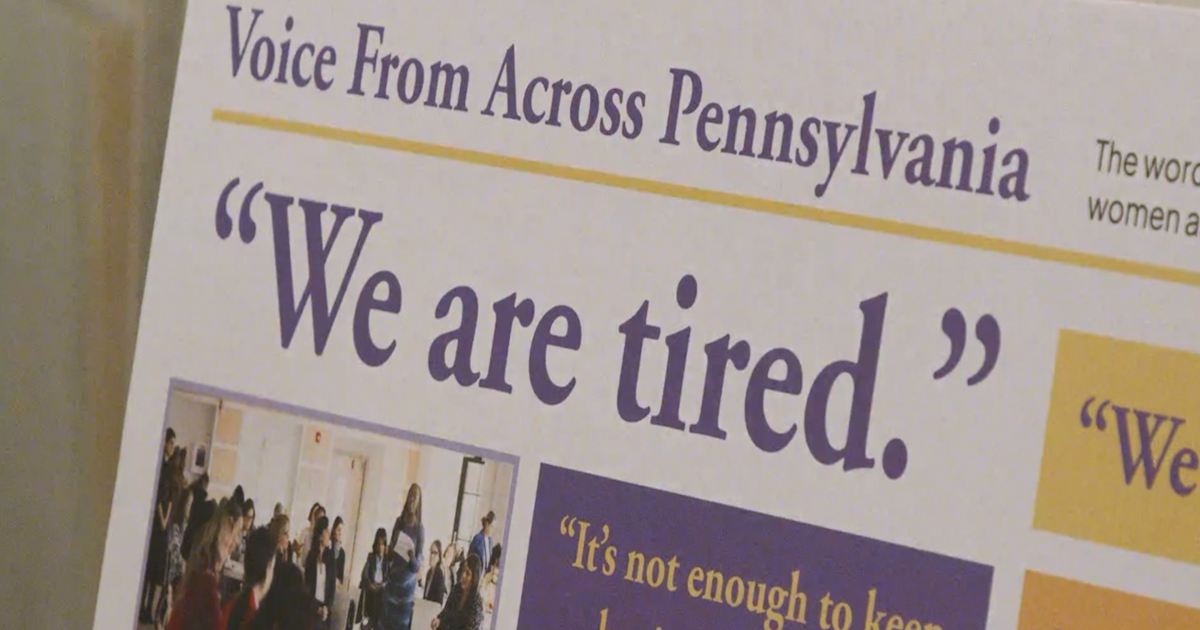
In comments, Walkowiak said one of the biggest issues raised by women was childcare. “When child care falls through. People miss work. Hours are reduced. Career advancement is delayed,” said Michelle Mikitish, president of the Greater Pittston Chamber of Commerce. “If there’s one message that echoes throughout this report is that women are tired.”
Kelsie Massini, legal policy manager for the PA Coalition Against Domestic Violence, highlighted systemic failures for survivors. “Unfortunately, survivors often face a legal system that was not built for them. As one survivor said in the report, quote, it feels like you need money to escape. And I don’t have that,” Massini said.
On maternal health, the lack of paid leave was the most frequently cited challenge for mothers. “When people take time to tell us about the barriers they face. They’re seeking something beyond acknowledgment. They are seeking change,” said Janine Jelks-Seale, director of health equity at UPMC Health Plan.
The report’s recommendations include establishing statewide paid family and medical leave, setting safe staffing standards in healthcare, expanding trauma-informed education and mental health supports, increasing funding for legal services for domestic violence victims, and expanding housing and economic support for survivors. Invest in trauma-informed education and mental-health supports. Establish safe staffing standards in healthcare settings.
Promote safe and equitable workplaces. Increase funding for legal services. Speakers said that many issues mirrored those raised in the commonwealth’s previous reports in 1966, 1973, and 2004. Walkowiak urged that solutions address the interconnected nature of the barriers. “Women’s issues are often interlinked,” she said, “and encouraged that solutions also strive for holistic approaches.”
Keep reading
- Shirley Ann Byrd, Former USGS Cartographer and St. Mary’s Hospital Volunteer, Dies at 92
- Sioux Falls Skyforce 6-1 After First Loss; Quiñones, Goldin Pace Offense Before FIBA Absences
- Michigan vs Ohio State: Kickoff time and game details for the rivalry matchup (world-today-news.com)
- Kmart Releases $229 Reformer Pilates Machine for Black Friday (archyde.com)

Shirley Ann Byrd, Former USGS Cartographer and St. Mary’s Hospital Volunteer, Dies at 92
Shirley Ann Byrd, a former U.S. Geological Survey cartographer and longtime Jefferson City volunteer, died Monday at her...

Sioux Falls Skyforce 6-1 After First Loss; Quiñones, Goldin Pace Offense Before FIBA Absences
The Sioux Falls Skyforce sit 6-1 after a 130-125 loss to the Cleveland Charge on Nov. 25, the...

Bloody Brawl at Killington Resort Chairlift Line
A quiet chairlift wait turned into a bloody brawl Saturday at Killington Resort, where two snowboarders fought on...

Montgomery’s Dylan Sherman and Hughesville’s Carter Gormont Named Sun-Gazette Boys Soccer Co-Player of the Year
Montgomery's Dylan Sherman and Hughesville's Carter Gormont shared Sun-Gazette Boys Soccer Co-Player of the Year honors. Sherman became...