SOUTH BURLINGTON, Vt. — Vermont voters delivered a strikingly split verdict Tuesday that will reshape the balance of power in Montpelier for the next two years: Republican Gov. Phil Scott won a historic sixth term by seven points, even as Democrats and progressives swept enough legislative seats to reclaim a supermajority capable of overriding his vetoes without a single Republican vote.
The results capped a national Democratic wave that swept across the country Tuesday, giving Democrats control of Congress starting in January. While Scott defeated Democrat Amanda Janoo decisively in the governor’s race, his Republican colleagues suffered losses in both the state House and Senate, setting up a divided government where the executive and legislative branches will enter 2027 with fundamentally different approaches to governing.
This marks the first time since 2023 and 2024 that Democrats and progressives will hold enough combined votes to override gubernatorial vetoes. Based on unofficial results, the new makeup gives the coalition control of the 150-seat House and the 30-seat Senate, assuming progressives vote with Democrats as they have in past sessions. During the previous supermajority in 2023 and 2024, Democrats overrode multiple vetoes from Scott, a dynamic that could return.
Four Senate Districts Flip as Rutland Sees Independent Victory
The shift was most dramatic in the Senate, where Democrats and progressives ousted Republicans in the Grand Isle, Addison, Orange, and Chittenden North districts. In a notable Rutland race, an independent candidate replaced a Republican who had recently been charged with domestic assault.

Scott acknowledged the new political reality in his victory speech Tuesday night, telling supporters that Vermonters had made their choices not just for the governor but for the entire legislature.
“We will enter the next two years with some significant differences in our political views, and the approaches to our government,” Scott said. “I want Vermonters to know this: my commitment to you has not changed.”
The governor’s election win contrasts sharply with his party’s losses in the legislature, forcing Scott to work in a Capitol where opponents now have the votes to override his vetoes.
Majority and Minority Leaders Trade Cautious Promises
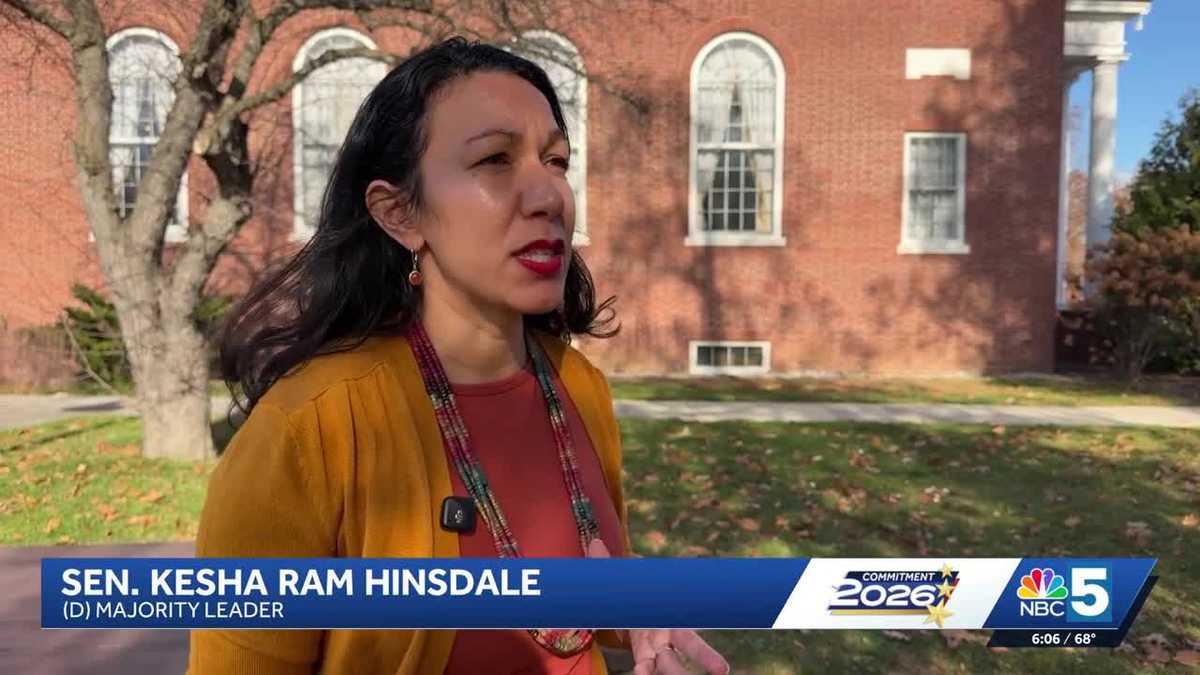
Senate Majority Leader Kesha Ram-Hinsdale said she is encouraging her caucus to work with the Republican minority when the new legislature convenes in January, invoking a lesson from her time in the minority.
“A really good Republican minority leader in the House taught me that you’re all in the same boat, and the majority steers the ship. The minority points out the rocks. So we have to work together,” Ram-Hinsdale said. Majority Leader Kesha Ram-Hinsdale
Republican Minority Leader Scott Beck said he hopes that sentiment holds up in practice and that lawmakers can avoid a contentious veto session.
“I think it’d be best for Vermonters if they didn’t pursue that strategy again,” Beck said. “This is a business like most other businesses, where actions are way more important than words.”
Beck’s reference to avoiding “that strategy” points to the 2023 and 2024 sessions, when the Democratic supermajority overrode multiple vetoes from Scott, setting the stage for potential confrontations in the coming biennium.
Education Reform Funding Talks Will Test New Dynamic
The new power arrangement will face its first major test next year during anticipated funding talks on education reform, an issue where Scott and the Democrats have staked out very different positions. Richard Clark, a political science professor at Vermont State University’s Castleton campus, said the relationship between the governor and the Democratic supermajority will be significant when lawmakers tackle the massive issue.
“Gov. Scott and the Democrats have had very different approaches to this,” Clark said. “They’re going to have to come together and hammer out some bipartisan way of dealing with this massive issue that we’re going to be facing for years.”
With Democrats now holding the two-thirds majority needed to override vetoes, the governor’s ability to block legislation will depend entirely on whether he can peel off enough Democratic votes, a much steeper climb than in the previous two years when Republicans held enough seats to sustain his vetoes. The supermajority gives Democrats the mathematical power to pass bills over Scott’s objections, fundamentally changing the negotiating leverage in Montpelier.
The new legislature will return to Montpelier in January for the fresh biennium, where a Democratic and progressive supermajority will have the votes to override Scott’s vetoes for the first time since 2024.
Keep reading
Wyoming Constitution Party gains major-party status as Bextel gets 16% of vote
Rebecca Bextel didn't win the governor's mansion Tuesday night, but she delivered something arguably more valuable to her...

WSBA Executive Committee Meeting Remains Unscheduled Despite Urgent Role
The Washington State Bar Association's Executive Committee exists to handle emergent, non-policy-making matters that need timely attention between...
Secretary Warner reveals logo for West Virginia Office of Entrepreneurship
Charleston Unveiling Puts Gear at the Center Secretary of State Kris Warner unveiled the new logo of the...

NC Rep. Virginia Foxx Trails Democrat Chuck Hubbard by 99 Votes in Tight District 5 Race
Republican U.S. Rep. Virginia Foxx trails Democratic challenger Chuck Hubbard by just 99 votes in North Carolina's 5th...