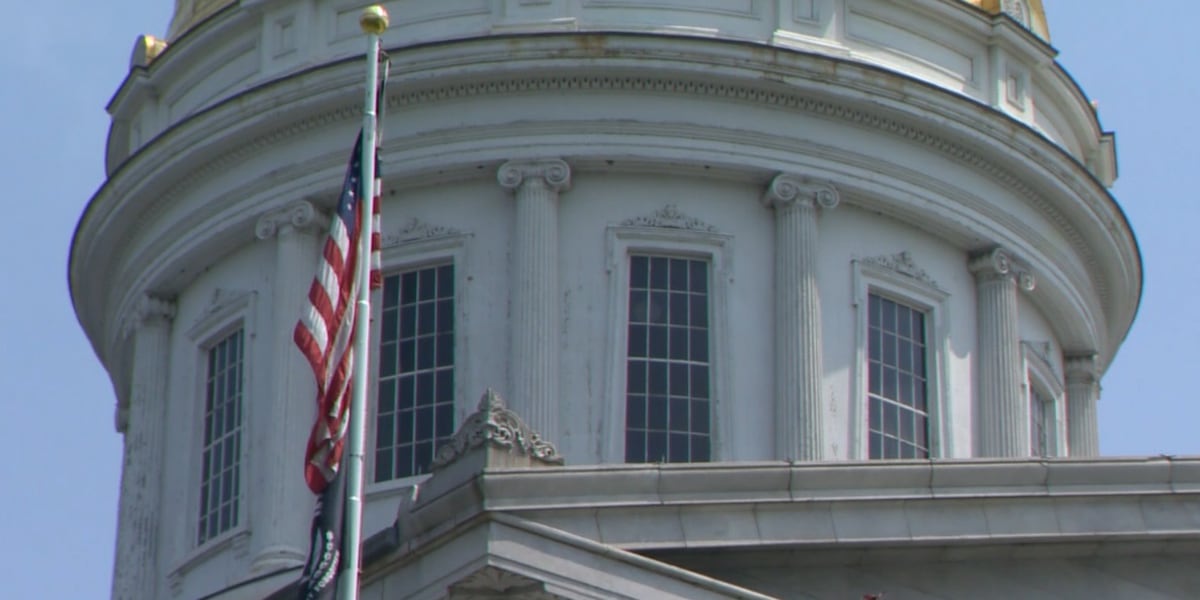
MONTPELIER, Vt. — Republican Gov. Phil Scott won a sixth term Tuesday night, surviving a national blue wave that handed Democrats veto-proof supermajorities in both chambers of the Vermont Legislature and setting up a high-stakes clash over taxes, housing, and health care, WCAX reported. The results cement a divided government in Montpelier, where Scott will face a Democratic-controlled Statehouse empowered to override his vetoes without a single Republican vote.
The outcome marks a dramatic reversal from the final days of the campaign, when polls showed Scott trailing and political obituaries were being drafted. Instead, Vermonters split their tickets once again, returning Scott to the governor’s office by a seven-point margin over Democratic challenger Amanda Janoo while simultaneously expanding Democratic majorities to 22 seats in the Senate and 112 seats in the House.
A Sixth Term Against the Wave
Scott defeated Janoo by seven points, a victory he joked Tuesday night came after some people “wrote his obituary.” Standing before supporters shortly after Janoo conceded, the governor thanked Vermonters for what will be his sixth term. “For nearly 10 years, I’ve had the privilege of serving the people of Vermont,” Scott said. “And as long as I have that privilege, I will continue doing what I believe is right for this state.”
If he completes the term, Scott will become the longest-serving governor in Vermont history. Political analysts say he weathered the Democratic surge that swept nationally and through the Statehouse by distancing himself from President Donald Trump and hammering an affordability message that has defined his career.
“It might seem as if it appears, as if Phil Scott is the last Republican standing, at least from where we sit in Vermont. And it’s quite an impressive accomplishment for him to have resisted this blue wave that affected not only the rest of the country, but also the Vermont Statehouse,” said Bert Johnson, a political science professor at Middlebury College. “I think he did it because he’s experienced, people know him, and he’s had that affordability message pretty much his entire political career; that turned out to resonate with a lot of people this year.”
Johnson added that Scott was not a target of the anti-Trump backlash seen across the country, which may have immunized him from the national mood. Voters also appear to want a check on Democratic power, understanding that the Legislature will be controlled by Democrats and preferring a Republican in the corner office to balance that control.

The Math of a Supermajority
While Scott held the fifth floor, Democrats wiped out Republican gains from the previous cycle, retaking control with numbers sufficient to override any veto. Armed with 22 Senate seats and 112 House seats, legislative leaders are already pivoting to battles over health care, housing, and taxes.
Preliminary data shows Democratic turnout held steady while Republican turnout dropped nearly 30% in some districts, swept up in a national rebuke of the Trump administration over the high cost of gas and housing.
Senate Minority Leader Scott Beck, R-Caledonia County, said he was unsure if the large Democratic supermajority was what Democrats intended but said that was the outcome. He characterized the strategy of making Vermont more affordable by adding government programs as counterproductive, stating it leads to the current high cost of living.
The supermajority means Democrats can pass legislation on health care access, housing affordability, and tax restructuring without needing Scott’s signature, forcing the governor to either sign bills he opposes or watch them become law over his veto. The last time Democrats held a supermajority, Scott issued a record number of vetoes and Democrats set a record number of veto overrides, a precedent that looms large as both sides prepare for the 2027 session.
A Referendum on the Fifth Floor
Some Democrats view the election as a direct referendum on Scott, who won with his narrowest margin of victory across his six elections. The message, they say, has shifted from blaming the Legislature to blaming the executive branch.
“In 2024, where, ‘It’s broken, it’s the Legislature.’ What we’re hearing in 2026 is, ‘it’s broken and it’s the executive branch,'” said Sen. Becca White, D-Windsor County, who is considering a run for majority leader. White said Tuesday was also a referendum on Scott’s vetoes of data center regulation and education reform, and that Senate Democrats intend to use their regained power to address health care, housing, and more. “Vermonters want dynamic, forward-thinking leadership and we aren’t getting that from an incumbent.”
The supermajority also casts uncertainty over Vermont’s education property tax reform, which advanced last year through a bipartisan agreement between Scott and top Statehouse Democratic leaders, neither of whom will return to Montpelier next year. With the architects of that compromise gone and a Legislature that no longer needs the governor’s vote, the path forward for property tax relief remains unclear.
Janoo’s Progressive Echo
Though defeated, Amanda Janoo’s campaign may still shape the debate. Her progressive economic agenda—taxing high-income earners and second homes—drew comparisons to Bernie Sanders and energized the party’s left flank. In her concession speech, Janoo insisted the vision would endure.
“The vision we advanced doesn’t end here tonight,” Janoo said. “A Vermont where everyone has a home, has a local doctor, and the freedom to live a good life.”
Whether those proposals gain traction in a Legislature now free to override Scott remains the central question of the coming session.

JoAnna Mendoza Declares Victory in Competitive Arizona Congressional Race
Mendoza Declares Victory in a Race Still Uncalled Democratic challenger JoAnna Mendoza declared victory Tuesday night in Arizona's...

North Little Rock opens ATG Pavilion Celebrating Arkansas music Legacy
North Little Rock has opened the ATG Pavilion, a new public space housing the Mashburn Gallery of Americana...

Alaska Senate Race Too Close to Call as Peltola Holds Narrow Lead Over Sullivan
Senator Sullivan's campaign said he was in that position despite an election cheating scandal. "He is also in...

Santa Visits Return to Parkway Place Mall in Huntsville for 2026
Santa Claus will return to Parkway Place Mall in Huntsville on Thursday, November 5, 2026, continuing a holiday...