
Phoenix Suns face a critical juncture after 1-4 start
The Phoenix Suns are staring down a familiar, yet increasingly dangerous, reality. After stumbling to a 1-4 start, the team currently sits 12th in the Western Conference standings, trailing the league-leading Houston Rockets by 4.5 games. While this slow start mirrors the beginning of last season, the stakes have shifted fundamentally. The margin for error has evaporated, and the path to the postseason is beginning to look more like a sprint that the Suns are already losing.

According to a report from Bright Side Of The Sun, the distinction between this year’s struggle and last year’s lies in the weight of expectation. Last season, a 1-4 start was met with a sense of patience; the prevailing sentiment was to let the season play out and prepare for the summer of 2026. This year, however, the roster construction carries a different promise, and the local expectations are significantly higher. When a team is built to compete, every loss feels less like a growing pain and more like a systemic failure.
The mathematical reality of the current NBA landscape makes this slump particularly punishing. Unlike previous eras where a team could “tank” for high draft picks, new anti-tanking rules have altered the incentive structure. For a team like Phoenix, which does not control its own draft picks, being stuck in the middle of the standings is a precarious position. There is a very real possibility that the Suns could find themselves in the tier of teams with only an 8.1% chance of landing the number one overall pick—a scenario where they might improve just enough to avoid the bottom, only to have any potential draft advantage handed over to another franchise.
Statistical gaps threaten the postseason climb
To understand why the current slide feels so heavy, one has to look at the defensive metrics. The Suns are struggling to find the defensive identity that allowed them to salvage their previous campaign. The following table compares the team’s defensive and net ratings during their initial five-game stretches over the last two seasons:

| Metric | Start of Last Season | Start of Current Season |
|---|---|---|
| Defensive Rating | 120.5 (28th) | 124.0 (30th) |
| Net Rating | -9.8 (27th) | -9.8 (25th) |
The data suggests a downward trend in defensive efficiency, moving from 28th to 30th in the league. Last season, the team managed a remarkable turnaround; after their initial 1-4 start, they posted a 112.3 defensive rating (8th) and a +2.1 net rating (13th). That momentum eventually propelled them to a peak on January 22, 2026, when they fought their way into the fifth seed of the Western Conference. Replicating that level of mid-season ascent is a monumental task when the foundation is currently this shaky.
Beyond the defensive lapses, there is a glaring issue on the glass. The Suns are currently sitting at a 45.7% rebounding percentage, a figure that places them among the lower tier of the league. For context, the Washington Wizards held the league’s worst rebounding percentage last season at 47.1%. Without the ability to control the boards, the Suns’ inconsistent execution becomes even harder to rectify.
The high cost of a middle-ground season
The dilemma for the Suns’ front office is a classic “no-man’s land” scenario. In the current Western Conference, the teams sitting near Phoenix in the standings—including the Kings, Nets, Jazz, Bulls, and Bucks—are largely those projected to be bottom-dwellers. This leaves the Suns in a position where they are too good to secure a high draft pick, yet not consistent enough to secure a playoff berth.
This creates an immediate pressure to utilize the trade market. There is an increasing sense of urgency to find “mediocre saviors”—players like Domantas Sabonis or Dejounte Murray—to stabilize the roster. However, with significant red flags surrounding the current roster construction, the search for a quick fix may only exacerbate the financial and structural long-term risks.
The question remains whether the team can find the discipline to tighten their execution before the train leaves the station. If they cannot bridge the gap between their current defensive struggles and the high-level play required to climb the standings, they risk spending the season chasing a postseason destination that is moving further out of reach with every passing game.
Worth a look

Addition Financial Credit Union Awards Grants to Local Teachers
Addition Financial awards classroom grants to North Florida and South Georgia teachers Addition Financial Credit Union has awarded...
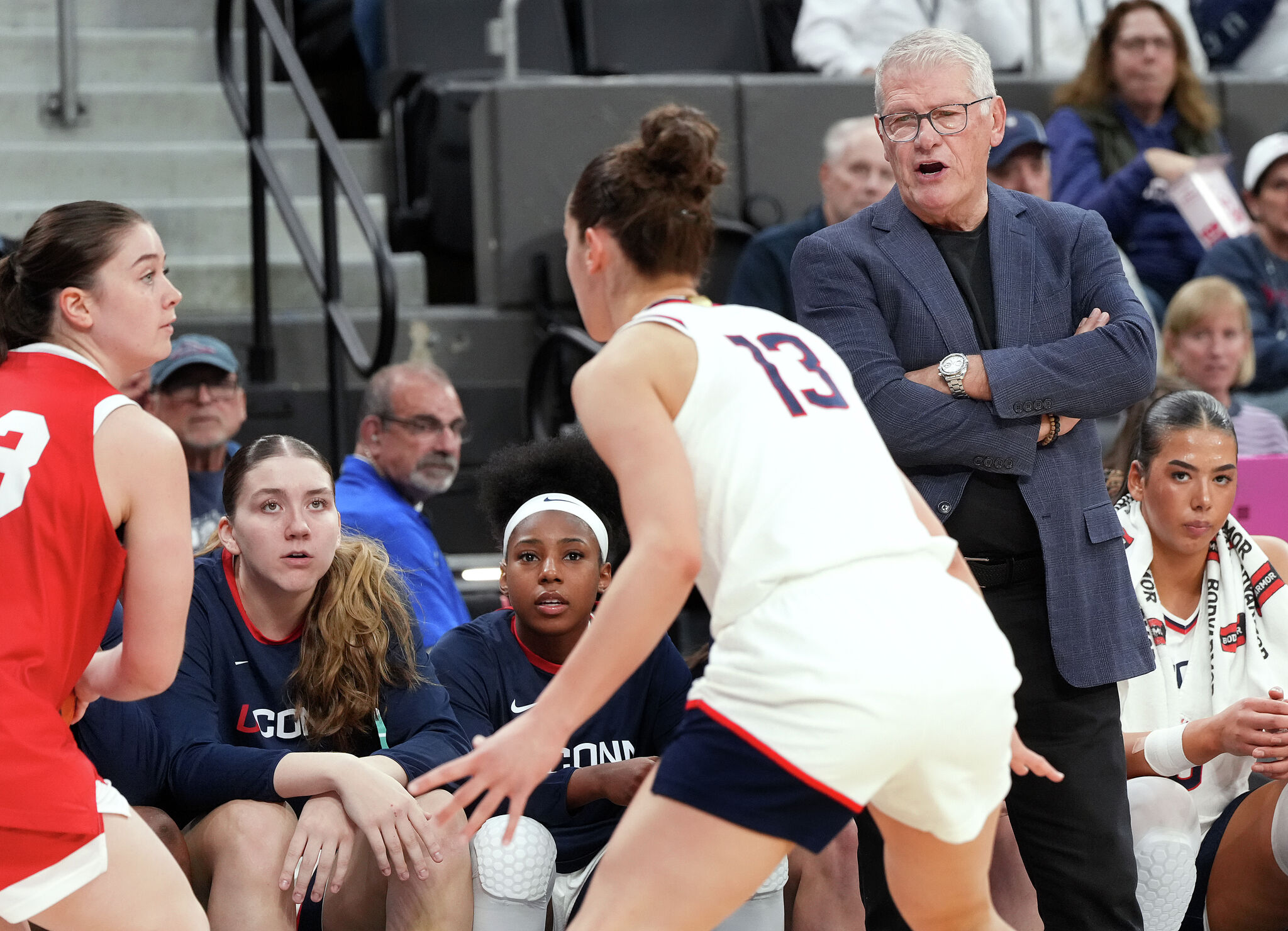
UConn women beat Cornell 100-35 as freshmen Popovic and Dursus lead
Jovana Popovic and Marine Dursus spark UConn's dominant season opener Jovana Popovic matched Sarah Strong for a game-high...

Bella Campos Makes History as Three-Time RMAC Women’s Soccer Player of the Year
Bella Campos makes history with third straight RMAC Player of the Year title Colorado School of Mines forward...
UAMS to Host 31st Annual Diabetes Update for Healthcare Professionals
UAMS prepares for 31st annual diabetes update in Little Rock Healthcare professionals across various specialties are preparing to...