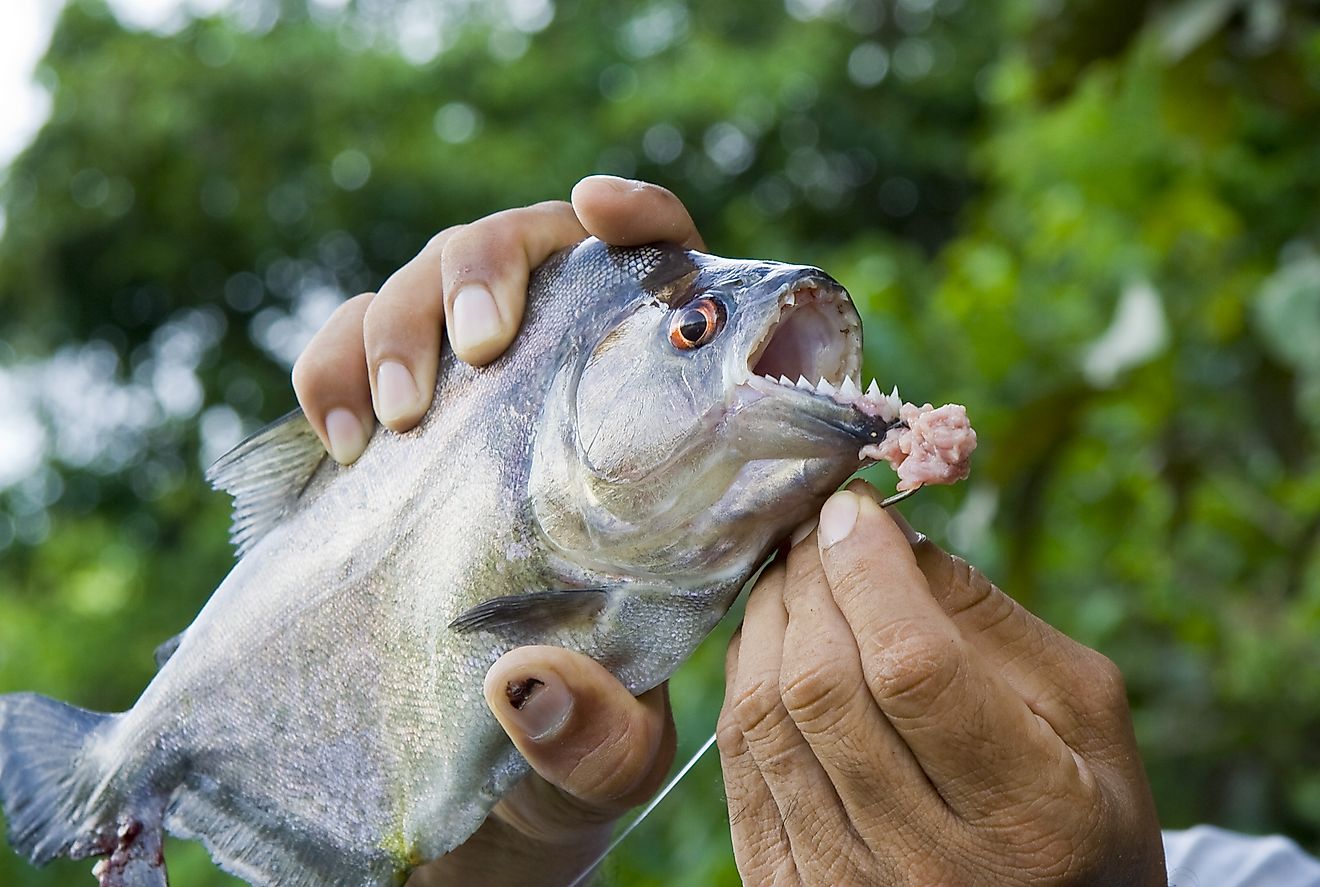
Pulling a tropical predator from an American freshwater lake sounds like an urban legend, but wildlife agencies have documented these razor-toothed fish in local reservoirs for decades.
The most recent encounter happened in August 2026, when an eight-year-old angler reeled in a two-pound red-bellied piranha at a lake outside Philadelphia.
While the image of a South American piranha swimming in domestic waters sparks immediate alarm, federal ecological risk assessments show that these introduced populations have either failed to establish or been eradicated. Instead of building self-sustaining colonies, the vast majority of these catches point to a quieter, illegal habit: aquarium owners dumping unwanted pets.
On Saturday, August 8, 2026, Seamus Coffey was fishing with his father, Michael, at Ridley Park Lake in Delaware County, Pennsylvania. Having already landed two catfish, Seamus felt a heavier tug on his line and initially suspected he had hooked a bass.
His father thought the unfamiliar catch looked like a large bluegill. Pennsylvania Fish and Boat Commission officials later identified the 9.5-inch, two-pound specimen as a piranha, suspecting an illegal pet release. After briefly returning the fish to the water, the family retrieved it and left it for a snapping turtle, according to local reporting.
This Pennsylvania incident mirrors a long-running pattern across the United States. Federal records and state wildlife agencies note that northern states frequently see single piranhas caught on hook and line during summer months, or found dead when water temperatures plummet.
In July 1993, a piranha was captured in Duban Lake within Rice County, Minnesota, its evidence preserved as a museum specimen. The Louisiana Department of Wildlife and Fisheries noted that all piranha species are illegal to possess or sell in Louisiana.
Southern states record similar encounters. On August 27, 2011, five-year-old Lindsay Schutte hooked a hand-sized red-bellied piranha using a piece of hot dog at Tom Bass Regional Park Lake in Harris County, Texas. When her six-year-old brother, Jack, tried to pick it up, the fish bit him and left a deep, bleeding wound. Texas Parks and Wildlife confirmed it as the second verified piranha in state waters, and the first since 1982.

Anglers frequently confuse piranhas with pacu, a related South American fish known for its blunt, human-like crushing teeth. The Michigan Department of Natural Resources documented three pacu reports in July 2016 across Lake St. Clair and near Port Huron, while Texas records show 27 pacu records in the state since the 1980s.
Experts emphasize that a single piranha poses minimal threat to human swimmers, though the fish should never be handled casually. The true concern remains ecological: released pets can prey on native species and disrupt local aquatic balance. State wildlife agencies across the country continue to urge anglers who encounter a suspected piranha not to return it to the water, but to contact local authorities instead.
Worth a look

Ohio State Suspends Sigma Alpha Epsilon After Party Results in Medical Intervention
An Ohio State University fraternity faces an interim suspension following a weekend gathering that required medical intervention for...

NDCA Awards $137,440 in Folk and Traditional Arts Apprenticeship Grants
Grants fund traditions The North Dakota Council on the Arts awarded $137,440 in grants through its Folk and...

Merrimack Beats UAlbany 73-60 as Zone Defense Causes 21 Turnovers
No sooner had the University at Albany men’s basketball team clawed its way back from a 10-point second-half...

Suspect in Brooklyn Jogger Killing Held Without Bail as New Details Emerge
Suspect Brought Knife to Greenway Newly filed court records reveal that 27-year-old Sayed Mohassib told investigators he carried...