
A three-year-old Black boy went to play soccer at a park named for Dr. Martin Luther King Jr., and before the morning ended, an adult had called 911. What changed that Saturday in Winter Park, Florida, is not just a story about one gifted child. It is a story about who gets to protect a Black child’s joy, and what it costs when the people with badges are the ones summoned to a dispute over how much a preschooler gets to play.
Nevada was competing in a youth league match at Martin Luther King Jr. Park on the morning of Saturday, October 24. He is three years old. He lives with his family in Orlando and plays against children as old as five. His mother, Martasia Griffin, says he scored more than 40 goals in five games this season, according to ABC News. The league was run by i9 Sports, and its director, Thomas Hayes, told police on body camera that he pulled Nevada from games because, as he put it,
“he’s so good I take him out.”
The Call That Brought Officers to the Sideline
Griffin pushed back on the sideline. Hayes called 911 and told the dispatcher an unruly parent was livestreaming him, describing her as a Black woman in pink and asking officers to rush, according to ABC News and People. When officers arrived, Hayes told them Nevada was “very advanced compared to the other ones,” that he scores a lot of goals, and that he pushes other children — a claim Nevada’s parents, Griffin and Don Pierre, dispute, per Gray News.
According to Winter Park Police, no arrests were made, no one was trespassed or removed, and the incident was a civil matter rather than a criminal one. Police also say the call was about a disturbance between adults, not about Nevada’s talent, according to Gray News and KTLA. i9 Sports refunded the family’s fee and says it has begun a review, WFTV reported.
Police escorted a mother of 3-year-old Nevada Pierre from a youth soccer game because her son was benched for being "too good." She says Nevada has scored more than 40 goals in five games this season while playing against children two years older than him.😭😭😭 https://t.co/PsqdXVQX6Q
Griffin later said Nevada was traumatized. He still wants to play soccer. He doesn’t want to go back to that field, Yahoo Sports reported.
When a Gift Becomes Something to Manage
Little Black boys learn early that the gifts that get them noticed can also get them managed. Energy becomes a behavior problem. Confidence gets read as attitude. Excellence becomes something other people need protection from.
The first wave of posts about the incident described Hayes as a white man; others said he is Black, and no major outlet has confirmed his race either way. That uncertainty matters less than it seems. Anti-Blackness does not need a white face to do its work. It lives in institutions and reflexes, and it can teach anyone — including Black adults — to see a Black woman advocating for her baby as a threat. Police have been called on Black people for barbecuing in Oakland, birdwatching in Central Park, and waiting at a Starbucks in Philadelphia. Every one of those calls carried the same message: you are out of place here. Nevada is three. The message still reached him.
Too Good Gets Different Treatment Depending on Who Is Good
When a boy dominates, the adults bench him and talk about fairness. When a girl dominates, the questions change. The Associated Press reported that in 2022, a Utah High School Activities Association representative informed state lawmakers of a girl who had won a competition by a large margin; the runners-up’s parents lodged a complaint asking if she was transgender, and her school reviewed her records dating back to kindergarten without notifying her family. Two-time Olympic champion Caster Semenya was prohibited from competing in her event unless she medically reduced her natural testosterone; in July 2025, the European Court of Human Rights’ Grand Chamber determined that Switzerland failed to give her a fair hearing. Before the Tokyo Olympics, Namibian sprinters Christine Mboma and Beatrice Masilingi were ruled ineligible for the 400 meters over natural testosterone levels their families had not known about. When Serena and Venus Williams dominated tennis, the head of the Russian Tennis Federation called them the “Williams brothers.” None of these women are trans. Every one was treated as if her excellence were proof she wasn’t really a woman — a suspicion this country has long landed hardest on Black girls and women.
In June, the Supreme Court upheld state laws barring transgender girls from girls’ sports in West Virginia v. B. P. J. No one is drafting laws to shield five-year-old boys from a three-year-old they cannot outplay on the ball.
What Play Costs a Family Now
Nevada trains three hours a day with his father. Former U.S. Men’s National Team striker Eddie Johnson told Yahoo Sports that the family initially approached him when Nevada was two, at which point he said Nevada was too young for his academy; however, Nevada is now scheduled to begin at Johnson’s EJE7 Soccer Academy in January. Roc Nation Sports plans to bring Nevada to Spain in December, The Breakfast Club’s Loren LoRosa reported, though Roc Nation has cheered him publicly without formally announcing the trip, Kerich reported.
The path starts early and costs a lot. According to the Aspen Institute’s Project Play, the average family spent $1,016 on a single child’s main sport in 2024, a 46% increase from 2019; including additional sports, the annual total approaches $1,500. In 2016, the American Academy of Pediatrics recommended young athletes wait until at least 15 or 16 to specialize in one sport, noting that 70% of children drop out of organized sports by 13 and well under 1% of high school athletes ever play professionally.
So two things are true at once. Nevada’s parents see a gift and are pouring into it — that is love, and it is exactly what the culture tells families to do. And a three-year-old’s body and spirit are still forming, with three hours of training a day, games against five-year-olds, and then the police. A Los Angeles jury determined in March that Meta and YouTube were negligent in creating platforms that caused harm to a young user. Illinois, California, Minnesota, and Utah have passed laws protecting the earnings of children in money-making online content, and Minnesota bars children under 14 from content creation work entirely; Tennessee passed a similar bill this spring. Nevada’s parents post his highlights to a large following, and every share is a decision about a three-year-old’s public life that he doesn’t get a real say in.
The mother of 3-year-old Nevada Pierre, who was escorted by police from a youth soccer game, spoke with ABC News after she says her son was benched for being “too good.” She says Nevada has scored more than 40 goals in five games this season while playing against children two… pic.twitter.com/yoTsB9Pea3
Who Answers When the Video Goes Viral — and Who Never Gets the Video
It took a viral video, a 911 call, and celebrities to turn this moment into an open door. Most brilliant Black children never get the video. They never get the call from Roc Nation. They get benched, labeled, and told they are too much — and nobody with a platform ever hears about it. That is the Black tax: twice as good to get half as far. When we celebrate the exception, we let ourselves off the hook for the rule. One child gets rescued, and the system that made the rescue necessary stays the same.
Hayes told officers that everyone deserves their time on the field, and on that point he is right. A rule can be right in general and wrong in particular. Applied to one Black child again and again, after other parents complained, ending in a 911 call, a fairness rule produced something nobody should want for any child. Who protects Nevada’s childhood while the whole world watches him play — and who protects the children who never become a story at all?
More on Nevada Pierre
Keep reading

Jon Echols wins Oklahoma attorney general race over Nick Coffey
Jon Echols Takes Oklahoma Attorney General's Race, Vowing a "Safer, Freer, Stronger Oklahoma" Republican Jon Echols is set...

In a column, the writer argues that the Christmas season begins earlier and earlier every year
Christmas Before Thanksgiving in Bismarck In a column, the writer argues that the Christmas season begins earlier and...

Five DSA candidates win seats in U.S. House of Representatives
Five candidates endorsed by the Democratic Socialists of America won seats in the U.S. House of Representatives on...
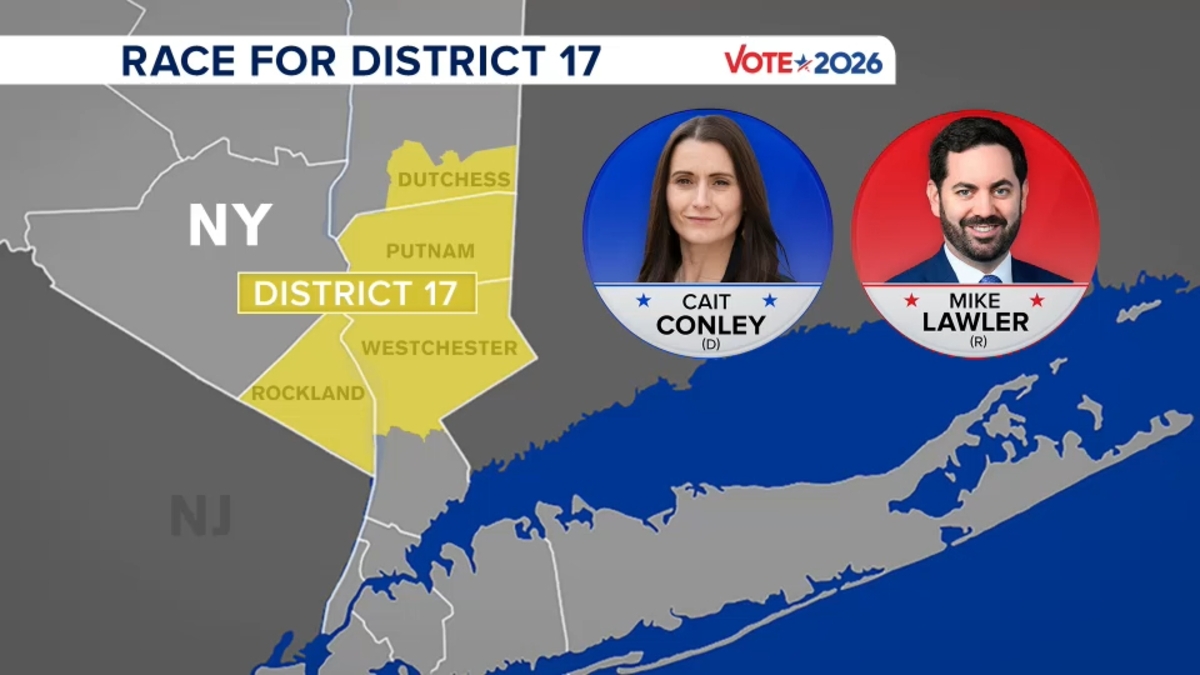
Cait Conley Defeats Mike Lawler in New York 17th District Race
Mike Lawler Concedes to Cait Conley, Flipping New York's 17th District to Democrats Republican incumbent Rep. Mike Lawler...