
Ten Portland elementary schools face closure starting in fall 2027, according to a revised recommendation from Portland Public Schools Superintendent Kimberlee Armstrong.
The proposal, released Friday, Nov. 13, marks a significant shift from earlier plans that suggested closing either 11 or 14 campuses. While the reduction in the number of closures offers some relief, it leaves many neighborhood communities in a state of mourning and uncertainty. The district aims to use this “rightsizing” effort to stabilize staffing and bolster academic programs by consolidating students into larger, more sustainable environments.
“Our first reaction was, of course, relief, but also still a lot of heartbreak for all the other schools that are still on the list,” said Gillian Charles, a mother of a fourth grader at Stephenson Elementary and the school’s PTA co-president, according to KATU.
The Divide Between Saved and Targeted Schools
The superintendent’s 63-page recommendation provides specific justifications for why four campuses were spared from the initial list. These include Stephenson Elementary, Maplewood Elementary, James John Elementary, and Sellwood Middle School. The district cited varying factors ranging from stabilized enrollment to specific community programming.
At Stephenson Elementary, enrollment has leveled off at approximately 285 students. Although this remains below the district’s target of 360 students for elementary schools, the district indicated it would monitor the site closely, noting that enrollment has stabilized after years of decline.
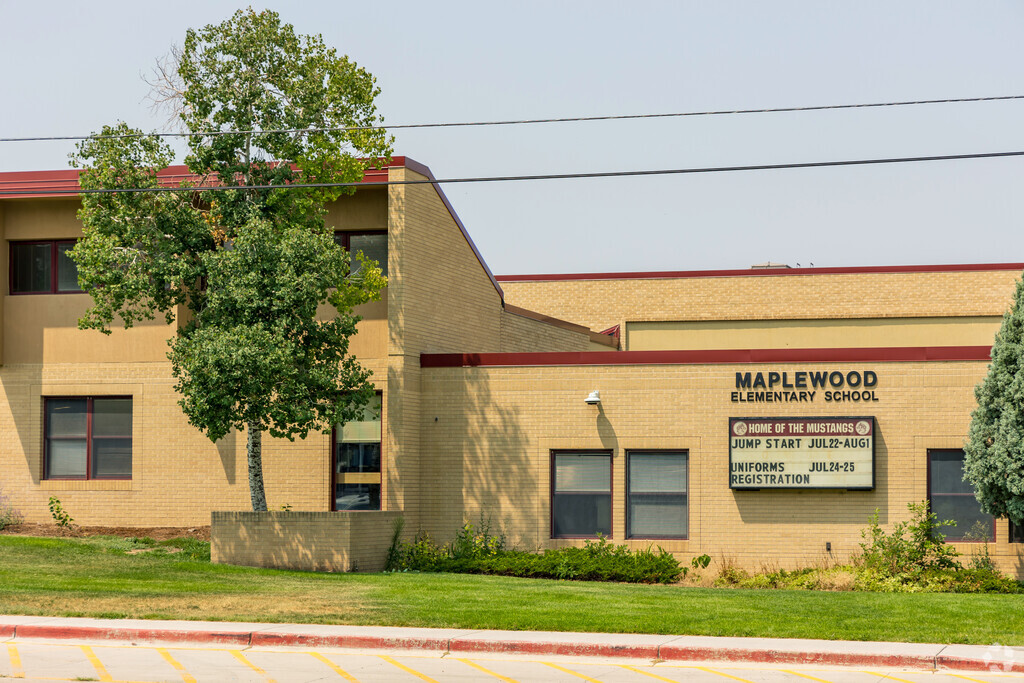
Similar monitoring will apply to Markham and Capitol Hill schools. Maplewood Elementary was also spared, as enrollment has climbed above 300 students in 2026, alongside concerns regarding future capacity at nearby Hayhurst Elementary.
James John Elementary remains on the list of open schools because enrollment is projected to stay near the 360-student threshold through the 2031-32 school year. The district also revised its model for this school after reconsidering how many families would follow its Spanish dual-language immersion program to other locations.
Meanwhile, Sellwood Middle School is expected to maintain enrollment above 500 students for at least two years, though the district plans to conduct a broader review in the 2029-30 school year.

For families at Sabin Elementary, however, the news is far more grim. Sabin is slated for closure in fall 2027, with most students expected to transition to Dr. Martin Luther King Jr. Elementary.
“We weren’t surprised,” said Miranda Rake, a mother of two Sabin Elementary students and a member of the school’s PTA board. “We thought that would happen when we knew rightsizing was coming, but it’s still devastating.”
Rake said that the uncertainty has already impacted student well-being, reporting that one of her children has experienced panic attacks since the plans became official. She also raised concerns regarding the loss of a specialized social-emotional support program at Sabin, arguing that the district may have undervalued the importance of the specific classroom space and staffing required to support those students.
Enrollment Projections and Geographic Disparities
The debate over these closures is complicated by the inherent difficulty of predicting student populations. A review of district data and a 2022 forecast from Portland State University highlighted significant discrepancies between projected and actual numbers. While some schools, such as Creston, Peninsula, and Woodmere, saw projections within 5% of reality, others saw massive gaps.

For example, Portland State projected 373 students at Buckman Elementary, but actual enrollment was only 239—a 35% difference. Conversely, Marysville Elementary saw 282 students despite a projection of 214. These fluctuations fuel parent arguments that the district should slow the closure process until more accurate data can be established.
There are also growing questions regarding equity in how these decisions are distributed across the city. The current recommendation targets schools in North, Northeast, and Southeast Portland, while the schools being saved include two located in Southwest Portland.
“It’s interesting ’cause we hear a lot about equity from the schools, from the district, and I’m seeing a lot of closures on the east side and nothing on the west side,” Rake told KATU.
The financial stakes are equally high. The district is currently managing a projected $65 million budget deficit for the 2027-28 school year. The proposed consolidation plan is expected to generate $10.2 million in recurring savings, with roughly $7.1 million available for reinvestment after accounting for the costs of transitioning students and programs.
The following table outlines the schools currently recommended for closure under the revised plan:
| Closure Year | Elementary Schools Targeted |
|---|---|
| Fall 2027 | Beach Elementary, Buckman Elementary, Creston Elementary, Peninsula Elementary, Sabin Elementary |
| Fall 2028 | Irvington Elementary, Lewis Elementary, Marysville Elementary, Rose City Park Elementary, Woodmere Elementary |
The Path to a Final Decision
The transition for Irvington Elementary will be uniquely complex. The district intends to merge Beverly Cleary Elementary students into the Irvington building for the 2027-28 school year before moving the combined community into the Beverly Cleary building in fall 2028.
The PPS Board of Education is scheduled to review the superintendent’s recommendation on Tuesday, Nov. 17. Before a final vote occurs, the district has scheduled several more community listening sessions to gather feedback from residents.
- Nov. 19 at Franklin High School
- Nov. 21 at McDaniel High School
- Dec. 3 at Grant High School
The school board is expected to take a final vote on Dec. 15.
Worth a look

West Virginia vs. Auburn: Players Era 8 Tournament Preview and Info
The West Virginia Mountaineers face the Auburn Tigers in the Players Era 8 Tournament at the Michelob ULTRA...

SLC Council to Consider Temporary Data Center Moratorium
Salt Lake City Council members are moving to block new data centers from being built within city limits,...
Chase Software Bug Triggers Nationwide Bank Outages
An outage affecting Chase, Wells Fargo, Bank of America, and other bank customers disrupted transactions on Monday, making...

Nebraska Huskers Host South Dakota at Pinnacle Bank Arena
The No. 24 Nebraska Huskers return to Pinnacle Bank Arena on Wednesday night to host the South Dakota...