
About 61.1% of registered Montanans cast ballots on November 3, a figure nearly identical to the 61.4% turnout four years earlier, according to preliminary numbers from the Montana Secretary of State’s Office.
The stability masks a turnout gap of more than 30 percentage points between counties. Golden Valley County saw the steepest decline in the state, dropping 14 points, while Treasure and Liberty counties fell 12 and 10 points respectively. At the other end, Glacier County surged 13 points to 51.1%, up from 38.1% in 2022, the largest gain of any county.
“We can’t stand for status quo of what we’ve been dealing with the last few years,” Blackfeet Tribal Business Council Chairman Terry Tatsey said in an October 26 video shared to Facebook. “If you really want to see change at the state and national level, this is your time to make that difference, make your vote count,” he said.
The raw number of voters grew by roughly 26,000 compared with 2022, pushing total registration past 800,000 for the first time. Yet the turnout rate still trailed the 2018 midterm, when Jon Tester topped the Senate ticket.
Native-majority counties buck the downward trend
Three of Montana’s four majority-Native counties — Glacier, Blaine and Big Horn — posted turnout increases. Glacier’s 13-point jump led the state. Blaine County rose 8.3 points. Roosevelt County was the lone majority-Native county to decline.

Cinda Burd-Ironmaker, a citizen of the Blackfeet Nation who recently returned to the reservation after working for the Rocky Mountain Tribal Leaders Council in Billings, attributed Glacier’s surge to volunteer organizing and late candidate visits.
Eight days before the election she noted on Facebook that Glacier County had received back only 71 of 2,975 mailed ballots, writing, “We can do better!” She then encouraged Tatsey to record the video urging turnout and organized rides to polling places.
“Without the community, it probably wouldn’t have got done,” Burd-Ironmaker said. “We just got them rallied, and just letting them know how important their voice is and that we could make some decisions on who is going to be at the table.”
“People were excited having two Running Wolfs on the ballot,” Keaton Sunchild, director of government relations for Western Native Voice, said. “Tyson is very well-liked in his community, and people were excited to vote for them as a couple. Thedis is also well-liked and very involved in the community.”
Democratic state Rep. Tyson Running Wolf, who chaired the Montana American Indian Caucus during the 2025 legislative session, won a state Senate seat. His wife, Lona Running Wolf, captured his former House seat. Incumbent Rep. Thedis Crowe also won re-election.
Tester's absence and messy Senate race lowered Native turnout
All four majority-Native counties still lagged their 2018 turnout, when Tester — then chair of the Indian Affairs Committee — was on the ballot. “Tester did a lot of work that was tangible,” Sunchild said.
“It was a mutually beneficial relationship, so I do think that people were excited to vote for him when he was on the ballot. 2018 was the midterm after Trump was elected the first time, and I think that played a role in turnout, having [Tester] at the top of the ticket. This year, in the Senate race, the top of the ticket was messy.”
Lance FourStar, who chairs the Fort Peck Democratic Tribal Committee and spoke in a personal capacity, said the fragmented Senate contest may have depressed turnout in Roosevelt County. While the Western Congressional District benefited from energy around Democratic candidate Sam Forstag — who flipped the seat — Senate race resources were thinner on the ground in eastern Montana.
“Montana’s always had pretty high voter turnout, and it tends to be one of the highest states in midterm elections,” Carroll College political science chair Jeremy Johnson said before the election. He noted the four-way Senate race lacked the massive spending of previous cycles.
A statewide leftward shift beneath the surface
Despite the flat overall turnout, nearly every county swung toward Democrats compared with 2024. The average shift across both U.S. House races was 5.8 points. Democratic strongholds Missoula, Gallatin and Silver Bow counties moved more than 12 points left, as did Republican-leaning Madison County.
In the state legislature, all but two House districts shifted toward Democrats by an average of 12 points, flipping two seats in each chamber and coming within 15 votes of a third House seat. Even the Bitterroot Valley voted 10 to 24 points more Democratic than two years earlier.
Tatsey developed Blackfeet Community College’s associate science degree program in 1994, integrating Blackfeet traditional knowledge with western science and recruiting an advisory team of Elders to build the curriculum. He later served on the Blackfeet Tribal Business Council, where he advanced land planning rooted in Amskapi Piikani values.
Patrick Yawakie, who canvassed in the Western Congressional District, said organizers are already looking toward 2028. “We need to start earlier, and we need to uplift the people on the ground doing the work,” he said.
Worth a look

HUD Declares Newark Housing Authority in Substantial Default, Installs Federal Receivers
The federal government took possession of New Jersey's largest public housing authority Thursday, firing its board of commissioners...

96 Facts About the Second Round of the VHSL Football Playoffs
Ninety-six data points land on the desk this week as the Virginia High School League football playoffs hit...
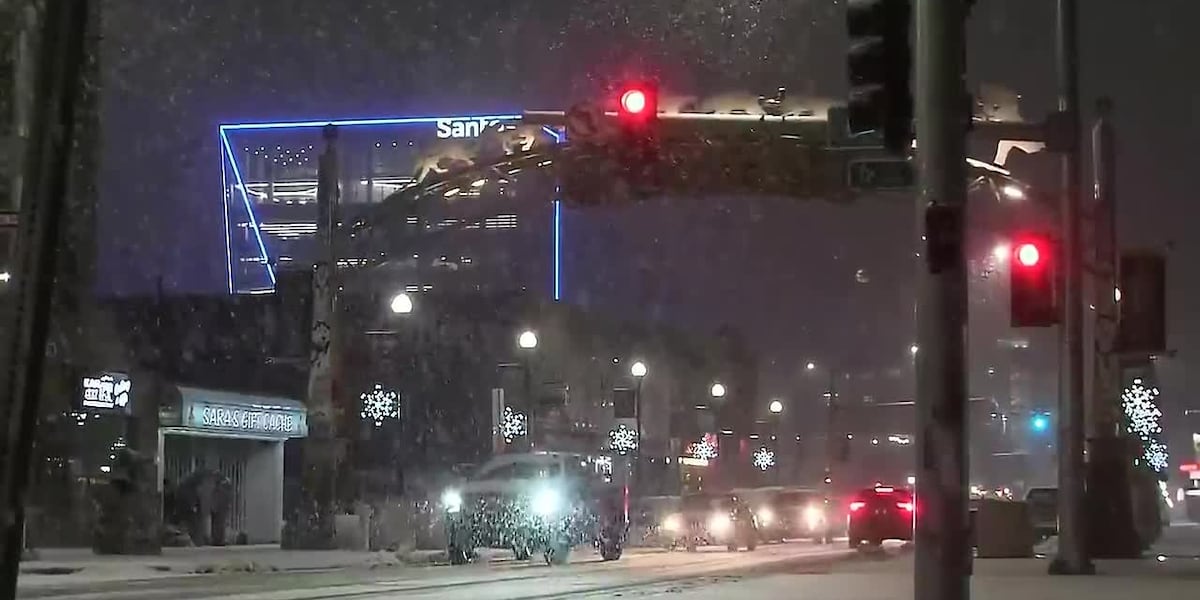
Heavy Snow Knocks Out Power to 8,000 in Anchorage After Tree Downs Power Line
Heavy snow knocked out power to just over 8,000 Chugach Electric customers in Anchorage Thursday evening after a...

Packers Waive Pierre Strong, Signaling Micah Parsons Activation for Rams Game
The Green Bay Packers waived running back Pierre Strong Jr. on Thursday, a procedural move that all but...