Nearly one in nine women who delivered by cesarean section at a tertiary hospital in Abbottabad, Pakistan required a blood transfusion, a retrospective study found. Preoperative anemia, placenta previa and emergency cesarean delivery were independently linked to transfusion risk.
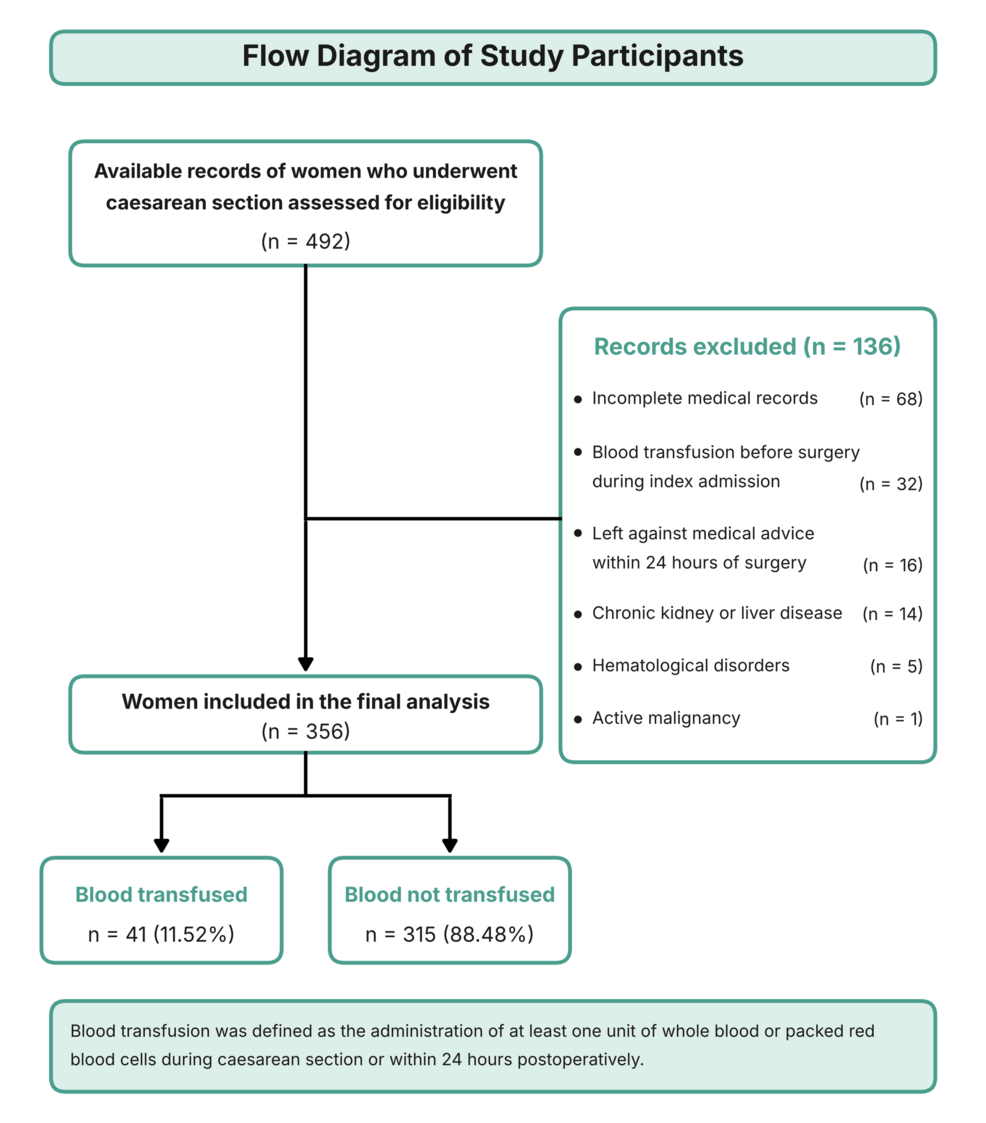
The study, published in Cureus, reviewed records of 356 women who underwent cesarean section at a tertiary care hospital in Abbottabad, Pakistan between August 2024 and August 2025. Of those, 41 women — 11.52% — received at least one unit of whole blood or packed red blood cells during surgery or within 24 hours afterward.
Three preoperative factors independently associated
On multivariable analysis, three factors measured before or at the time of the decision to operate remained independently associated with transfusion:
- Preoperative anemia (hemoglobin <11 g/dL): adjusted odds ratio 3.60 (95% CI 1.64–7.87; p=0.001)
- Placenta previa: adjusted odds ratio 9.12 (95% CI 2.46–33.74; p=0.001)
- Emergency cesarean section: adjusted odds ratio 2.65 (95% CI 1.19–5.87; p=0.017)
Pregnancy-induced hypertension also showed an association (AOR 3.70; 95% CI 1.28–10.73; p=0.016), but the authors described the estimate as imprecise and exploratory. Age, body mass index and number of previous cesarean sections showed no significant association after adjustment.
Intraoperative factors significant only on initial analysis
Dense intra-abdominal adhesions, uterine atony, operative duration longer than 60 minutes and estimated blood loss exceeding 1,000 mL were significantly associated with transfusion on initial comparison, but did not remain independent predictors in the multivariable model limited to preoperative variables.
Cesarean rates surge while blood supplies stay limited
Cesarean section rates in Pakistan have risen from 3.20% in 1990–1991 to 19.60% in 2017–2018, the study notes. Routine preoperative cross-matching for all scheduled cesarean deliveries — the institutional practice during the study period — can strain limited blood supplies. The authors cite a cross-match-to-transfusion ratio of 148:1 in a prior study of elective cesarean deliveries, far above the recommended threshold of 2.5:1.
Study excluded 136 records and calls for larger trials
The retrospective review excluded 136 of 492 eligible records due to incomplete documentation, preoperative transfusion, early discharge against medical advice, or comorbidities including chronic kidney or liver disease, hematologic disorders and active malignancy. The Institutional Review Board approved the study on October 27, 2025 (IRB.ATH.2873/25).
Results were consistent in sensitivity analyses using Firth’s penalized regression. The authors call for larger prospective multicenter studies to confirm the findings and support more targeted blood preparation.
Worth a look

Supreme Court to Hear Contempt Pleas Friday Over Thiruparankundram Deepam Row
Supreme Court bench of Justices Aravind Kumar and Vipul M Pancholi scheduled the hearing for November 27 after...

Governor-General Mostyn Backs Plans for Australian Campuses in Jakarta
Australian Governor-General Sam Mostyn has expressed support for plans to encourage Australian universities to establish campuses in Jakarta,...
Long-Term ART Tied to Similar Body Fat, Lower Cardiometabolic Risk in South African Adults With HIV
Middle‑aged South Africans on long‑term antiretroviral therapy showed no excess body fat or visceral fat compared with matched...

Rockspring Applies for 258 Homes Near Mungret After Prior Refusal
Rockspring Developments has applied to Limerick City and County Council for permission to build 258 homes on the...