
Quest Diagnostics, the Secaucus-based clinical lab operator, has agreed to pay over $13 million to resolve federal allegations that it provided healthcare providers and executives illegal kickbacks in the form of luxury game-day perks.
The settlement, announced Friday by the U.S. Attorney’s Office for the District of New Jersey, brings a close to an investigation into how the company courted business from medical professionals who held the power to steer lab testing referrals their way.
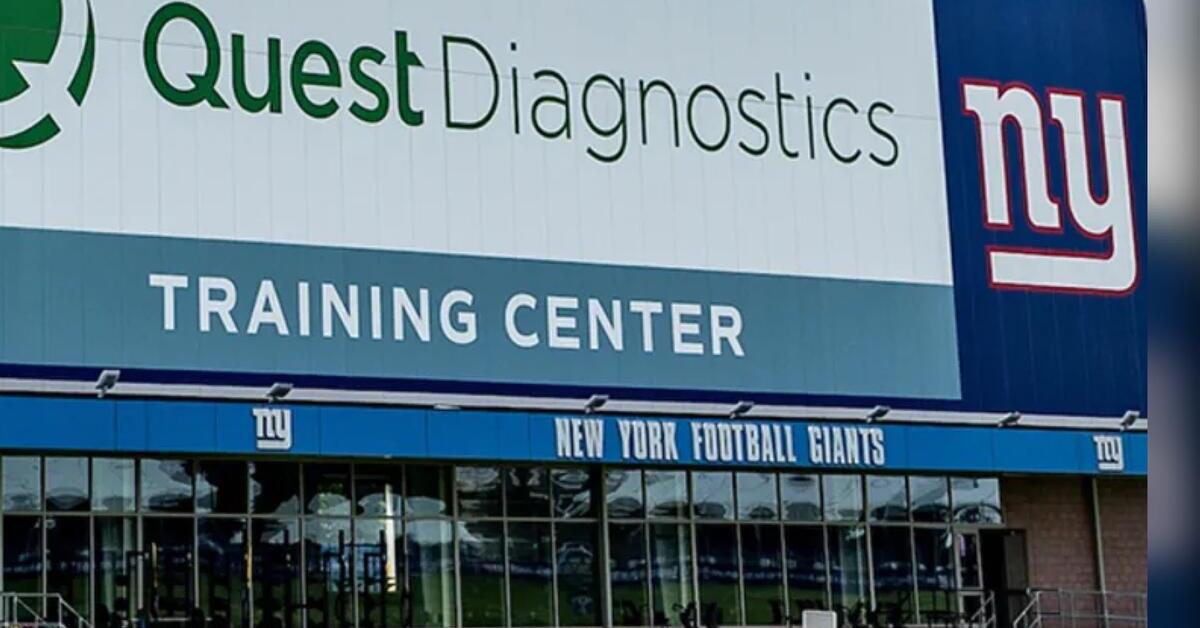
The core of the dispute centers on the period between July 25, 2013 and Aug. 3, 2022. During this time, federal prosecutors alleged that Quest used its corporate sponsorship with the New York Giants to secure exclusive access to MetLife Stadium suites, VIP training camp experiences, and "chalk-talk" sessions. Investigators claim the company offered these benefits to healthcare executives and providers to incentivize the use of Quest’s diagnostic services.
The investigation paints a picture of a calculated feedback loop. According to the U.S. Attorney’s Office, Quest monitored the revenue it received from clients for up to one year after entertaining them.
Once these providers were wined and dined, Quest allegedly billed Medicare as well as the Medicaid programs of New York and New Jersey for the lab tests that followed, effectively using taxpayer-funded healthcare dollars to subsidize their marketing efforts.
Kickbacks to referring providers, especially by lab companies, corrupt medical judgment, lead to unnecessary lab testing, cause providers to steer patients to labs that offer inducements, and squander taxpayer money.
The settlement will cost a large sum of money. Quest has agreed to pay $13,014,576 plus interest to resolve the allegations, which were brought to light through a whistleblower lawsuit filed under the federal False Claims Act. Those whistleblowers are slated to receive roughly $2.47 million of the recovery.
Despite the substantial payout, Quest Diagnostics denies any allegations of wrongdoing. In a statement, spokesperson Amanda Rivera noted that the company “wholeheartedly” denies the allegations and emphasized that the settlement contains no determination of liability. The company maintains that it agreed to the payment more than a year ago to put the matter behind them.
The resolution of this case does not end the oversight for the Secaucus-based firm. Under the terms of the settlement, Quest is obligated to sign a five-year Corporate Integrity Agreement with the Office of Inspector General of the Department of Health and Human Services.
This requires the company to retain an independent review organization to conduct audits of the company. According to the company, their internal compliance programs already mirror these requirements, and they intend to continue their adherence to federal regulations governing the lab business.
While the legal dust settles on the financial penalties, the New York Giants organization has not immediately responded to requests for comment.
This matter serves as a stark reminder to the broader medical sector regarding the federal government’s persistent focus on the Anti-Kickback Statute—a fundamental component of healthcare fraud law that bans providing, asking for, or accepting compensation to influence the selection of items or services reimbursed by Medicaid, Medicare, and other government-sponsored health programs.
Keep reading

Nvidia Board Probes Jensen Huang After Alleged Spy Relationship
Nvidia CEO Jensen Huang is the subject of an independent investigation by the company's board following reports that...

APP Group and Consortium Launch PROTECT30 for Landscape-Scale Conservation in Sumatra
APP Group and a consortium of conservation organizations have reached an early milestone in PROTECT30, an initiative dedicated...

Seven Injured as Car Mounts Footpath in South Dublin
Six teenagers were injured Sunday afternoon after a car mounted a footpath on Oliver Plunkett Road in Dún...

Mpox Outbreak Emerges in Anchorage, Alaska, as Cases Rise Without Recent Travel
Anchorage Health Officials Track New Mpox Cluster Four new cases of mpox have been identified in Anchorage, prompting...