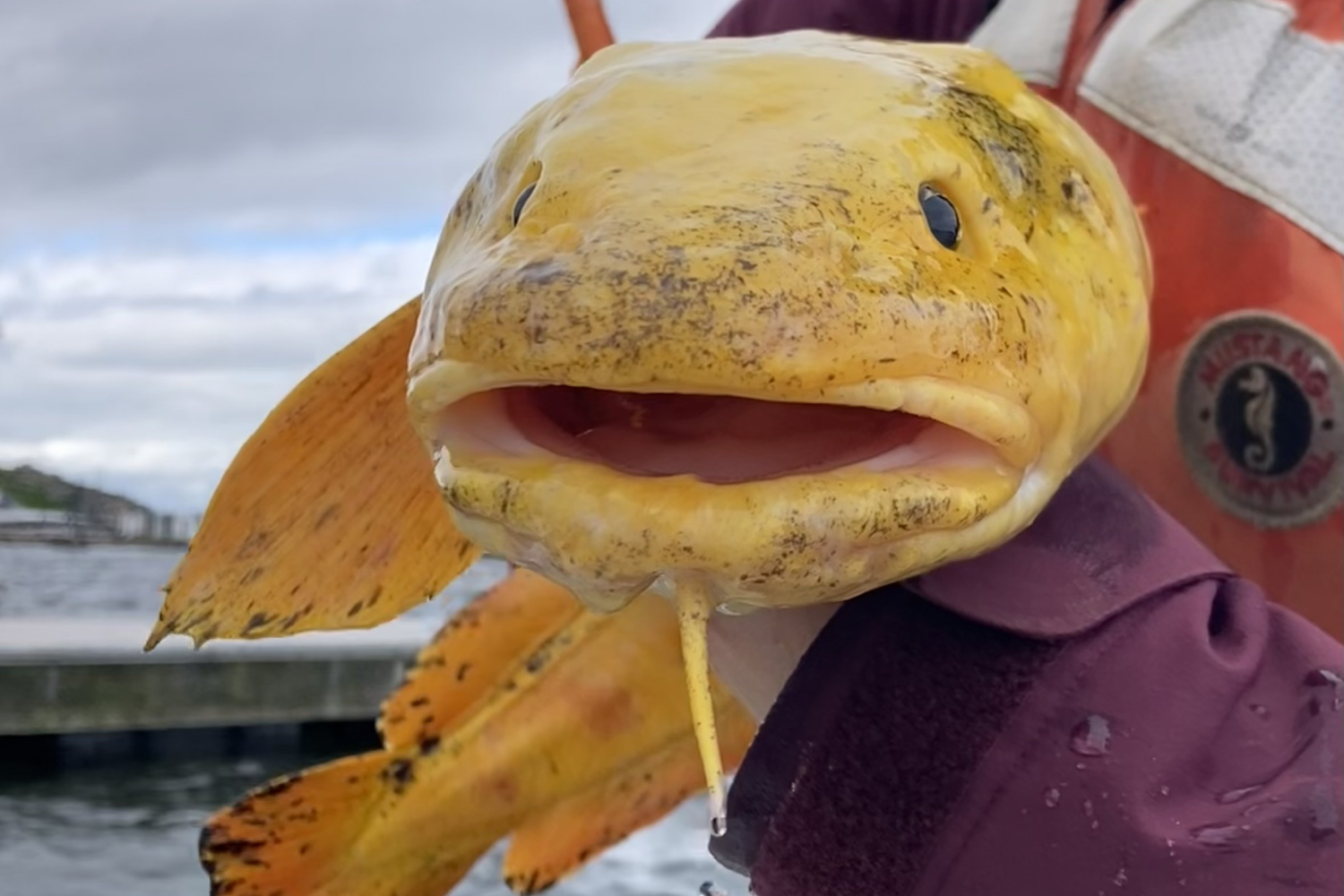
“make even the brightest fall foliage look pale in comparison,” the U.S. Fish and Wildlife Service said of a bright yellow burbot pulled from Oswego Harbor during a routine invasive species survey last month.
The agency announced the catch on Nov. 10, describing the fish as a “one-in-a-million” find because its saturated yellow-orange color comes from xanthochromism — a genetic mutation that suppresses dark melanin and lets yellow pigment dominate — which the service said is “considerably less common” in wild fish than albinism or melanism. FWS noted the species normally shows a mottled palette of olive green, earthy brown and golden yellow, Smithsonian Magazine reported.
Biologists noticed the burbot was emaciated and in poor health, so they sent it to the Cornell University College of Veterinary Medicine for a necropsy.
A Nov. 17 social media update from the USFWS Lower Great Lakes Fish & Wildlife Conservation Office said the examination found the fish had stopped eating, had multiple skin lesions and an “overall poor body condition.” Histopathology also revealed carcinoma — a cancer originating in epithelial cells — and a mild parasite infection in the kidney, Smithsonian Magazine reported.
Burbot are native to the Great Lakes but typically live in cooler, deeper waters than those in Oswego Harbor on Lake Ontario, where populations are extremely low for unknown reasons. The agency said the findings could help scientists understand the cause of this type of cancer in the species and the reasons behind its population decline.
PetaPixel reported that USGS biologists on the survey team said the discovery “could turn out to be lucky for the species too” by providing insight into health issues across the basin that can inform management actions.
The U.S. Fish and Wildlife Service caught the bright yellow burbot during a routine Aquatic Invasive Species Survey in Oswego Harbor on Lake Ontario near Oswego, New York, last month.
The Lower Great Lakes Fish and Wildlife Conservation Office crew noted the discovery represents the first documented detection of a burbot during a fisheries survey in the harbor, where the species typically inhabits deeper, cooler waters than those found within the harbor.
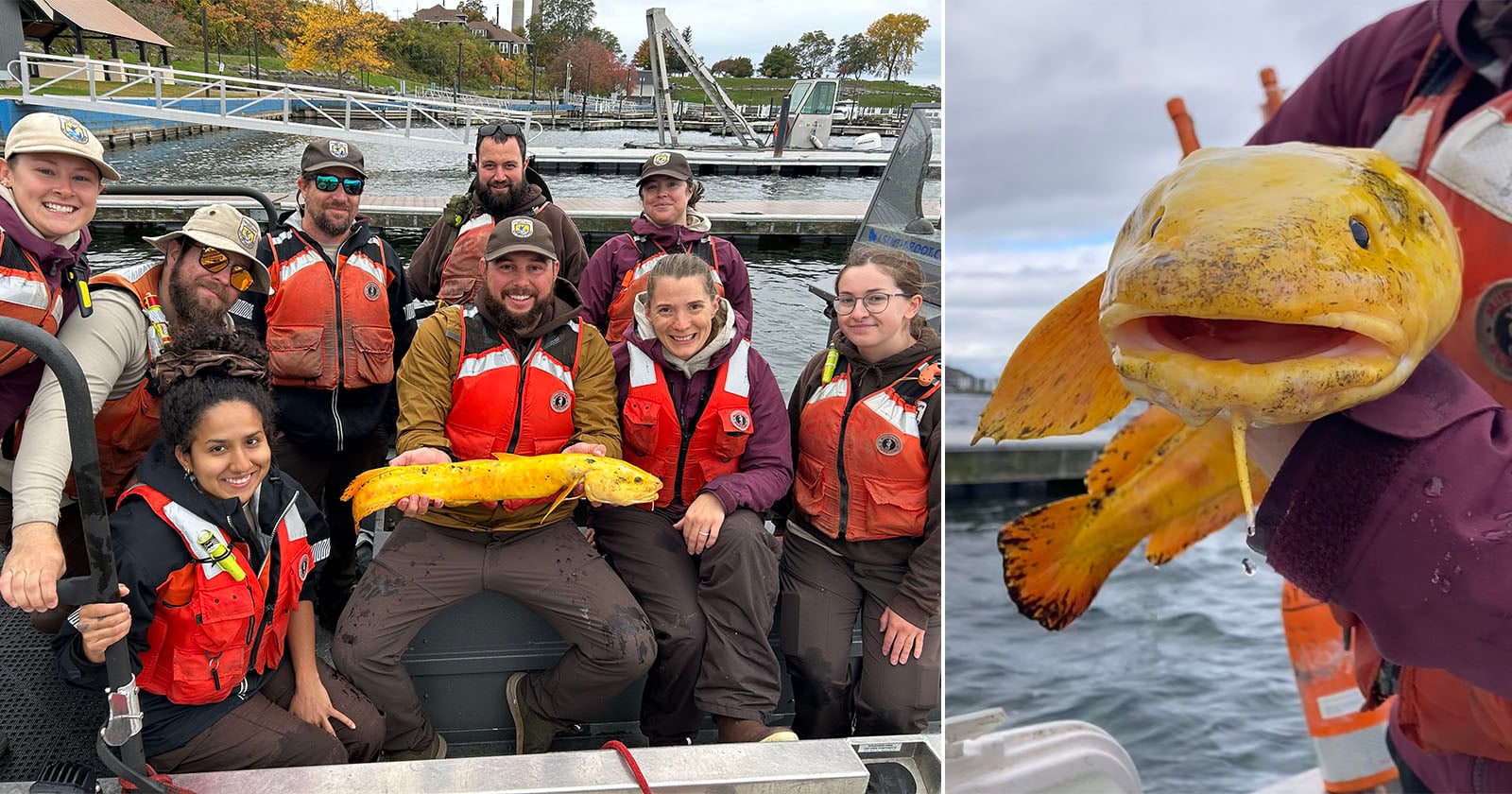
Xanthochromism has been observed in dozens of fish species as well as birds and amphibians, and recorded in a handful of mammals including anteaters, tayras, opossums, pikas, martens, weasels and coatis, Smithsonian Magazine reported. In 2024, sport fishers caught a bright orange nurse shark with xanthochromism off the east coast of Costa Rica — the first known case in that species.
Worth a look

Pierre Jourdan has left Les Fines Lames, ending a nearly twelve-year run
Pierre Jourdan has left Les Fines Lames, ending a nearly twelve-year run as founder of the Marseille-based cigar...

More Indiana Women Hunt, But Girls Still Struggle for Recognition
More Indiana women are buying hunting licenses, yet girls like Gemma Grimm still face a quieter reception when...

Second Neighbor Appeal Halts Next Phase of Montpelier Affordable Housing
Construction has begun on four affordable homes on high ground in Montpelier, but a second neighbor appeal has...

Oregon Guard Physician Assistant Breaks World Record With 425 L-sit Chin-ups
“Grow your goals,” Maj. Tommy Vu said. “You start off with small goals and you work your way...