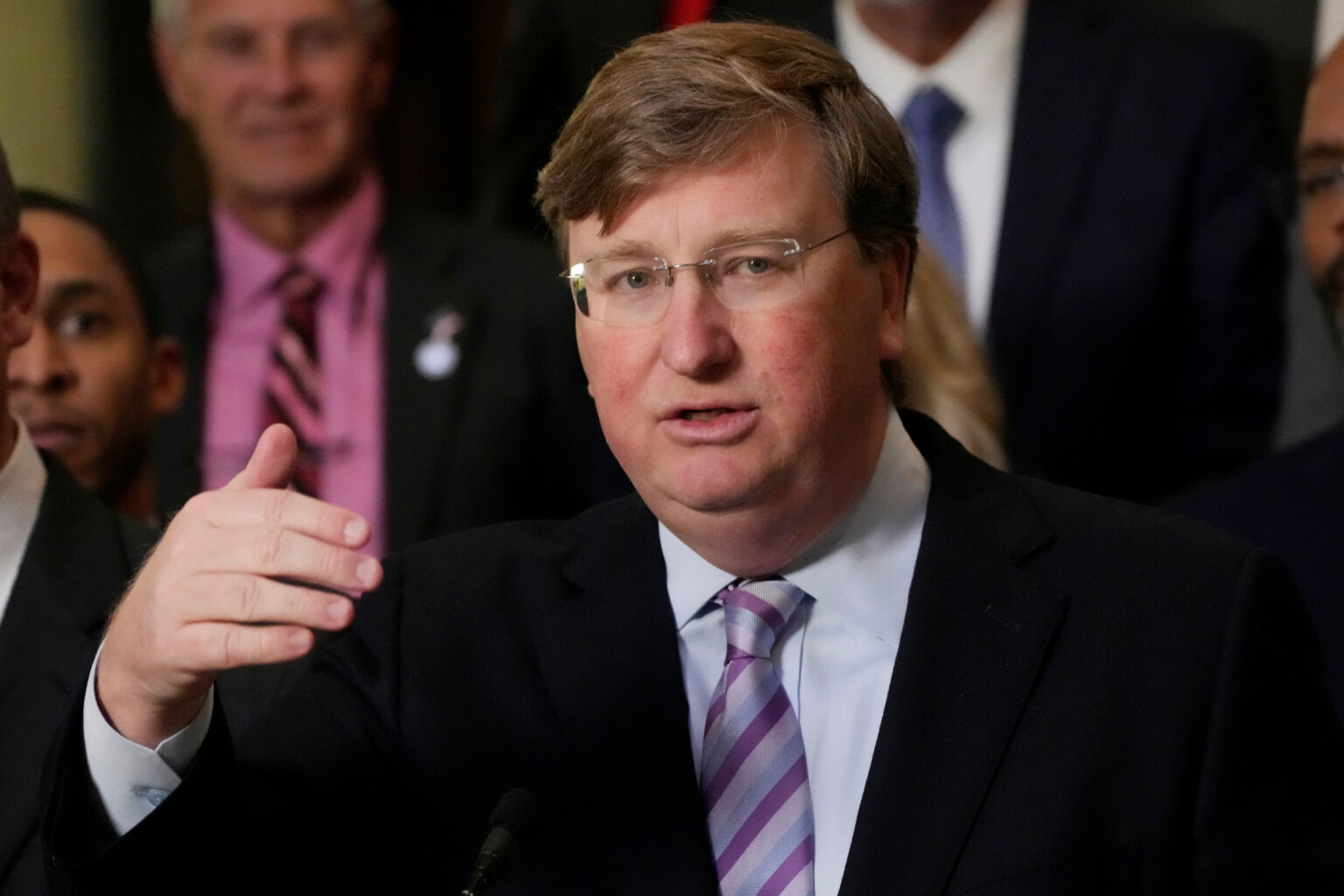
Mississippi Gov. Tate Reeves slipped a line item into his budget proposal Tuesday asking lawmakers to kill the state’s five-day grace period for mail ballots, the same provision that allowed 67 late-arriving ballots to be counted in Hinds County this month after Democrat Scott Colom beat Republican Sen. Cindy Hyde-Smith.
The request landed in the governor’s proposed budget recommendations, not an elections bill, and came with a single sentence of justification: “COVID-19 is now a distant memory, and Mississippi election laws should be amended to reflect the history and tradition of American democracy.” Reeves offered no explanation for why the change belonged in a spending plan.
Democracy Docket reported the grace period survived a Supreme Court challenge in March when the justices rejected the Republican National Committee’s argument that the Constitution requires all voting to end on Election Day. That case, Watson v. Republican National Committee, was brought against Mississippi’s law and decided on the merits — the Court found grace periods constitutional.
Today I’m proud to release my Executive Budget Recommendation for Fiscal Year 2028. We’ve attracted a record-breaking $85 billion in new capital investment, we’ve created thousands of high-paying jobs, and we’ve made Mississippi the second fastest-growing economy in America. At… pic.twitter.com/t56jV1MnlN
“The Supreme Court has already spoken on this exact issue,” said Marc Elias, founder of Democracy Docket and chair of the Elias Law Group, which represented intervenors in Watson. “The governor is asking the legislature to ignore that ruling and disenfranchise voters whose ballots arrive late through no fault of their own.”
Hinds County election officials processed those 67 ballots on the same day the race was called for Colom, the first Black senator Mississippi has sent to Congress since Reconstruction. Under Reeves’ proposal, ballots received after 5 p.m. on Election Day would be discarded regardless of postmark.

Voting-rights groups in the state had been pushing the opposite direction — expanded early voting, same-day registration, and a cure process for rejected absentee envelopes — hoping the historic turnout would translate into broader access. Instead, the governor’s budget asks for a rollback.
The legislature convenes in January. Any change would require a majority vote in both chambers and the governor’s signature.
Keep reading

Blood Donor Urges RI Blood Center to Drop Anti-Union Consultants, Recognize Teamsters
In a column for SteveAhlquist.news, longtime blood donor and union organizer Fil Eden argues that the Rhode Island...

Shooting Sparks Police Chase in SE Portland; 1 Arrested, 1 Driver at Large
Gunfire in Southeast Portland sent officers toward two speeding cars Tuesday night, ending with one driver in custody...

Philadelphia Rapper D. Jones Killed by Stray Bullet in Road-Rage Shooting; SEPTA Bus Mechanic Charged
Philadelphia rapper D. Jones died on Saturday after a stray bullet from a road-rage shootout struck him as...

Rick Bowness Back Behind Blue Jackets Bench After Three-Game Absence
Rick Bowness is back behind the Blue Jackets bench for Thursday’s game in Chicago after a three-game absence...