
Ten years after J.T. Barrett’s fourth-and-1 conversion in double overtime sent Ohio State past Michigan, the spot remains one of the most disputed calls in college football history. Referee Dan Capron says his crew got it right, but the replay angle that would have settled it — a camera looking directly down the 15-yard line — never existed.
On Nov. 26, 2016, No. 2 Ohio State hosted No. 3 Michigan with a College Football Playoff berth at stake. The Buckeyes led 24-21 in the second overtime when Barrett kept the ball on fourth-and-1 from the 25-yard line. He cut left, collided with tight end A.J. Alexander and flipped backward.
Line judge Brian Bolinger, stationed on the 15-yard line, signaled first down. Capron upheld the spot after replay official William Simons ruled the overhead angle inconclusive. Curtis Samuel scored on the next play for a 30-27 Ohio State win.
Why the debate persists
The television replay came from an overhead camera behind the play. Capron, who retired in 2019 after more than 200 Big Ten games, said he still wonders why ESPN did not place a camera on the goal-line extension of the 15-yard line.
“That would have been the Zapruder film,” Capron said. “Now you’ve got an actual video that’s preserved for all time. He did make it, he didn’t make it, whatever it is. We don’t have that.”
Bolinger, now an NFL official, mouthed “first down” to Capron immediately after the play. Capron said he has never doubted Bolinger’s judgment, but acknowledged that trusting a fellow official is not the same as indisputable video evidence.
Chris Fowler, the play-by-play announcer that day, said even with modern camera arrays the spot might still be unclear. “A lot of times you still can’t tell on a spot,” Fowler said.
How the call reshaped the rivalry
Michigan coach Jim Harbaugh called the officiating “outrageous” in his postgame news conference and said the ball did not reach the line. Michigan fans focused on back judge Kevin Schwarzel and side judge Bobby Sagers, both Ohio residents, fueling conspiracy theories despite the Big Ten’s rule that only required recusal for alumni of the competing schools.
“Whether or not the back judge happened to live in the state of Ohio, it didn’t make the slightest bit of difference,” Capron said. “I’d have gone to war with any one of those guys.”
The loss extended Michigan’s skid against Ohio State to five years. Former Michigan defensive end Chris Wormley said the sting lingered. “We should have made it a lot more clear that he was short,” Wormley said. Barrett, who spent the first three years of his coaching career with the Detroit Lions, still hears about the play.
“It’s crazy how it’s still been that long, but it still has an impact on people,” Barrett said. “At the end of the day, people refer to me and say, ‘Hey, you never lost to the team up north.’ That’s my calling card.”
Keep reading
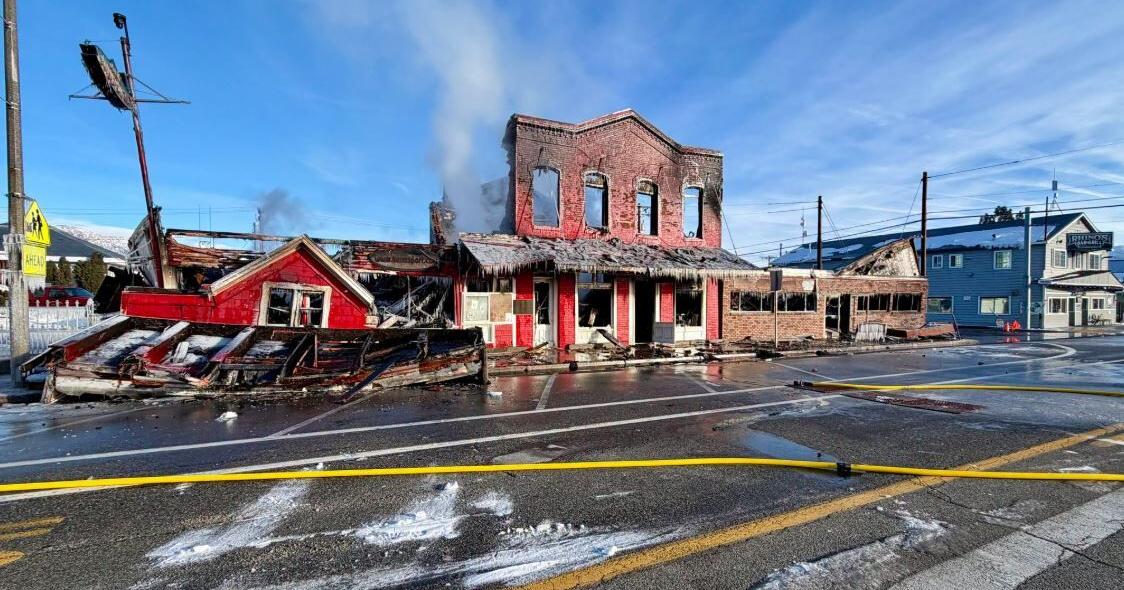
Two-Alarm Fire Destroys Bridgeport Businesses, Closes US 395
A two-alarm fire destroyed the Bridgeport General Store and Ken's Sporting Goods on Main Street near Sinclair Street...

Lehigh Valley Phantoms Host Providence Bruins at PPL Center
The Lehigh Valley Phantoms host the Providence Bruins tonight at 7:05 p.m. at PPL Center for the second...

Nevada Senate Democrats Recommend Shea Backus to Fill Vacant District 6 Seat
Nevada Senate Democrats have endorsed Assemblymember Shea Backus to replace Attorney General-elect Nicole Cannizzaro in Senate District 6,...

One Dead After Gasoline Tanker Trucks Collide, Spark Massive Fire Near Augusta
Two gasoline tanker trucks collided around 5:50 a.m. Wednesday on Sweetwater Road at Murrah Road Extension in Edgefield...