“We don’t really know how long they have been there because, in theory, they could have been there as long as the conditions have been there.”
said James Lendemer, curator of botany at the New York State Museum, describing lichens on a Connecticut bedrock outcrop first marked in 1949.
Researchers returned to Aton Forest in Norfolk and Colebrook nearly 80 years after Yale undergraduate Mason Hale drilled small holes in the rock to mark his survey plots. The holes remained, allowing Lendemer’s team to compare Hale’s original records with a modern survey published in October, CT Insider reported.
Forest succession reshapes lichen community
Hale’s 1950 paper documented 146 species and 20 varieties and forms of lichen across the roughly 400-acre tract, noting substrate, light exposure, and tree species. At the time, the land had been cut over and grazed, with brush-covered fields and grasslands covering about a fifth of the area. Since then, trees have filled open areas and pastures, creating a more continuous canopy.
The new survey found that species associated with sunny, open habitats have declined, while shade-tolerant lichens have become more common. The New York State Museum described the results as a major change in the lichen community over more than 70 years.
“The forest has filled in over time. There’s been sort of a decline or loss in the species that really needed light to be there.”
Lendemer said.
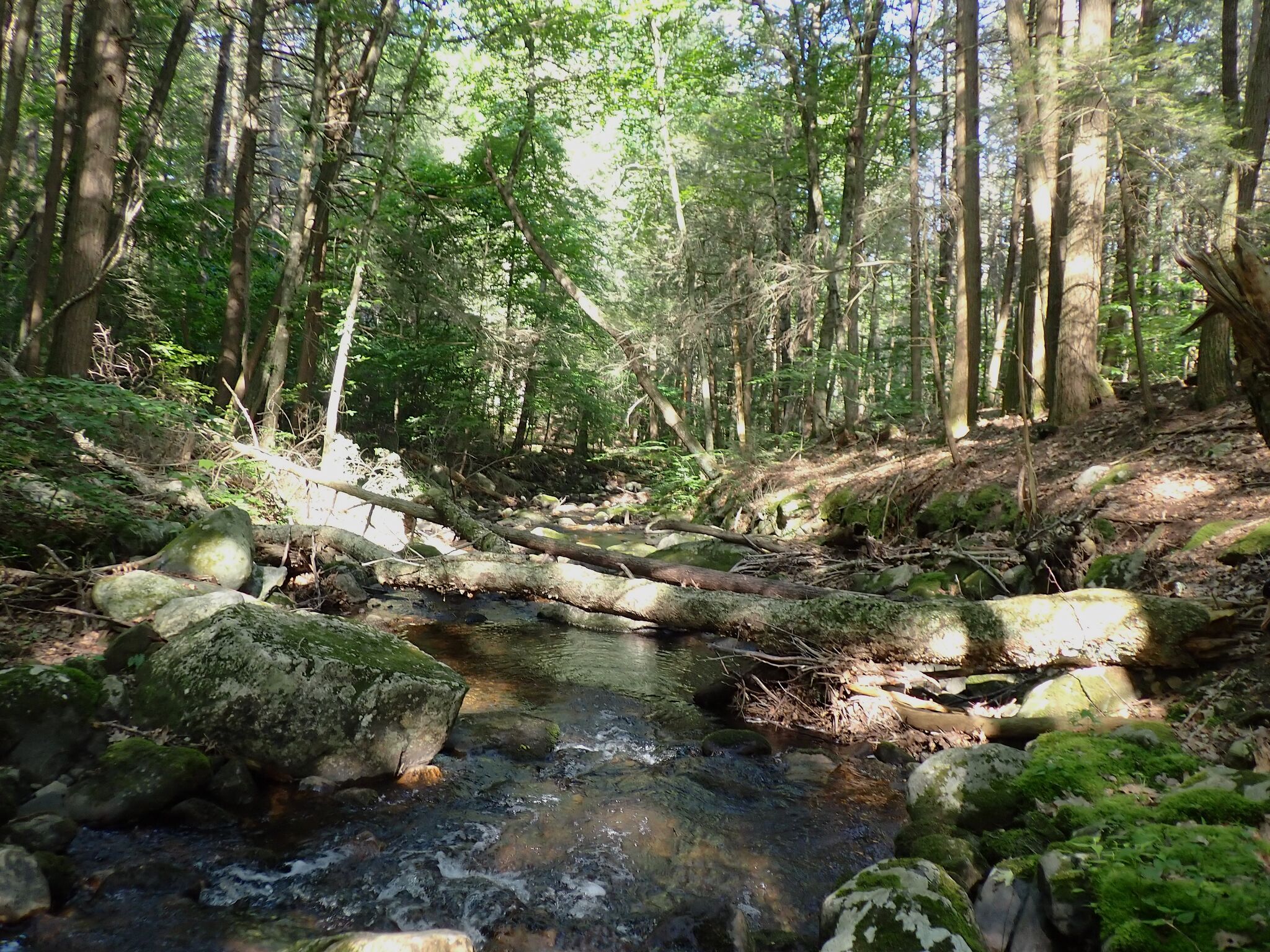
Hale himself had noted the process in his original paper, writing that clearing land could expose stone walls and boulders to light, while natural reforestation could later shade them. “Unless the past cultural history of an area under investigation is known,” Hale wrote, “the succession of lichen communities can hardly be dealt with conclusively.”
Rare baseline from preserved specimens
Beyond the plot markers, Hale left maps, detailed drawings, and collected specimens. That archive let Lendemer verify identifications against the original samples and locate exact survey points — a level of detail Lendemer called rare in ecological studies.
“If you actually look at the specimens, some percentage of the time it turns out to have been something totally different,” he said.
Some species from Hale’s survey are no longer present. Lendemer said they may be sensitive to pollution or disturbance, but researchers do not yet know why those species disappeared. Changes in humidity, temperature, and air pollution could also have played a role. The New York State Museum said further research is needed to establish precise causes of individual species’ declines.
Lichen longevity remains a mystery
Lichens — partnerships between fungi and algae — can persist on rocks or trees for decades, perhaps longer, but their age is hard to determine. They grow when moisture is available and become inactive when dry; older parts may die while edges expand.
“They’re constantly sort of getting wet, getting dry, changing. We see them one way and think that that is the way that they always are.”
Lendemer said.
Lichens contribute to moisture and nutrient cycling, provide food for animals, and offer camouflage for forest species. “They’re kind of like the hubs of the forest,” Lendemer said.
Hale’s legacy in lichenology
Hale, born near Winsted, spent 33 years at the Smithsonian Institution’s National Museum of Natural History, where he built its lichen collection and became a leading lichenologist. He advanced the field by using chemical analysis to distinguish species once treated as one, showing that chemistry varied by place and environment.
James Lendemer said he completely transformed the field and was one of the leaders.
“Once you start seeing it, it kind of opens up your eyes. There’s this other world that exists in parallel to the one that we occupy.”
Lendemer said.
Related reading

REC: Job Postings Fall 6.2% as Christmas Hiring Boost Fails
"The job market appears to have caught a seasonal chill at the wrong time for jobseekers and the...

Eric Thomas Advises Hawaii Man to Visit Brothers in California
In a syndicated column published Friday, advice columnist Eric Thomas argues that a Hawaii transplant should accept his...
EVEREVE Opens First Anne Arundel County Store at Annapolis Town Center
Women's fashion retailer EVEREVE opened its first Anne Arundel County store at Annapolis Town Center on Saturday occupying...

Five Big Sky Teams Enter 2026 FCS Playoffs as Montana State Gets No. 1 Seed
The Big Sky Conference placed five teams in the 2026 FCS playoffs on Sunday, tying the league record...