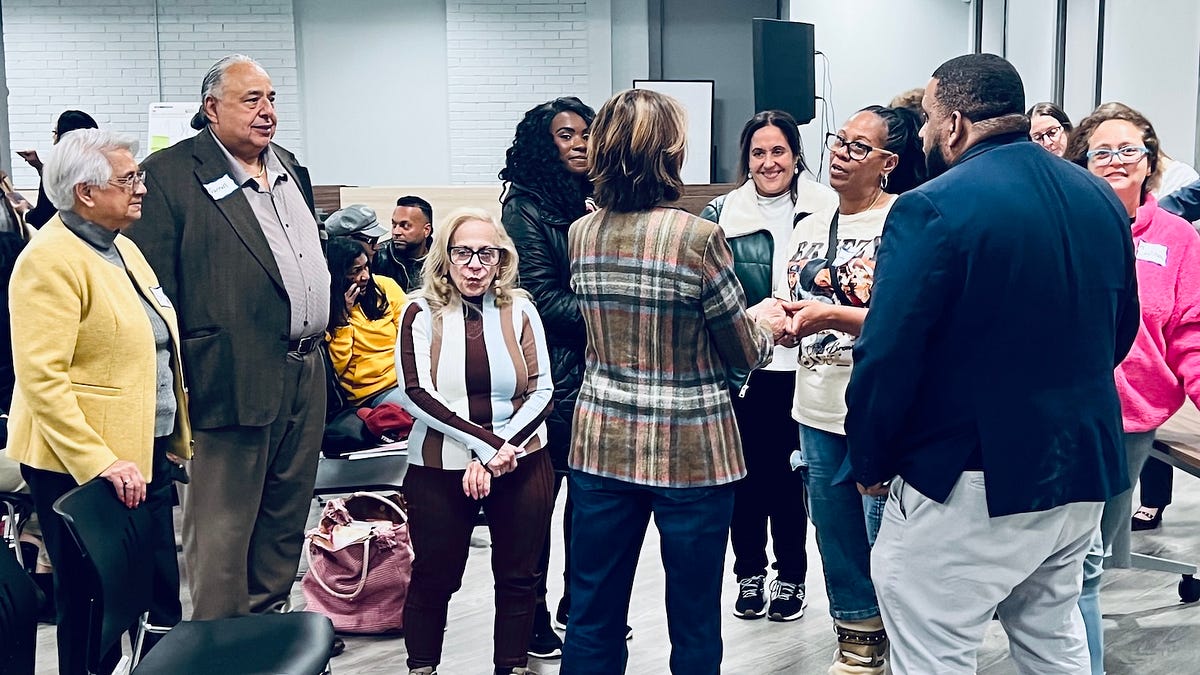
Rhode Island Governor-elect Helena Foulkes opened her first listening session Tuesday, telling a standing-room-only crowd her office has already received more than 1,200 public submissions.
Rhode Island Governor-elect Helena Foulkes opened the first of four scheduled listening sessions Tuesday at the Elmwood Community Center in South Providence, telling a standing-room-only crowd the gatherings are an experiment in democratic accountability, SteveAhlquist.news reported.
“This is an experiment. It’s going to be messy, but I love messy experiments because that’s what democracy is all about,” Foulkes said.
The transition team announced the four-session tour on Nov. 20, according to the Providence Journal. All sessions run from 5 p.m. to 7 p.m., Rhode Island Current reported. The remaining dates are Nov. 30 at the Newport County Campus of the Community College of Rhode Island, Dec. 1 at the Warwick Public Library, and Dec. 2 at the Woonsocket Education Center. RSVPs are requested but not required.
Foulkes said her office has already received more than 1,200 submissions through the transition website, helenatransition.com. “We’re going to read every idea,” she said. “We’ve read every one in our portal. That doesn’t mean we’ll be able to do everything, but I promise we’ll work as hard as we can.”
Foulkes links housing affordability to transit expansion
Foulkes read from a sampling of submitted ideas during the first hour, when attendees also posted notes to boards labeled 100 Days, Six Months, One Year, and First Term.
On housing and transit, one submission linked affordable housing to Rhode Island Public Transit Authority expansion. “I couldn’t agree more,” Foulkes said. “In a state like ours, if we imagine 25 years from now, we could be enticing more and more young people to live here because we’d have a state powered by bikes, walking, and buses, and that makes it a lot more affordable to live here.”
Another idea asked the Office of Housing to develop a GIS map of neighborhoods that can support more housing based on objective criteria including access to utilities, jobs and transit. “That’s a good idea. I’ve not heard that one before,” she said.
Foulkes said the administration will inventory state land for potential shelter villages and housing development. “I’ve been looking at what Governor Mikie Sherrill’s doing in New Jersey; I spoke to her housing leader on this, and this is a big part of their effort,” she said.
Washington Bridge communication
A submission from an East Providence resident urged restructuring the Rhode Island Department of Transportation with better public engagement standards. Foulkes highlighted the Washington Bridge as a case study.
“One person had the idea of using drone technology to take pictures of what’s going on every day. That’s a cool idea,” she said. “If you have more ideas on what you’re seeing in other places, that would be an exciting way for you to learn about the Washington Bridge in particular, and at some point, other bridges.”
She added: “When people understand what’s going on, I hope they’ll trust that the government’s doing the right thing. Without information, we all build our own narrative, and oftentimes it doesn’t feel very good.”
Child care, lead paint and the Armory
Foulkes read a note stating, “There is no workforce without childcare.” She responded: “We absolutely need to make sure that you are taking care of our greatest gifts and that we are compensating you… We need to make sure that you can live a good life.”
On lead paint remediation, a submission proposed a pragmatic hazard-determination system tied to historic tax credits. “I think this is a really interesting area where obviously we don’t want lead paint in homes where children are. But we do have many, many old homes in our state. And we have put a big burden on homeowners and landowners,” Foulkes said. “If you have specific thoughts or you’re an expert in this area, I’d like you to be right over there.”
Regarding the Cranston Street Armory, Foulkes said: “I mean, not to get political, but what happened in that Scout meeting was not a proud day for Rhode Island. But I hear that they’re standing by and ready to go. I have spoken with Providence Mayor-elect David Morales about this. We’re both, I would say, open and eager for something to happen.”
Foulkes commits to ethics reform and judicial changes
A submission calling for a strong ethical code drew a direct commitment. “As we look nationally and see what’s happening, it makes people distrust every politician. You have my commitment that I will do my very best on this,” Foulkes said. “For example, I want to clean up the judicial nominating process so people feel that it is fair.”
Another idea proposed a Rhode Island Community Preservation Office modeled on Boston’s income-generating program for historic preservation and affordable housing grants.
Talent and dashboards
Foulkes closed by emphasizing personnel decisions. “I’m spending most of my time on talent. The most important thing a governor can do is have the best people around her,” she said. “If I can get the team at the top right, we will be able to unlock these kinds of ideas. If I don’t have the right team, nothing will happen.”
She pledged public dashboards to track progress.
Foulkes takes office Jan. 5. A separate 501(c)4 organization was established the day after the Nov. 3 election to raise inauguration funds, though details on events, schedules and costs remain undetermined, transition spokesperson Jon Carvalho told Rhode Island Current.
Seattle Opens Library of Stories Monday to Guide I-5 Reconnection
The Seattle Office of Planning and Community Development opened a virtual Library of Stories on Monday to collect...
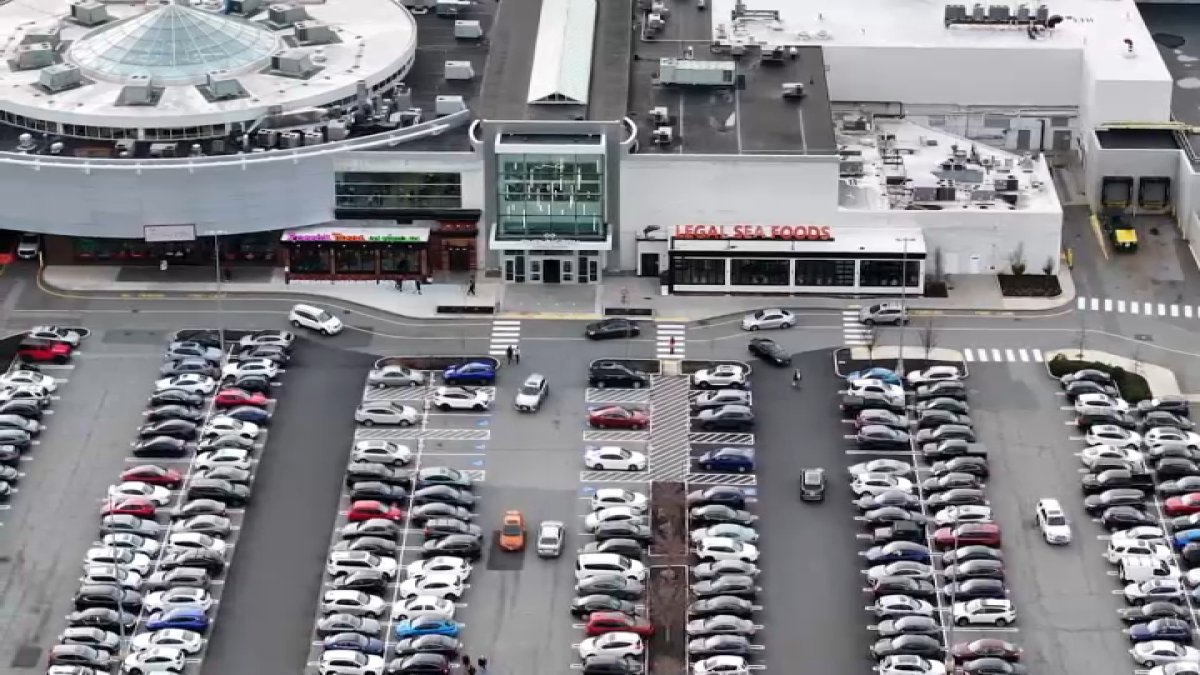
JLL Survey: 55% Plan Mall Visits This Holiday Season
Article "It makes Black Friday more fun to come in person instead of sitting behind your computer screen,"...

Missouri Democrats End GOP Supermajorities, Plan Voucher Fight
Missouri Democrats return to Jefferson City in January with their largest caucus in 14 years after flipping 16...

No. 19 BYU, Providence Meet in Maui Invitational Third-Place Game
No. 19 BYU (6-1) meets Providence (5-2) Wednesday at 5:30 p.m. EST in the Maui Invitational third-place game...