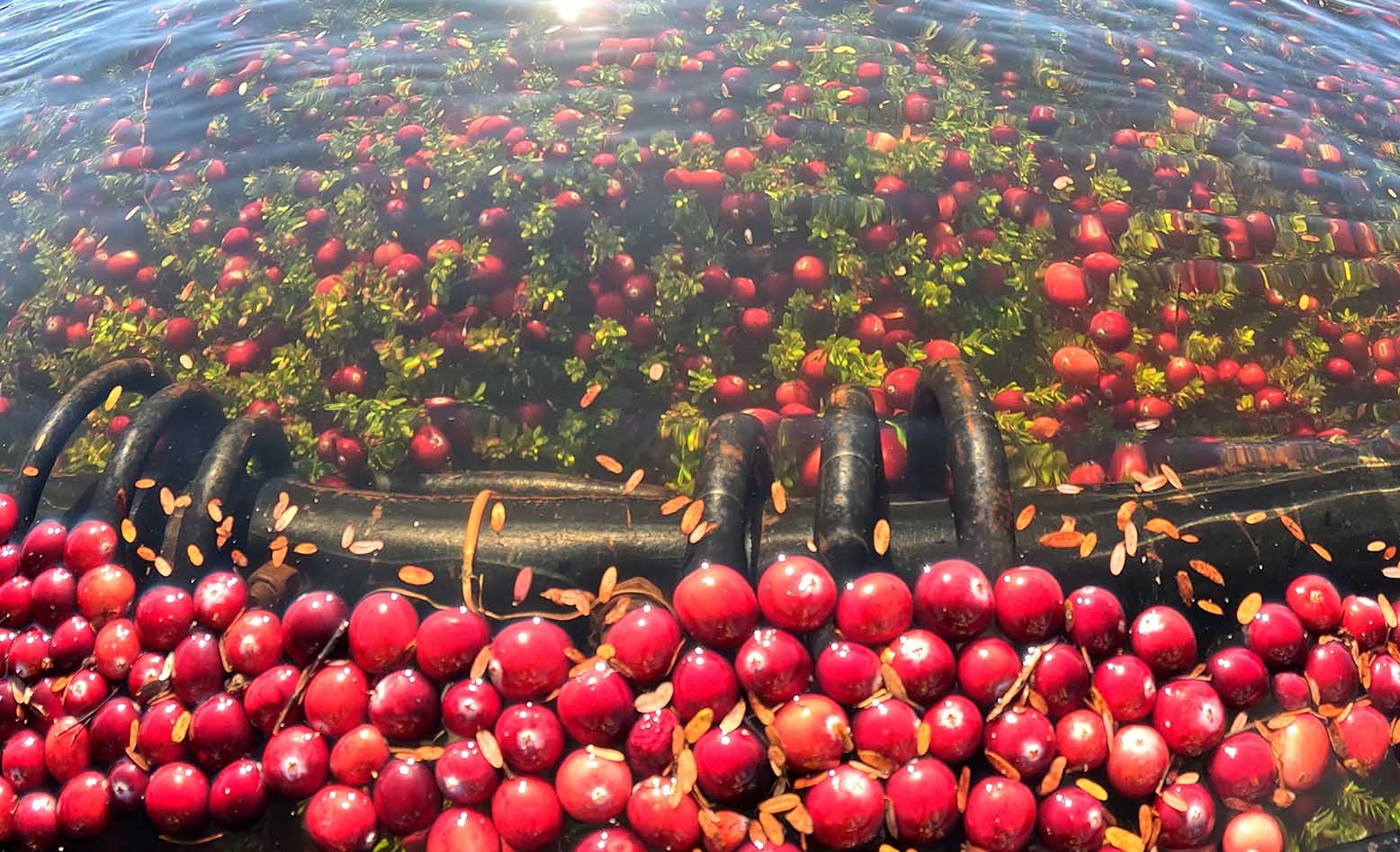
Massachusetts cranberry farms generate nearly $1.7 billion in annual state revenue and support more than 6,000 jobs, but tighter margins and unpredictable weather are forcing growers to rebuild their bogs from the sand up.
In Carver, the Rhodes family has spent the last decade renovating Edgewood Bogs, a property that began as a lumber operation before the timber crews discovered cranberries growing on the cleared land.
James Rhodes, who runs the farm with his brother Jarrod, said they consolidated their acreage in the early 2000s to gain control over fruit prices, streamlined daily operations, and planted higher-yielding varieties. Those efficiencies paid down debt and launched their own frozen brand, Cape Cod Select, which now handles about 30 percent of their fruit.
“Cape Cod Select for us was about controlling some of our own destiny and making cranberries available in grocery stores year round,” Jarrod Rhodes said. “We do about 30% of our own fruit and the rest goes out to independent buyers that make juice and other food service products.”
Renovation is not restoration. The distinction matters because renovation revives the bog to produce better and sustain the business, while restoration returns land to its pre-farmed state. Crews stripped old vines, divided large beds into smaller squares, and used laser-guided equipment to level the ground. Since cranberries grow in dry sandy soil but are harvested in flooded fields, level ground is critical for water distribution.
“Some of the old, older bogs you’ll have to put six feet of water in some places to get three inches of water in other places,” James Rhodes said. “Here, as you can see, the bogs are nice and level. You put four inches somewhere, it’s four inches somewhere else. That’s a huge benefit to the renovation.”
Once flat, Edgewood Bogs installed automated irrigation pumps and replanted with modern varieties that produce two to three times more fruit while cutting back on water, chemicals, and labor. Jarrod Rhodes said the biggest gain is water preservation and an efficient irrigation system.
The economics driving this shift are statewide. Brian Wick, executive director of the Cape Cod Cranberry Growers Association, said the growing season on average tends to be longer, droughts are more frequent, and running pumps during those droughts burns fuel and money. Flat fruit prices mean the only way to survive is boosting yields.
“If you’re growing a 100 barrel crop or a 500 barrel crop, your input costs are both the same. But if you can get that much more yield, that’s where you’re going to make the difference,”
— Brian Wick, Cape Cod Cranberry Growers Association
Renovation costs up to $75,000 an acre, takes three years for a decent crop, and up to a decade to see a return on investment. About ten years ago, the association successfully advocated for the state’s Cranberry Renovation and Enhancement Program, which provides grants that have now helped renovate more than 500 acres.
“So the state stepped in with this grant program, and that provided enough of a stimulus to help growers with some money so that they could then start to renovate the current bogs,” Wick said. “And it really just snowballed from there.”

Some farmers are retiring old bogs into wetlands, but the Rhodes family chose renovation to protect their livelihood. Wick called them leaders in the innovation of cranberry production, proving the model works so others can follow.
Carver, in Plymouth County about 45 miles south-southeast of Boston, was incorporated in 1790 after separating from Plympton and named for John Carver, the first governor of Plymouth Colony. By 1900 its farmers raised a fifth of all U.S. cranberries, and the 1940s harvest was the largest in the world; today the town’s 40 square miles remain defined by its many bogs. The 2020 census recorded a population of 11,645.
“Well, we’re farmers and we want to remain farmers,” Jarrod Rhodes said. “Our family’s been doing it for a long time, and without renovation, we wouldn’t be profitable. We wouldn’t be able to keep doing what we’re doing. So I think that’s the main reason that we’re doing it.”
Related reading

Northeastern Women’s Basketball Lost to Providence 52-42 on November 17
Northeastern women’s basketball lost to Providence College on November 17. The Huntington News reported the Huskies struggled to...

Illinois Basketball Beat Eastern Illinois Friday in Champaign, Says SI
Illinois basketball achieved a record-breaking three-point barrage Friday night in Champaign. The 114-52 thrashing of Eastern Illinois by...
Eventbrite Reported Watch Party for Utah vs. TCU at Ken Garff University Club
A watch party for the Utah vs. TCU football game opens doors at 6 p.m. Saturday at the...
Small Business Optimism Amid Rising Costs and AI Adoption According to Gusto Report
Small-business owners show a clear difference between their internal operations and the overall economic outlook. While the U.S....