
In a column for Chemistry World, Richmond Sarpong argues that sustained curiosity and diverse perspectives drive meaningful scientific progress.
Sarpong, the Maxine J Elliott Endowed University Chair at the University of California, Berkeley, received the Royal Society of Chemistry Pedler Prize this year for developing creative strategies to synthesize complex molecules and new methods based on single-atom skeletal editing.
He told Chemistry World his interest in medicine began in childhood. “I was familiar with diseases like malaria, bilharzia and elephantiasis. These are all like household names to me,” he said.
A coup d’état forced his family to move from Ghana to Zambia and then Botswana. In the 1980s, he witnessed the impact of ivermectin, provided by Merck & Co. and the World Health Organization to treat river blindness in West Africa. “That was the first time I had heard of a drug that could cure people,” he said.
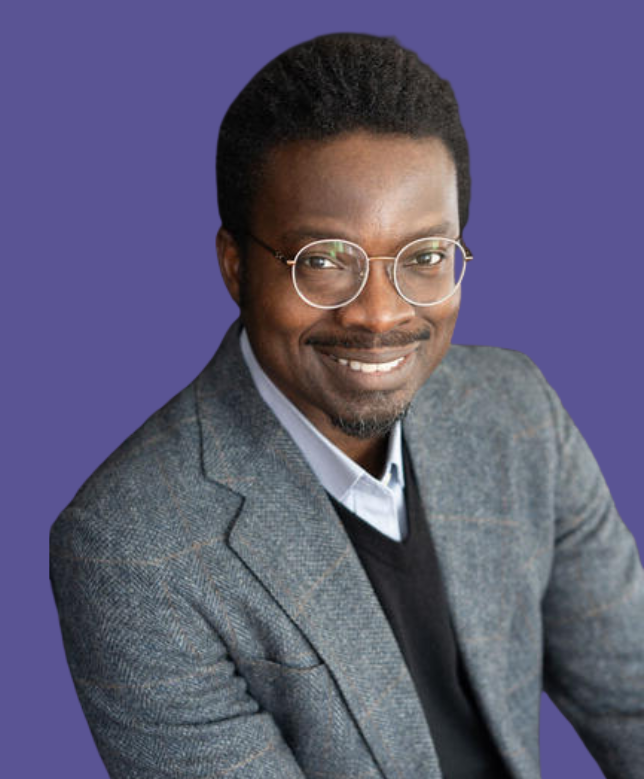
After a scholarship took him to college in Minnesota, Sarpong built a career focused on natural products. “Nature produces these molecules in very small amounts. We want to make more of these molecules or make modifications to improve their properties,” he said. He emphasizes fundamentals in his lab.
“Having a very strong command of the fundamentals of chemistry is very important. These days you can gain access to a lot of different types of information. But you have to discern what is right and what is not. I think a lot of that has to do with having a strong physics-based command of the fundamentals,” he said.
Sarpong connects diversity to scientific excellence. “There aren’t many black people doing chemistry. Initially, I didn’t see a lot of examples of people like me out there. Yet people supported me. I’ve tried to pay that forward and support others from diverse backgrounds,” he said. He also warns against short-term thinking in research funding.
“Science and research are under attack here in the US. Sometimes we take a very myopic view on things. We expect a return within a week. But with science that return could come in 20 years’ time. We need to support science, we need to support curiosity and we need to support creativity,” he said.
Sarpong earned his B.A. in chemistry from Macalester College in 1995 and completed his Ph.D. at Princeton University in 2001 under Prof. Martin Semmelhack, studying enediyne compounds modeling calicheamicin antibiotics. He then joined Prof. Brian Stoltz’s laboratory at the California Institute of Technology as a UNCF-Pfizer Postdoctoral Fellow, where he achieved the first total synthesis of dragmacidin D and developed a novel tandem Wolff/Cope rearrangement.
Since 2004 at the University of California, Berkeley — advancing from assistant professor to the Maxine J Elliott Endowed University Chair — he has pioneered creative strategies for complex molecule synthesis and single-atom skeletal editing, particularly for alkaloid natural products targeting neurodegenerative diseases, which the Royal Society of Chemistry recognized with the Pedler Prize this year.

Sarpong held the 100-metre record at his college for 32 years until it was broken last year. “Records are meant to be broken. Sprinters are famously lazy. Now I challenge myself to run three miles whenever I can,” he said.

Portland Restaurants Face Outdoor Dining Permit Choice Amid Six-Month Limit Enforcement
Portland restaurants face a choice between removing outdoor dining tents or spending six figures on permanent structures as...

Houston Thanksgiving Coldest Start of Season Before Warmup to 70s
Thanksgiving morning will bring Houston its coldest start of the season, with a low near 41 degrees, before...

U.S. Marshals Warn of Holiday Fraud Surge: Gift Card, Fake Invoice Scams Target Nevada Residents
The U.S. Marshals Service District of Nevada is warning residents of a seasonal surge in fraud schemes targeting...

Bronwyn Newport Gives Estranged Husband Todd Bradley Tour of New Utah Home
Bronwyn Newport gave her estranged husband, Todd Bradley, a tour of her new Utah home on the most...