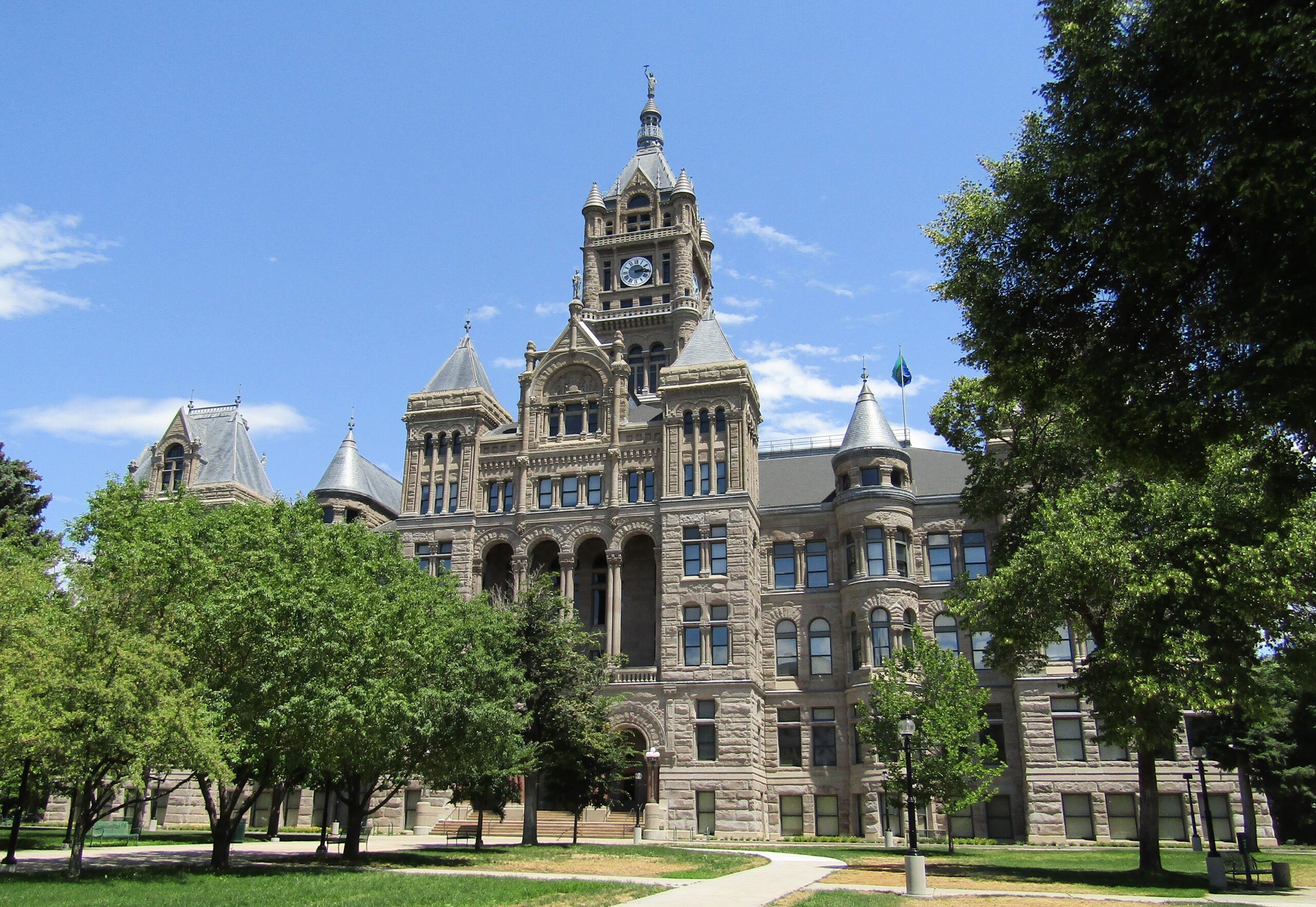
Salt Lake City officials raised the transgender Sego Visibility Flag outside City Hall on Friday, Nov. 13, to signal the beginning of Transgender Awareness Week.
The ceremony marks the second time this specific design has flown at the municipal headquarters. By hoisting the flag, the city uses a formal administrative maneuver to ensure visibility for transgender residents despite restrictive state-level legislation regarding government displays.
“It means that we love our trans Salt Lakers, and we want you here,” Mayor Erin Mendenhall said during the ceremony.
The flag itself serves as a visual bridge between global identity and local heritage, blending the blue, pink, and white stripes of the transgender Pride flag with the city’s traditional sego lily emblem. This integration is not merely symbolic; it is a strategic legal distinction that allows the city to bypass certain state mandates.
Salt Lake City uses Sego design to bypass HB 77
The decision to use the Sego Visibility Flag is a direct response to Utah’s HB 77, which limits the types of flags that can be displayed on government property. While the law does not explicitly name Pride flags, it does not include them among its general exceptions, according to the text of HB 77.

However, the legislation provides an exception for flags that represent a city, municipality, county, or other political subdivision. To use this, Salt Lake City formally adopted the Sego Visibility Flag as an official municipal design rather than simply flying a standard Pride flag. This distinction ensures the display remains within the bounds of state law while still communicating a specific message of inclusion.
This approach follows a broader pattern of municipal flag expansion in the city. On May 6, 2025, the City Council adopted three additional designs, which brought the total number of official city flags to four. Each design incorporates the sego lily in the upper corner to maintain a unified municipal identity.
| Flag Name | Primary Representation |
|---|---|
| Blue-and-white Sego Lily Flag | Standard Salt Lake City emblem |
| Sego Visibility Flag | Transgender residents |
| Sego Belonging Flag | LGBTQIA community |
| Sego Celebration Flag | Juneteenth and Black/African American residents |
The city notes that the shared emblem identifies these flags specifically with Salt Lake City, preventing them from being classified as generic social symbols that might fall under state restrictions.

Political friction and the struggle for visibility
The path to this display has been met with significant legislative pushback. In 2026, lawmakers attempted to narrow the scope of what city flags can be displayed through HB 302. While the House passed the measure, it failed to become law after the Senate struck its enacting clause on March 6, placing the bill in the file for legislation that did not pass, as KSL reported.
For the community members present at Friday's ceremony, the flag represents a rare moment of public affirmation while social tensions persist. Fane Harris, the operations coordinator for Project Rainbow Utah, emphasized the joy of seeing people live authentically while addressing the physical and political hostility facing transgender individuals.
While the flag offers a sense of belonging, the political debate highlights a growing divide in Utah regarding the use of public space to signal social values. Opponents of expanded flag usage argue that government property should remain neutral, while city leaders like Mendenhall view the formal adoption of these flags as a way to create an enduring place for marginalized residents in the capital’s history.
The week of visibility serves as a precursor to a more somber observation. Transgender Awareness Week runs from Nov. 13 to Nov. 19, and it is followed by Transgender Day of Remembrance on Nov. 20, which honors those lost to anti-trans violence.
Keep reading

Gavin Gores Scores 15 as Wyoming Defeats Denver 76-53
Gavin Gores scored 15 points to help Wyoming defeat Denver 76-53 on Saturday. The Cowboys improved to a...

Fed Warns AI Investment Boom and Data Center Debt Pose Financial Risks
Debt issuance for AI computational infrastructure, including data centers, exceeded 680 billion dollars from January to October this...

How Many Wins the Seattle Seahawks Need to Reach the Playoffs
Seattle Seahawks fan confidence currently sits at 58% following a recent victory against the Arizona Cardinals. While this...

Milwaukee Wins Ninth Consecutive Horizon League Women’s Soccer Title with 5-2 Victory
Emily Petring scored three times to lead Milwaukee to a 5-2 victory over IU Indianapolis in the Horizon...