
Santa Fe sits at 7,199 feet in the Sangre de Cristo Mountains, the oldest state capital in the United States, founded by Spanish colonizers in 1610 on land inhabited for millennia by Puebloan villages.
That deep history is not ceremonial; it is the bedrock of the local economy and cultural policy, informing everything from zoning laws to public school curriculum.
Santa Fe’s reputation as an art capital is neither accidental nor new. The phenomenon transforms the central canyon into a year-round exhibition where commerce and craft intersect in adobe walls.
This diversity attracts a global collector base, yet it also creates friction regarding authenticity and accessibility.
Museum Hill anchors the scholarly study of regional heritage, home to the Museum of Indian Arts and Culture and the Museum of Spanish Colonial Art.
The demand for studio and retail space pushes out working artists, leaving open the question of who truly benefits from the cultural economy the city cultivates.
The tech sector, though smaller than in Albuquerque, is growing. The convergence of these industries with traditional sectors requires a sophisticated workforce, prompting investments in education and workforce development.

The high desert environment that gives Santa Fe its unique beauty also presents ongoing challenges. Water scarcity is a persistent concern, dictating landscaping regulations and long-term urban planning.
Wildfire risk is another critical factor.
Santa Fe is experiencing a demographic transformation that is reshaping its social dynamics.
This shift creates a cultural dissonance. The city grapples with balancing growth against the preservation of the very cultures that make it attractive. Longtime residents face rising rents, while new arrivals seek an authenticity that can sometimes feel commodified.
The geography of Santa Fe dictates its infrastructure.
The Regional Transportation Commission oversees regional transit, attempting to connect Santa Fe with neighboring communities like Eldorado and Los Alamos.
Santa Fe stands at 6,998 feet, the highest elevation of any U.S. state capital, and anchors a metropolitan area of 158,000 people within a combined statistical area of 1.16 million. The Tewa name for the site, Pʼoegeh, means “water place,” reflecting the springs that drew settlement long before 1610.
In 2005, Santa Fe became the first American city admitted to the UNESCO Creative Cities Network, and writers and authors now hold the highest share of the labor force of any U.S. city.
In essence, Santa Fe exists in a state of dynamic equilibrium.
Worth a look

The Las Vegas Grand Prix was supposed to be a spectacle
The Las Vegas Grand Prix was supposed to be a spectacle. Instead, its debut delivered nine minutes of...
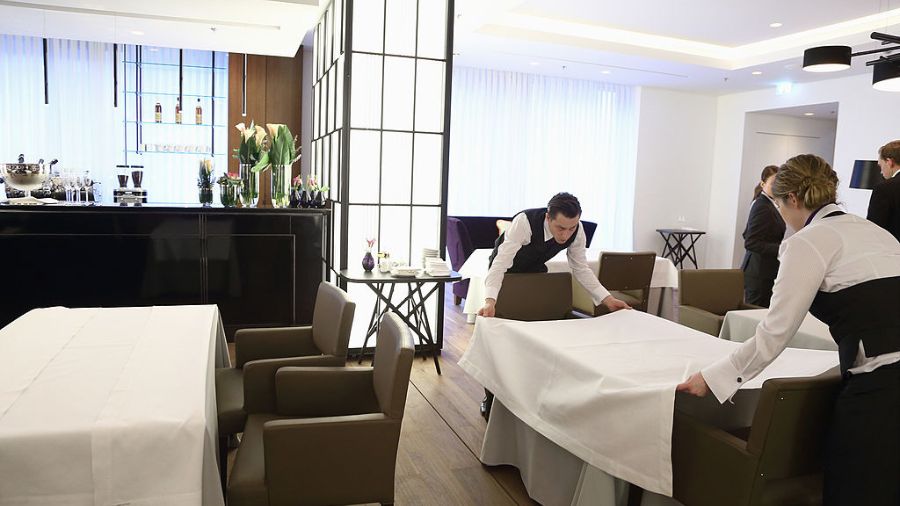
Westin Seattle to Lay off 423 Staff as Operator Change Ends in Late January 2027
WHC Payroll Company will lay off all 423 employees of The Westin Seattle early next year after the...
JLL CFO Kelly House Details Q3 Records, Raised 2026 EPS Outlook on NYSE Live
JLL’s third quarter delivered record revenue and adjusted earnings, giving the firm enough confidence to lift its full-year...

HMRC Dismantles Illegal Cigarette Factory Capable of 200,000 a Day in Lincolnshire Raid
A factory in Lincolnshire was capable of churning out more than 200,000 illegal cigarettes a day before HM...