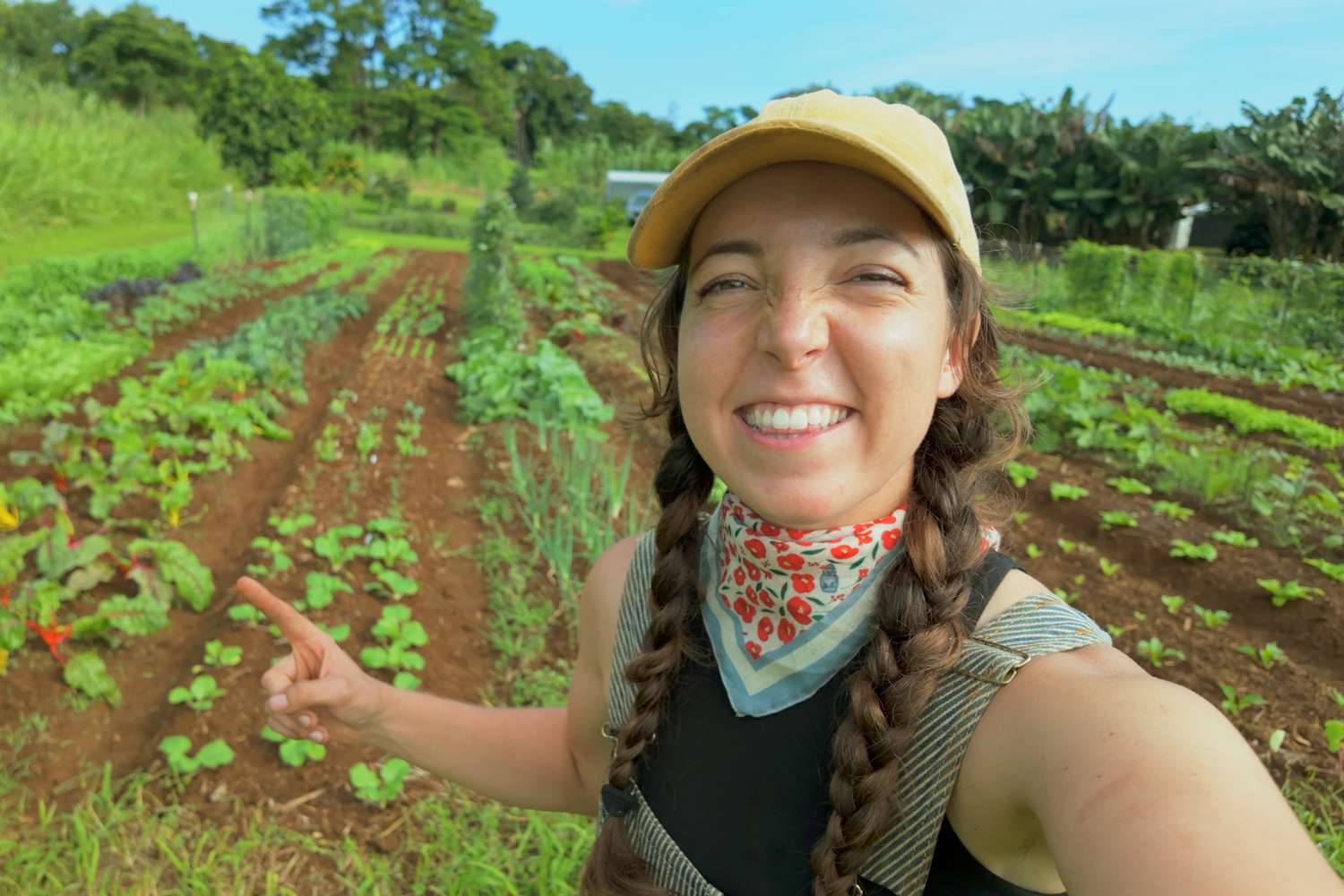
“The difference between farming and gardening, because I’ve been gardening for a long time, is that if you want to sustain yourself as a farmer, you really have to approach it as a business,” Sarah Bonello told People.
One year after leaving her job as an environmental consultant in Boston, Bonello, 29, is training through GoFarm Hawaii and building a farm operation on the islands. She says at least half her working hours are spent off the fields — on marketing, branding and outreach to grocery buyers — and that the “playing in the soil” says she receives online miss the revenue-generating reality, People reported.
The business case
Bonello said she meets many aspiring growers who want to give food away for free to their communities and kūpuna, or elders.
“The reality of that is that it only works if you have a very wealthy sponsor or you have some other form of income,” she told People. “If farming is your way of supporting yourself, you need to be able to actually generate money from it, and that’s totally possible.”

GoFarm Hawaii, which Bonello described as “farm school,” is teaching her the business side of the operation. She spends time visiting grocery stores and making connections with produce buyers, work she said is “all the same thing as any other business,” People reported.
Community contrast
After four years in corporate consulting, Bonello said the farming community feels radically different. “Even though I was working with really kind people, really well-meaning, genuinely good people, it still was an every-person-for-themself environment,” she told People. In agriculture, competitors share seeds, cuttings, tools and knowledge openly, she said, because “that’s what supports all of our collective mission to feed our communities.”
Financial reality of community-focused farming
Bonello says she meets many aspiring growers who want to give food away for free to their communities and kūpuna, or elders.
Community contrasts with corporate life
After four years in corporate consulting, Bonello said the farming community feels radically different. “Even though I was working with really kind people, really well-meaning, genuinely good people, it still was an every-person-for-themself environment,” she told People. In agriculture, competitors share seeds, cuttings, tools and knowledge openly, she said, because “that’s what supports all of our collective mission to feed our communities.”
She described the collaboration as “beautifully collaborative,” noting that growers share freely because it supports local ecology, soil health and population health. Bonello said one of the hardest parts of the career change has been “feeling like I need to justify the fact that what I’m doing now is important and meaningful and worthwhile, even though I feel that so deeply to my core.”
GoFarm Hawaii is a University of Hawaiʻi beginning-farmer training program run collaboratively by UH Mānoa’s College of Tropical Agriculture and Human Resources, Windward Community College, and UH’s Agribusiness Incubator Program under the direction of Janel Yamamoto. Since starting in 2012 across five sites on four islands, it has trained more than 260 aspiring farmers and received $600,000 in USDA Beginning Farmer and Rancher Development Program funding as of December 2017.
The program moves participants through escalating stages: an open AgCurious seminar, AgXposure workshops, a four-month AgSchool course, and a six-month AgPro option for deeper learning, with graduates at certain locations eligible for three years of incubation support on program-provided land.
Degrees in the dirt
Bonello holds a master’s in environmental science and said she sometimes fears people view her career change as a waste of potential. “I’ve never actually used my degrees more than I am now, with my hands in the soil every day,” she told People. “I know in my heart that this is important and meaningful.”
Worth a look

Bubble Run 5K returns to Salt Lake City May 29 at Utah State Fairpark
The Bubble Run 5K returns to Salt Lake City on May 29, 2027, at the Utah State Fairpark...

Raritan Valley College Receives Record $24M Bequest From Caldwell Estate
A $24 million bequest to Raritan Valley Community College is the largest private donation ever recorded for a...
East Idaho News Column Describes Snowstorm Triggering Elk Migration Near Rexburg Bench
East Idaho News published a column on November 21 describing how a sudden snowstorm triggered a large elk...

UT Martin Opens 2026 Emerald Coast Classic in Niceville vs Virginia Tech Monday
UT Martin travels to Niceville, Florida, for the 2026 Emerald Coast Classic, opening against Virginia Tech on Monday...