Scott Colom’s win triggered a cascade of cultural attention that moved beyond politics: a campaign ad line — "We should get a new senator" — became an internet meme; Nike agreed to provide shoes for Mississippi’s highest-achieving graduates after Colom publicly asked; celebrities including Magic Johnson and John Legend celebrated the result; and "Saturday Night Live" parodied the state, idahostatesman.com reported.
The shift has left longtime observers debating whether Mississippi has changed or whether the country is finally seeing what was already there.
The Mississippi America forgets
Wright Thompson, a Clarksdale native and senior writer for ESPN and contributing writer for The Atlantic, dismissed the premise that the state suddenly became cool. "We’ve always been cool," Thompson told the Clarion Ledger. "People are just remembering again."
He cited Muddy Waters, Elvis Presley, Eazy-E’s grandparents from near Doe’s Eat Place in Greenville, and Nate Dogg from Clarksdale as evidence of a cultural footprint that exceeds the state’s population and economic stature. "I think everybody is seeing the Mississippi that we all see and want people to see," Thompson said.
The science of cool
Democrat Scott Colom has won Mississippi’s Senate race, becoming the state’s first Black senator since 1874, during the Reconstruction era. He defeated Republican incumbent Cindy Hyde-Smith. pic.twitter.com/jiYk5XiCj2
Warren’s research suggests coolness often attaches to people or movements perceived as changing culture for the better. Colom’s election — historic, unexpected in a state where a Democrat was not thought viable — supplied that signal. "The optics suggest it makes a lot of sense why people think he’s cool," Warren said.
He added that the identity of the state itself amplified the effect: "That it was Mississippi and not Alabama or Louisiana or even Florida that elected a Black senator makes it seem cooler than the other states in the Deep South at the moment."
Why Colom broke through
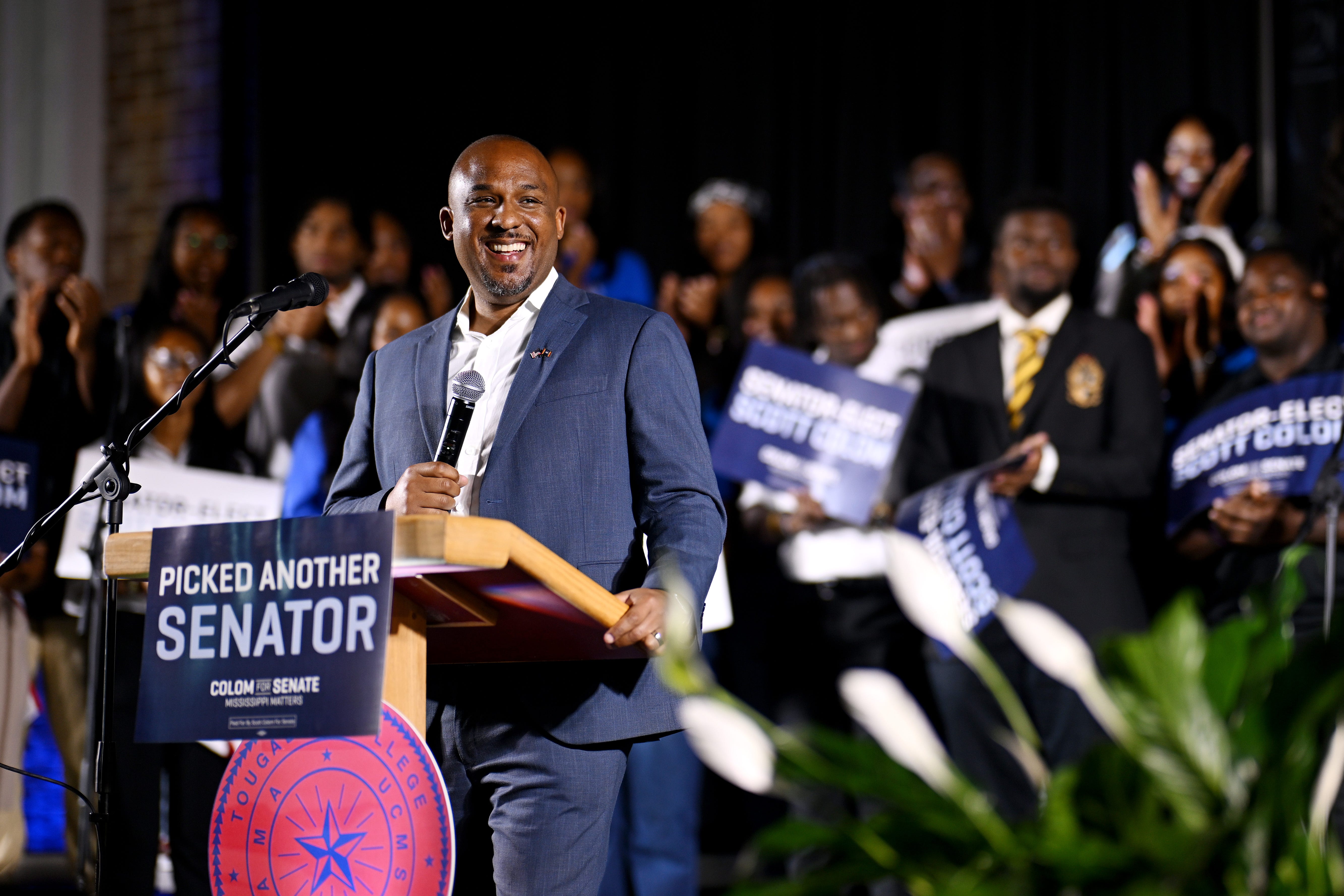
Both Thompson and Warren pointed to Colom’s presentation. The "pick another protein" ad exchange felt organic, Warren said: "He responded, ‘We should get a new senator,’ which is very clever."
Thompson heard something familiar in the candidate’s voice. "He didn’t run as a Democrat or a Republican," Thompson said. "He ran as a Mississippian." That distinction, Thompson argued, explained crossover appeal at a time when much of politics feels imported from national ideological battles. "He talks like a Mississippian," Thompson said. "Not like a university professor or a think tank hack."
A coalition that surprised people
Thompson said frustration had been building in the Delta before Election Day, particularly among farmers — a constituency long considered reliably Republican. "I got the sense that farmers were done with it," Thompson said. "For the Republican Party to lose farmers in Mississippi is malpractice. That’s difficult. It’s unbelievable."
The coalition that delivered Colom’s victory crossed economic, ideological and regional lines, helping the moment grow beyond politics into culture.
When Mississippi became shareable
The transformation unfolded in stages: the historic election, then viral moments, then celebrity amplification. Magic Johnson publicly celebrated the victory. John Legend endorsed Colom during the campaign. Chrissy Teigen shared the conversation with millions of followers who likely pay little attention to Mississippi politics.
Then came Nike. Colom’s public request for shoes for top graduates seemed like a longshot; the company responded, turning the exchange into a national story about academic achievement rather than controversy or crisis. For a state accustomed to negative headlines, the distinction mattered.
Democrat Scott Colom defeats Republican Sen. Cindy Hyde-Smith, becoming Mississippi’s first Black U. S. senator since 1881. pic.twitter.com/YgZDLO9auA
Cool doesn’t solve problems
Neither Thompson nor Warren argued that viral moments solve Mississippi’s challenges. Schools still need improving, infrastructure still requires investment, and economic development remains difficult.
But perception has value. A state’s reputation influences tourism, investment, recruitment and whether talented young people believe opportunity exists at home. Momentum attracts attention; attention attracts interest; interest can eventually attract investment.
More on Scott Colom
Keep reading

GOP Rep. Virginia Foxx Concedes NC Race, Democrats Get Largest House Majority Since Early 1990s
Democrats will control at least 259 House seats after North Carolina Rep. Virginia Foxx conceded Sunday, giving the...

Anchorage Digital to Launch 61st Parallel Asset Management With Bitcoin-Denominated Fund
Anchorage Digital announced on November 24 that it will launch 61st Parallel Asset Management, a new subsidiary offering...
Records: Judge Made DOJ Revise Omar Home Search Plan Over Constitution
A federal magistrate judge initially blocked the Justice Department from searching Rep. Ilhan Omar’s Washington, D.C., home without...
Madison Introduces Zoning Ordinance to Ban Hyperscale Data Centers, Limit Size to 75,000 Square Feet
Madison introduced a zoning ordinance Tuesday that would ban hyperscale data centers and limit new facilities to 75,000...