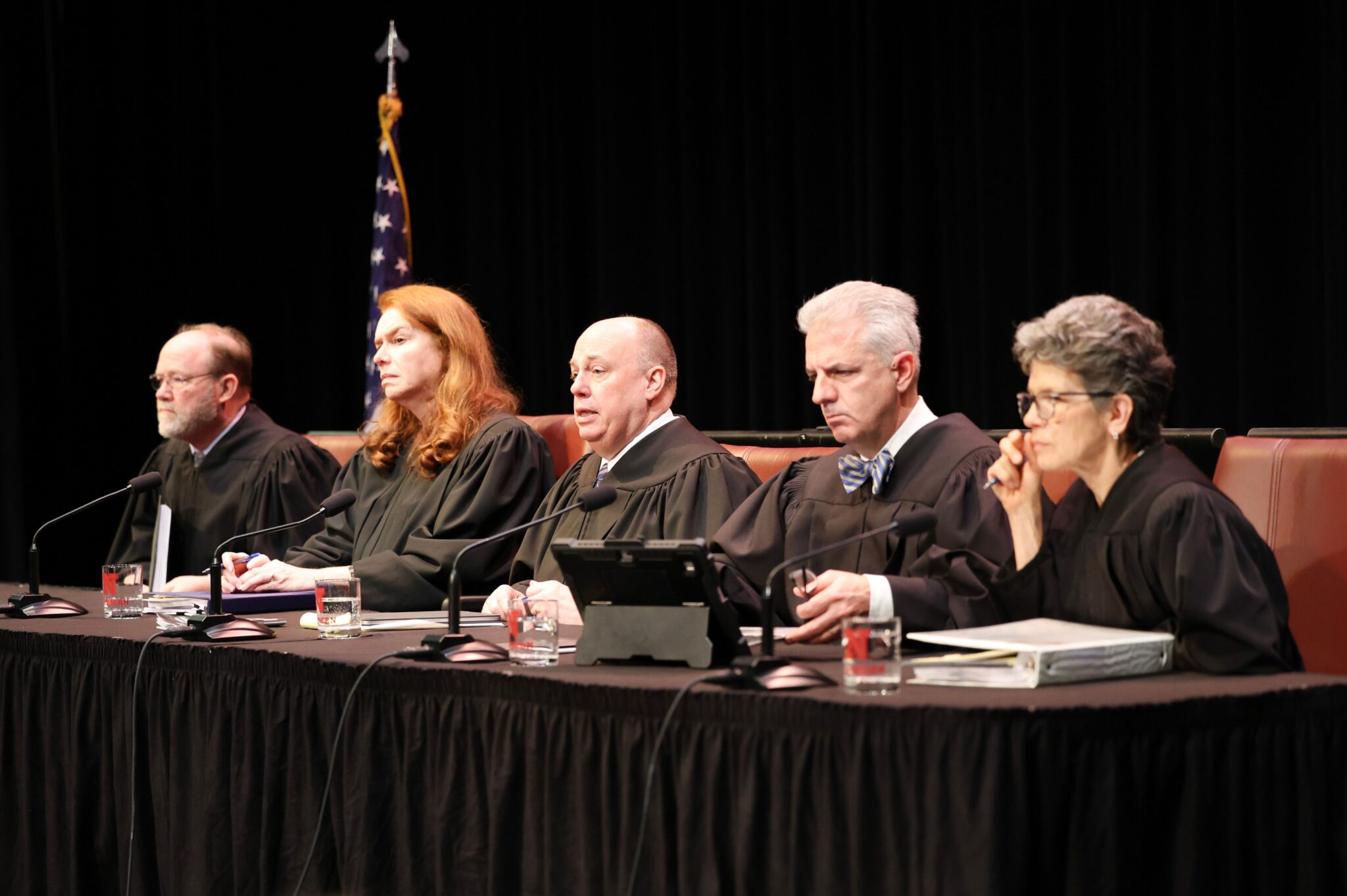
South Dakota’s Supreme Court ordered the administrative merger of the 4th and 7th judicial circuits on Monday, Nov. 23, stopping short of a full consolidation that would have created the state’s largest circuit by area, the Unified Judicial System said.
- Circuits keep separate borders and judges but share one court administrator, chief clerk and chief court service officer.
- State Court Administrator Greg Sattizahn said 90% of court business in the 12-county area occurs in three counties.
- Two court services officer positions must be reallocated to the 2nd Circuit by March 1.
The order preserves each circuit’s presiding judges, who remain responsible for supervision, oversight and scheduling of all judicial officers and law clerks, according to the State Court Administrator’s Office. The chief court service officer, overseen by the 7th Circuit’s presiding judge, will manage two chief deputies across the combined administrative unit.
The order says presiding judges in the 4th and 7th circuits “shall each continue to be responsible for the supervision, oversight, and scheduling of cases for all judicial officers and law clerks.”
“The state will ‘continue studying’ whether a more complete merger would make sense long-term,” the press release said.
The proposal aimed to find efficiencies and save an estimated $300,000 by repurposing staff across a 12-county region covering more than half the land area in western South Dakota, the Unified Judicial System said. At a Nov. 9 hearing, Sattizahn told the court that 90 percent of court business in the affected area occurs in Meade, Pennington and Lawrence counties.
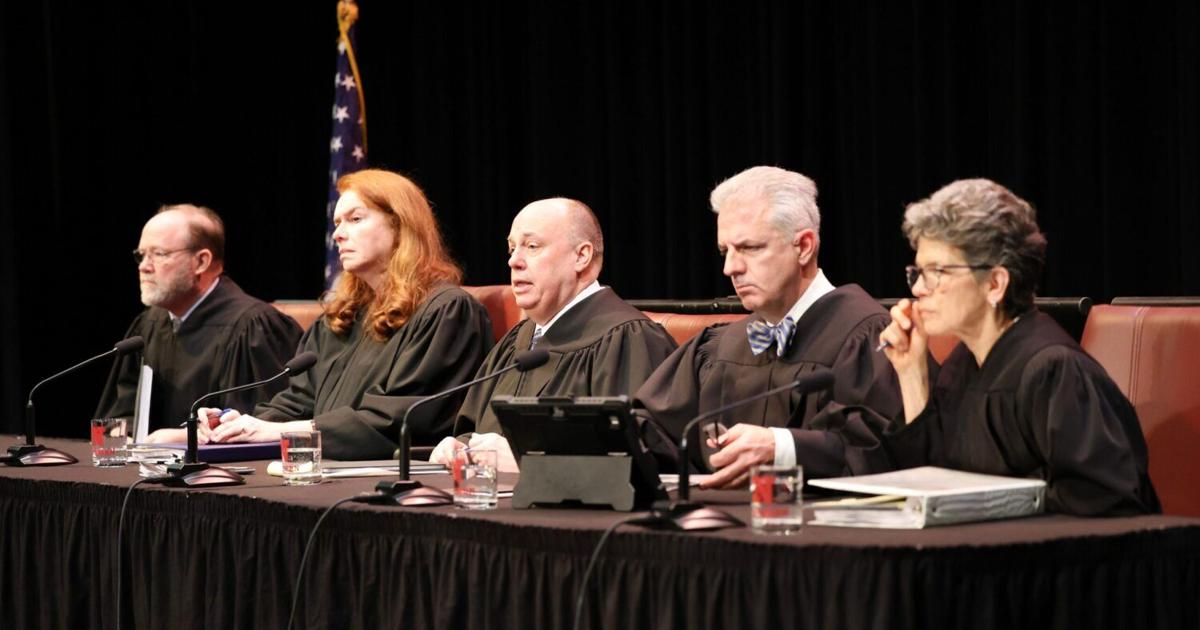
Opponents raised concerns that smaller counties would receive less attention and lose influence in judicial elections. Fourth Circuit Judge Eric Strawn compared resisting consolidation to “fighting smoke,” arguing the administrator’s office had not identified specific inefficiencies in the current structure.
The 4th Circuit covers eight counties including Spearfish, Belle Fourche and Deadwood. The 7th Circuit includes Rapid City — the state’s second-largest city — plus Fall River, Custer and Oglala Lakota counties.
Oglala Lakota County lies within the Pine Ridge Reservation, where the Oglala Sioux Tribe polices the area and has its own court system for misdemeanor crimes. Felony crimes within the borders of the tribe’s reservation are prosecuted in federal court. This story was originally published by South Dakota Searchlight.
The order cites the State Court Administrator’s statutory authority to promote the efficient operation of the Unified Judicial System and to restructure supervisory administrative positions across circuits.
State Court Administrator Greg Sattizahn, who has led the UJS State Court Administrator’s Office since 2013, previously served as the UJS director of policy and legal services and legal and legislative counsel, and as a law clerk and staff attorney for the South Dakota Supreme Court.
The supreme court directed the two circuits to enter into a memorandum of understanding to restructure supervisory administrative positions across the two circuits. https://t.co/EoQUiIg2Ho
The order directs both circuits to develop uniform policies for clerks of court and court service officers that “balance workload needs and shift work as necessary between offices.” It also requires the reallocation of two court services officer positions through vacancies or attrition to the 2nd Circuit, based in Sioux Falls, by March 1.
The order also directs the circuits to “reallocate two court services officer positions through current vacancies or by attrition” to the 2nd Circuit, which includes Sioux Falls, by March 1.
Worth a look

PPO vs. Self-Pay for a Dental Second Opinion in East Indianapolis
SmileCentric East reports that dental second opinions in East Indianapolis depend on whether a patient's plan has already...

Astros Unlikely to Pursue Arozarena, Happ; Laureano a Lower-Cost Option
Houston Astros are unlikely to pursue top free-agent left fielders Randy Arozarena or Ian Happ, leaving Ramon Laureano...

Helena Weiderer Crashes Out of FIM MotoMini World Final in Valencia
German teenager Helena Weiderer crashed out of the FIM MotoMini World Final in Valencia on Thursday, ending her...

Charles Woodson Urges Michigan to Rehire Warde Manuel as Permanent Athletic Director
Michigan legend Charles Woodson called on the university to rehire Warde Manuel as its permanent athletic director Saturday,...