
The Seattle City Council voted 7-2 Friday to adopt a $9.2 billion budget for 2027, restoring fire department overtime and adding millions for housing and gender-based violence programs while relying on one-time funding sources that the mayor and two dissenting council members warned would create a future deficit.
The vote approved Mayor Katie Wilson’s first budget but layered on roughly 80 amendments adding $66 million in new spending. Council Budget Chair Dan Strauss described the plan as the most sustainable in recent history, yet Wilson said the additions leave more than $20 million of 2027 spending unfunded in 2028, a structural gap the city has now carried for seven consecutive years.
“We’re reversing the mayor’s proposed cuts to firefighters. We are funding work to stop violent crime, and we’re making record high investments in affordable housing,” Strauss said Friday.
The budget preserves $37 million for shelter expansion expected to support nearly 1,000 beds by the end of 2027, and adds $7 million for gender-based violence prevention alongside $2 million to help the City Attorney clear a backlog of more than 1,700 domestic violence, elder abuse, stalking and sexual harassment cases.
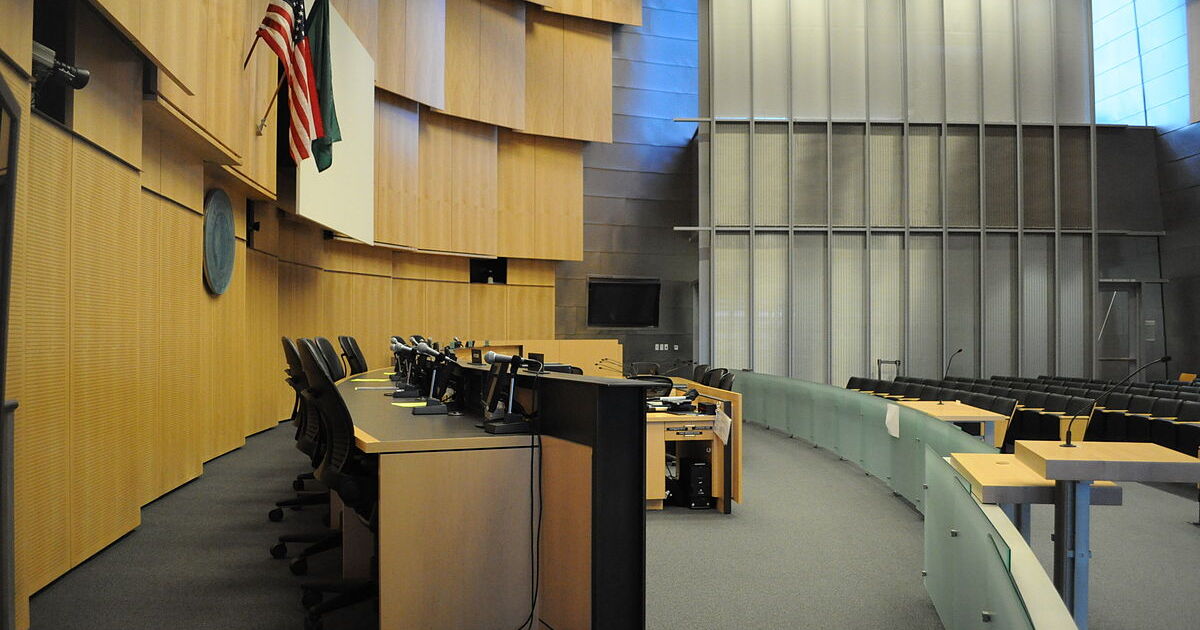
Councilmembers Maritza Rivera and Alexis Mercedes Rinck cast the two "no" votes, an unusual alliance that showed deep fiscal anxiety. “I cannot in good conscience recommend a budget that is adding millions and millions of dollars,” Rivera told colleagues during a final budget committee meeting Thursday, arguing the council added spending without offsetting cuts or provisos.
Rinck objected to the $533 million allocated to the Seattle Police Department, a record sum, and the reliance on temporary revenue. “I’m voting against a budget that protects one department and asks everyone else to pay for it, against balancing today’s books on tomorrow’s back,” Rinck said.
The mechanics of the gap
The dispute centers on the JumpStart payroll tax, created in 2020 to fund housing and homelessness relief. Rivera told KOMO News the council’s plan draws down JumpStart and real estate excise tax reserves.
Strauss disputed that characterization, saying the council suspended a planned payment into the reserve for one year rather than withdrawing from the principal. “We suspended one year’s worth of payment to the reserve,” he said, noting the city maintains five healthy reserve funds.
City Budget Director Aly Pennucci wrote in a Nov. 6 memo that using one-time funding for ongoing items has been a “major driver” of Seattle’s structural deficit. Pennucci calculated the council’s package increases 2027 spending by $41.7 million, of which $35 million is marked as one-time.
Councilmember Dionne Foster likened the maneuver to “paying today’s bills with tomorrow’s money,” though Foster ultimately voted yes after securing an amendment directing some of the pulled revenue toward housing.
What the money buys
The amended budget restores $7.1 million for Fire Department overtime, adds $7 million for district-specific transportation safety projects, and funds a long list of district priorities: an anti-graffiti “art wall” in Delridge; neighborhood revitalization in the Central District; community center programming in South Park; police overtime for drug investigations in Little Saigon; and $150,000 for a light-up sculpture of Jimothy, the viral raccoon of Ballard, alongside other cultural programming for the 2027 holiday season.
The plan also includes $352 million for housing services, $185 million for homelessness programs, $350,000 to help residents clear $9.2 million in medical debt, and $3 million in grant funding for city arts and cultural organizations.
Council President Joy Hollingsworth noted the amendments account for just 1.5% of the city’s operating budget. About 80% of total spending is locked into utilities and transportation, leaving roughly $2 billion in the general fund — over half of which is already dedicated to public safety, including police, fire, 911 and community crisis responders.
A mayor without a line-item veto
Wilson, a self-described socialist who won praise from the business community in September for proposing an austere budget with no new taxes, now faces a binary choice: sign the entire package or reject it. She has not said whether she will sign, a spokesperson told KUOW. “She will review it.” The mayor cannot veto individual line items.
Councilmember Bob Kettle, a frequent Wilson critic, argued the mayor’s own claims of fiscal responsibility are a mirage. He said her increased police spending comes from existing obligations and accounting maneuvers, not service expansion, and criticized her for issuing a news release attacking the council’s process rather than sending a formal mayoral letter.
If Wilson signs, the budget takes effect for 2027 with a spending plan endorsed for 2028. The structural deficit projected for 2028 and beyond remains unresolved, a cliff the council has now scheduled for the seventh year in a row.
Related reading
- Lorin Fahrmeier: Creating a Market That Cultivates Connections
- Chandler Funeral Homes Delaware Reports Death of Bill Mervine in Claymont DE
- Missouri judge approves $7.25bn Bayer settlement over Roundup cancer claims (newsarchyuk.com)
- Seattle Mariners Release Luke Raley Ahead of Arbitration Deadline (world-today-news.com)

Lorin Fahrmeier: Creating a Market That Cultivates Connections
Missouri agriculture contributes $237.7 million in value-added products and supports more than 4,000 jobs in Lafayette County alone,...

Chandler Funeral Homes Delaware Reports Death of Bill Mervine in Claymont DE
Harry William Mervine passed away in Claymont, DE on November 11, 2026. Chandler Funeral Homes Delaware reported these...

Pierre Gasly Noted Alpine Progress in Q2 at Las Vegas Grand Prix Qualifying
Pierre Gasly showed progress with Alpine in Q2 but felt he missed potential during the Las Vegas Grand...

Springfield Installs Thermoplastic Turtle Mural at Jasper Meadows Park to Map Stormwater Flow
A thermoplastic turtle now guards the pavement at Jasper Meadows Park, mapping the journey of rainwater from neighborhood...