
- Report ranks Monarch Campus fifth among 12 projects for CO2 emissions at 11.1 million metric tons.
- Permit application proposes 864 gas generators for the initial 2.1-gigawatt phase.
- Developer Nscale plans to expand the site to 8 gigawatts by 2031.
- West Virginia officials say emissions reflect maximum permitted levels, not actual operations.
The report, titled “Artificial Intelligence, Real Pollution: How Data Centers Became a Top Climate Threat,” draws its figures from the facility’s draft air permit filed with the state and assumes 90% capacity utilization, West Virginia Watch reported.
For the 12 projects examined, the organization estimates on-site natural-gas generation could produce nearly 180 million metric tons of carbon dioxide, representing more than 45 gigawatts of proposed generating capacity, according to West Virginia Express.
Lisa Di Bartolomeo, the Sierra Club’s Beyond Coal organizer in West Virginia, said developers across the state have applied for almost 10 gigawatts of data center power. “That’s a hell of a lot of power across the state of West Virginia, where most consumers typically experience outages on a regular basis,” she told West Virginia Public Broadcasting.
The combined capacity of all of West Virginia’s coal and natural gas power plants currently stands at around 13.7 gigawatts.
Mason County United warns of health risks
Elaine Matheny, an organizer with Mason County United, said the pollution could exacerbate health issues for nearby residents. “We are concerned. The health risks are obvious,” she told West Virginia Watch. “People with asthma, people with breathing problems, COPD, they’re all going to be going to the doctor more.”
Matheny warned the impact would extend beyond the immediate area. “It’s going to be a very hazardous project to the area and beyond,” she said. “Ripley, Ravenswood. I don’t think the people living around here realize how it’s going to affect Point Pleasant, which is not very far.”
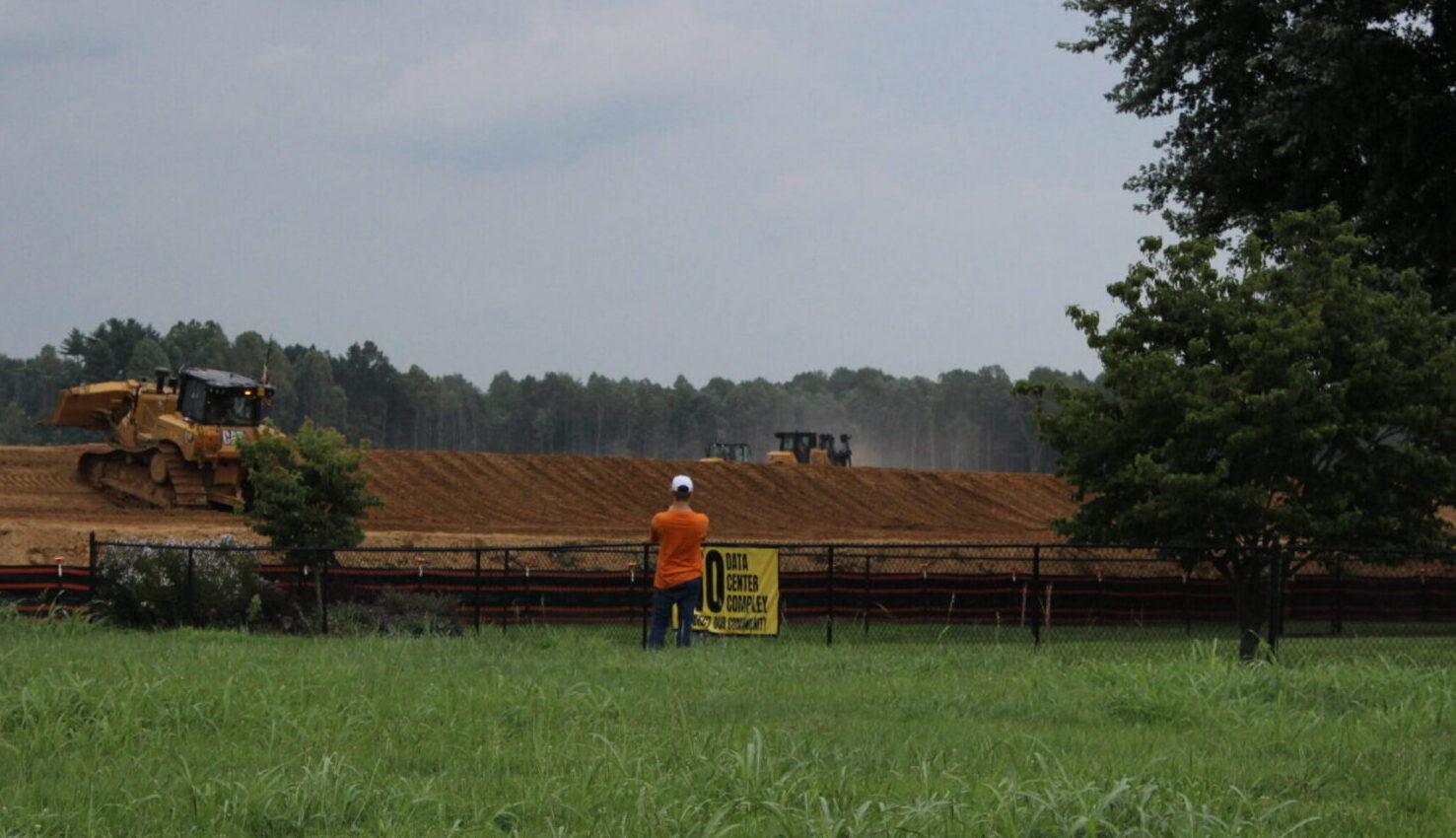
The Monarch site sits next to a housing subdivision and has already experienced flooding during construction, West Virginia Watch reported. Matheny said her group has attended West Virginia Department of Environmental Protection hearings and monitored the construction site for violations.
She argued that House Bill 2014, the state’s data center law, stripped residents of the ability to push for less harmful power generation. “There’s alternatives, but we have no right and no vehicle to even comment before this all started,” she said. “That’s really been the thing that has most people angry.”
State and developer response
Nicholas Preservati, director of the West Virginia Office of Energy, said the emissions cited reflect a maximum-capacity scenario. “The numbers in the Sierra Club report come from the maximum emissions allowed under the facility’s draft air permit, not from actual operations,” he said in a statement to West Virginia Watch. “Those maximums are inline and in some cases below what existing power plants already emit.”
Preservati added that HB 2014 does not exempt data centers from state and federal environmental guidelines. “Anyone who wants to build in West Virginia must still meet every state and federal environmental permitting requirement,” he said. “The state has reviewed Monarch’s air quality permit application and preliminarily determined that it meets all applicable requirements.”
Nscale, the developer, did not reply to a request for comment Wednesday, West Virginia Watch reported.
Monarch project shifted from hydrogen to data center
The Monarch project was originally proposed in 2023 as a blue-hydrogen facility before being acquired by Nscale in 2026, West Virginia Express reported. Microsoft was announced as the first major customer in March 2026, and agreements with Anthropic, each reportedly valued at about $45 billion, were announced in August and October.
The April 2026 air-permit application proposes installing 864 reciprocating internal-combustion engines to generate electricity for the campus. Nscale has said the site will begin operation with at least 1.3 gigawatts and could expand to up to 8 gigawatts by 2031, West Virginia Public Broadcasting reported.
The Sierra Club’s West Virginia chapter produced the “Artificial Intelligence, Real Pollution” report released in 2025, calculating that the Monarch Campus draft air permit allows up to 11.1 million metric tons of CO₂ annually and ranking it fifth among 12 proposed data-center projects whose combined gas-fired capacity could reach nearly 45 gigawatts.

Political opposition crosses party lines in Mason County
The fight over the data center has drawn opposition from across the political spectrum, Matheny told West Virginia Watch. Delegates Jonathan Pinson and Jim Butler, who both voted for HB 2014, retained their seats by winning neighboring counties but lost Mason County, she said.
Following the election, Butler acknowledged during a November interim legislative session that communication with the public had been the biggest issue. “I’m skeptical of all the economic development stuff, but when I see something that’s going to work and I buy into it, I’m sticking with it, and I’m sticking with the decisions we’ve made here,” he said.
Delegate-elect Lucia Valentine, a Democrat representing a district bordering the Penzance data center in Berkeley and Jefferson counties, said she anticipates introducing legislation to address pollution and restore local control.
“In addition to restoring local control over projects, we need protections for air quality and public health,” she said over text message to West Virginia Watch.
Treasurer Larry Pack announced legislative priorities for 2027 that include reforms to the taxation portion of HB 2014, which diverted tax monies that typically go to counties into state coffers.
“There’s no question that I believe there needs to be more transparency. There needs to be local input,” Pack told West Virginia Watch.
Tony Hodges, co-chair of the West Virginia Republican Party, posted on X that President Donald Trump had said, “make them pay your community” regarding data centers.
“He did not say make them pay your state. He said make them pay your ‘community.’ House Bill 2014 has a glaring mistake. It must be fixed,” he posted.
Worth a look
One Dead and Two Critically Injured in Two-Vehicle Crash on North Keystone Avenue in Indianapolis
A two-vehicle crash on North Keystone Avenue killed one man and critically injured two others late Wednesday, the...
Western Fire Chiefs Launch Live Map Fusing Satellites, AI, 911 Data
The Western Fire Chiefs Association has launched a live fire map that fuses satellite detections, AI verification, 911...
Lincoln Man’s Turkey Fryer Malfunction Sets House on Fire
A Lincoln man planned to fry his Thanksgiving turkey Thursday. A broken propane line set his house on...

Wisconsin Drivers Face Disputes Over Fault in Winter Weather Collisions
Wisconsin drivers face complex legal disputes when winter weather causes collisions, as fault often depends on individual actions...