
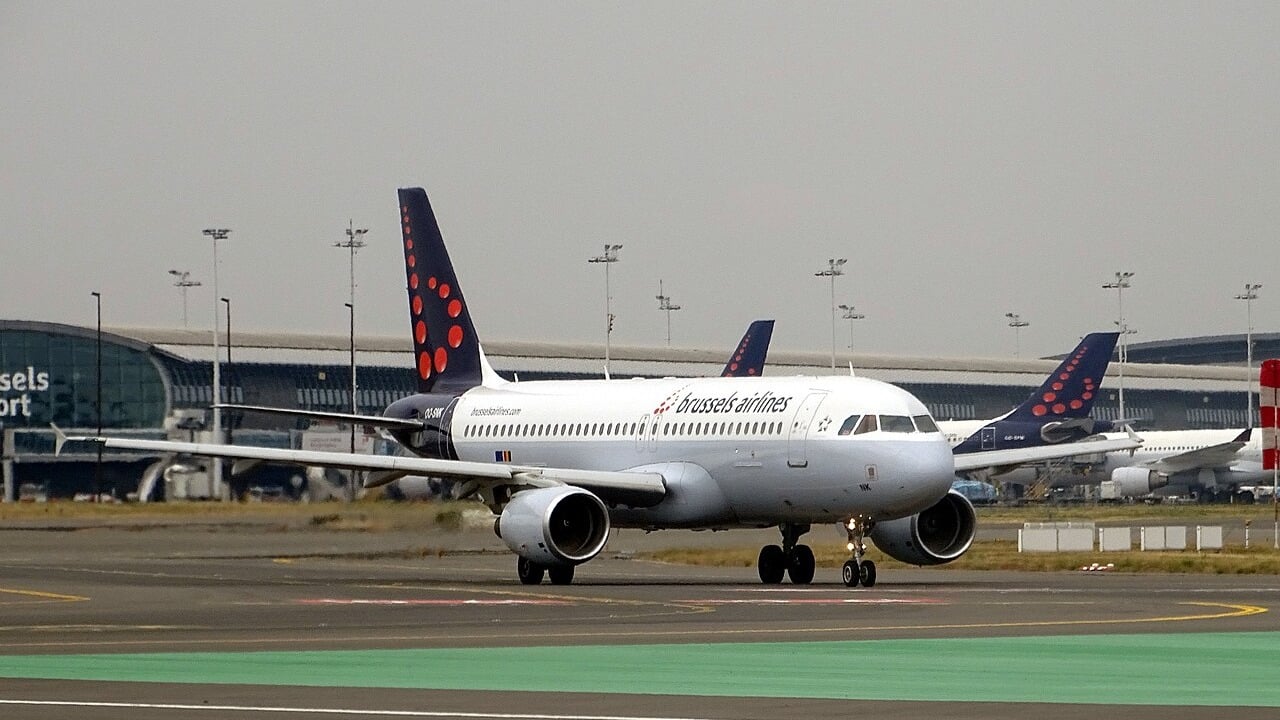
Belgium’s air traffic controller Skeyes suspended services from 7 a.m. to 9 p.m. on Monday, grounding all scheduled flights at Brussels and Charleroi airports and rerouting cargo through Maastricht.
Skeyes said around 60 percent of its controllers would join a national strike called by the FGTB, CSC and Synova unions, leaving staffing too thin to guarantee safe operations. Brussels Airport had planned 429 flights carrying roughly 59,500 passengers; Charleroi cancelled its entire Monday schedule. The Board of Airline Representatives in Belgium said this was the 11th strike to hit Belgian airspace in 11 months.
The walkout is part of a broader protest against Prime Minister Bart De Wever’s coalition budget, which aims to cut €10 billion (about $11 billion) from public spending by 2029. Unions argue the plan loads the burden on workers and pensioners while shielding the wealthy.
“A genuine wealth tax, fair taxation, and the elimination of tax loopholes,” said Bert Engelaar, head of FGTB, at the Brussels march. “Political responsibility is not about keeping a government afloat at all costs. It's about knowing when to stop.”
Airspace closure strands passengers
Skeyes announced the shutdown late Saturday, giving airlines roughly 36 hours’ notice. Brussels Airlines, part of Lufthansa Group, said it only learned of the controllers’ participation on Saturday afternoon, leaving “exceptionally difficult” time to rework Monday’s schedules. The carrier expected fewer than 6 percent of its 429 planned passenger flights to operate.
United Airlines, the largest U.S. carrier serving Brussels, waived change fees and fare differences for tickets rebooked on United flights departing between November 21 and November 26, provided the cabin and city pairs remain the same. The U.S. Embassy in Brussels issued a demonstration alert warning of strike impacts at Brussels-North Station, the Small Ring Road and Brussels-South Station.

Under EU Regulation 261/2004, passengers on cancelled flights departing from an EU airport are entitled to a refund or re-routing plus meals and accommodation. Airlines typically treat a national strike by a third-party air navigation provider as an extraordinary circumstance, which removes the separate cash compensation.
Cargo diversion and Liège disruption
Liège Airport, one of Europe’s busiest freight hubs, saw about 70 flights affected. Spokesperson Christian Delcourt said some were cancelled, others retimed or rerouted; Emirates SkyCargo flight EK9989 from Dubai diverted to Copenhagen.
Maastricht Aachen Airport in the Netherlands expected to take two cargo and two passenger flights diverted from Belgium. FedEx warned of possible delays to shipments to, from and within the country, while Chronopost said road blockages could lengthen transit times through Black Friday week.
Liège has been adjusting to a 42 percent drop in small-parcel volumes after the EU’s €3 duty on low-value e-commerce imports took effect on 1 July, reducing dedicated e-commerce flights. The strike hits during one of the airport’s busiest freight periods.
Maastricht picks up diverted flights
Maastricht Aachen Airport in the Netherlands is expecting to pick up an extra four flights, two cargo and two passenger, diverted from Belgium, according to Air Cargo News sister publication Nieuwsblad Transport.
The strike hits during one of the airport’s busiest freight periods, four days before Black Friday, The Loadstar noted.
Protesters clash near Midi station
Police estimated 50,000 demonstrators in Brussels; unions put the figure at 70,000. Marchers gathered near Brussels-North Station and proceeded along Boulevard du Jardin Botanique and the Small Ring Road toward the Esplanade de l’Europe near Brussels-Midi. Placards read “The rich earn more, workers pay more” and “Bart De Wever, enough is enough.”
Clashes erupted near Midi station around 2:10 p.m. when roughly 200 anti-fascist protesters pushed a burning pink cardboard pig structure toward police lines. Officers responded with tear gas and water cannons; at least one person was arrested.
Airlines criticize late strike notice
Brussels Airlines said the strike announcement was made late on Saturday 21 November, meaning a lack of advance notice that made it “exceptionally difficult” to prepare for disruption and “limit the impact on passengers,” Travel Tomorrow reported. The carrier added, “We deeply regret the extremely late communication about this decision,” and insisted it had been attempting to prepare for weeks, Travel Tomorrow said.

United Airlines issued a new advisory for “Brussels Industrial Action” and warned customers that flights may be affected, TheTravel reported.
Belgium’s air navigation service provider Skeyes, an autonomous public company governed by the 1991 law, shut down its control towers at Brussels and Charleroi airports from 7 a.m. to 9 p.m. Monday after roughly 60 percent of controllers joined a national strike. Skeyes manages civil airspace up to flight level 245 (24,500 feet) for which the Belgian State is responsible, including approach, landing, take-off and taxi control at the country’s five international airports.
Because Skeyes operates the CANAC centre in Steenokkerzeel and the airport control towers, its workforce stoppage legally suspends air traffic services in the delegated airspace, grounding all scheduled passenger flights and forcing cargo diversions to Maastricht and Liège.
Voka and Brussels Airlines criticise strike impact
Business lobby Voka criticised “the economic and societal consequences” of repeated strikes, calling them disproportionate. Brussels Airlines said passengers and staff must again bear the consequences of a strike after a series of disruptions in 2025 and early 2026.
Keep reading
Seth Rollins Returns as Team USA’s Final Member for Survivor Series
Seth Rollins was revealed Monday on "WWE Raw" as the fifth and final member of Team USA for...

Oti Mabuse Welcomes Baby Boy, Second Child With Husband Marius Iepure
Dancing with the Stars Ireland head judge Oti Mabuse has given birth to her second child, a son,...

The Order, Issued Friday by Los Angeles County Superior Court
Los Angeles County Superior Court ordered the payout from Alba’s HonorBar Inc. Profit Sharing Plan on Nov. 20....

Maura Higgins Secures DWTS US Final Spot With 59/60 Semi-Final Score
Longford native Maura Higgins secured her place in the Dancing with the Stars US final after a semi-final...