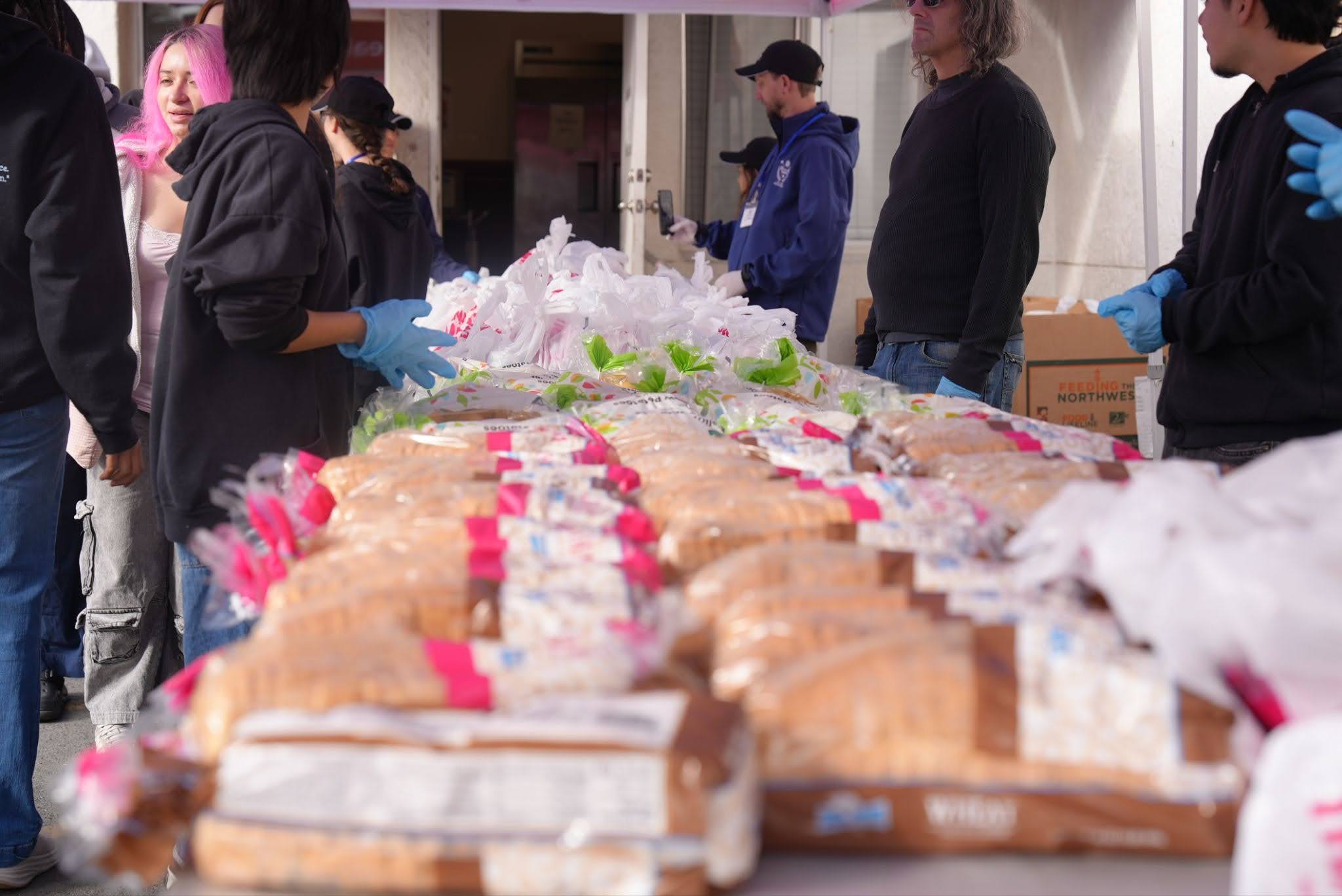
Demand at the Bay Area Rescue Mission’s Thanksgiving giveaway surged this week as the first holiday since Congress cut roughly $187 billion from the Supplemental Nutrition Assistance Program through 2034 brought more than 500 families to the Richmond nonprofit — about 200 more than last year, Richmond Confidential reported.
By 11:45 a.m. Tuesday, the line stretched down Macdonald Avenue, past a bus stop and around the corner onto Third Street. Russel G. Petty, a San Pablo veteran who has come for groceries for about four years, said his CalFresh benefit dropped from about $300 to $150 a month while his rent rose. “Without this giveaway, my family would have to go without a turkey,” Petty said as he waited in line.
New work requirements risk losing benefits for Californians
The federal cuts, enacted through what President Donald Trump called the “Big Beautiful Bill,” also imposed new work requirements and restricted SNAP eligibility for certain immigrant groups, Richmond Confidential reported. The state Legislative Analyst’s Office estimates 562,000 Californians are at risk of losing benefits under the work rule alone, and Contra Costa County projects about 17,600 county residents could lose food assistance under the new rules.
Rachel Monaco, senior manager of policy and advocacy at Second Harvest of Silicon Valley, told KRON4 the work‑requirement age ceiling was raised to 65 and automatic exemptions for veterans, foster youth and unhoused people were removed. “October was the first month when participants impacted by that change lost eligibility,” Monaco said, adding that she expects the ripple effect at food banks in coming months.
‘Regular people’ with jobs
“The people in line are regular people. These are not people who are not working, who are lazy,” said Bram Begonia, president and CEO of the Bay Area Rescue Mission. “These are people who have jobs. Some of them, both mom and dad are working, and they’re still here in line.”
Jerome Butler, a security officer, and Bernice Calloway, a caregiver, have attended the giveaway for 12 years. “I’ve never ever seen it like this,” Calloway said. Their household of about 10 faces $5,000 to $6,000 in monthly rent and bills, leaving Butler with $84 in his bank account for gas to get to work. “Our bills are more than what we work for,” Calloway said.
Stretching a shrinking supply
The Mission has provided more than 3 million meals so far this year — three meals a day and groceries six days a week — since its founding in the Iron Triangle in 1965. Begonia said the daily food line grows a week or two after paychecks and CalFresh benefits arrive.
When a regular donor supplied only 250 turkeys instead of the usual 500, the Mission raised about $8,500 in two weeks to buy the rest. “Cutting back on the number of families it serves wasn’t an option,” Begonia said.
James Wilson, 76, retired and living on Social Security with his wife and son, waited about 30 minutes leaning on his walker. He does not receive CalFresh and stopped driving when he could no longer afford registration and insurance. “I wouldn’t be in this line if I could afford, you know, to go out and buy it at a grocery store,” Wilson said.
Kim Keesee, a retired nurse on disability in Point Richmond, now buys generic brands and has given up eating out. “I’m one person and just cutting corners any way I can,” Keesee said. “So I can’t even imagine how it is for people with families.”
More cuts expected this winter
More people are expected to lose CalFresh this winter as benefits come up for renewal. The Food Bank of Contra Costa and Solano said in a July blog post that the state budget omitted $5 million food banks requested to help refugees, asylees and other immigrants who would lose or be ineligible for CalFresh.
Begonia said the Mission is preparing by giving each person less so the food reaches more people. “Instead of getting two loaves of bread in the line, we might give you one.”
Second Harvest serves one in six people in San Mateo and Santa Clara counties. The SF‑Marin Food Bank reports more than 120,000 people in San Francisco and Marin rely on SNAP, and the Alameda County Community Food Bank serves one in four in the East Bay, KRON4 reported.
Monaco warned that major changes to Medi‑Cal taking effect in the new year will further limit coverage and compound the strain. “We know that as CalFresh becomes more difficult to access or maintain, we do expect there will be a greater level of need for food assistance in our region,” Monaco said.
Petty, after picking up his Thanksgiving box, planned to visit the Mission’s women’s shelter for clothes for his 9‑year‑old daughter. “We got money for war, but we can’t feed the poor,” he said.

Penn State Erases 16-Point Deficit to Beat Mississippi State 68-63 in Battle 4 Atlantis
Penn State erased a 16-point deficit to beat Mississippi State 68-63 on Friday night in the Battle 4...

California Rail Authority Fires Consultant Linked to Honolulu Rail Over Billing
The California High-Speed Rail Authority has fired a consultant after he improperly billed taxpayers for hundreds of thousands...

Eileen Ifrah, 80, Dies; Memorial Service Set for Dec. 1
Eileen Ifrah, 80, has died; a memorial service will be held at 5:00 PM on Tuesday, December 1,...

Federal Navigation Rules Define Columbia River Mouth as Straight Line Between Jetties
Federal navigation rules draw the Columbia River's outer edge as a straight line between two rock jetties built...