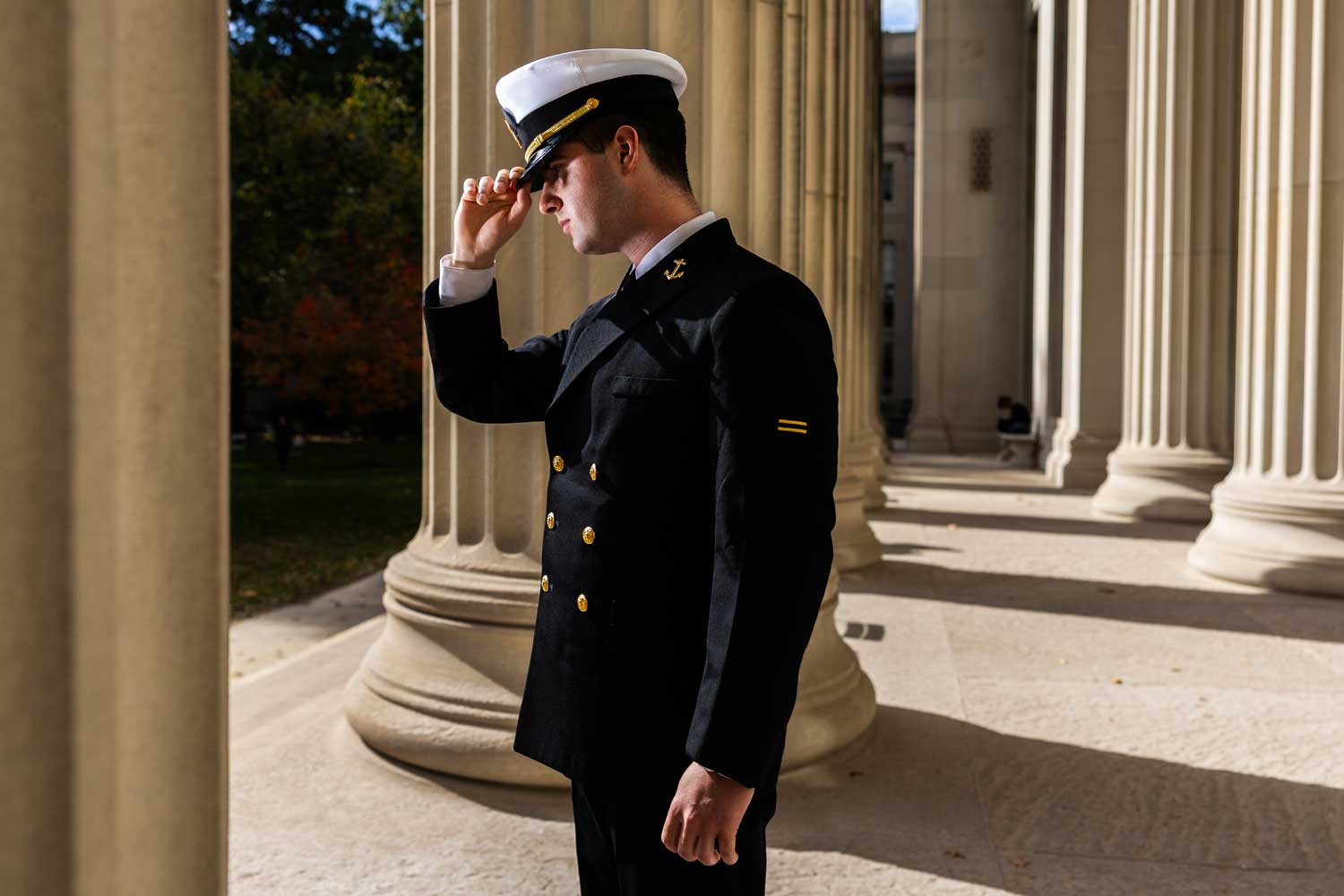
Failing midterms at the Massachusetts Institute of Technology was not part of the plan for an 8-year-old with big dreams.
After arriving on campus, Voelsing struggled to find his footing academically. He had thought he was at the top of his high school class.
“I thought I was smart in high school. I thought I was at the top of my class, and then I got here and I was failing midterms,” he said.
During the winter break of his first year, a conversation with his father changed his trajectory. His father encouraged him to find a path combining his strengths, personal fulfillment, and what the world needed.
That conversation prompted Voelsing to switch his major from aerospace engineering to climate system science and engineering. This joint program is offered by the departments of Civil and Environmental Engineering and of Earth, Atmospheric and Planetary Sciences.
The academic shift energized him and brought a sense of real-world purpose to his studies. He began connecting his ROTC training and environmental coursework to broader societal challenges.

A course in environmental history taught by Professor Susan Solomon further shaped his academic focus. Solomon is an atmospheric chemist who helped discover the cause of the Antarctic ozone hole.
For a final paper in that class, Voelsing researched an agroforestry project in Uganda. The assignment sparked a lasting interest in global agricultural and food systems that he plans to pursue in graduate school.
“There’s not going to be this one technology that comes along, and suddenly climate change isn’t an issue,” he said. “It will be a combination of 100 things making it 1 percent better for us to get across that finish line.”
Outside of engineering and ROTC, Voelsing dedicated considerable time to Camp Kesem. The student-run nonprofit provides free summer camps for children whose parents have been affected by cancer.
Joining the MIT chapter as a first-year student, he served in multiple roles over the years. He worked as a counselor, managed operations, led alumni relations, and helped organize a fundraising gala.
Returning to counseling as a senior, he found the most rewarding part was simply spending time with the children. The experience also transformed his understanding of empathy and emotional support.
“Being able to sit with a person as they grieve and experience that grief with them really changes your views on empathy and changes your views on what is actually important,” he said.
That openness influenced his friendships and his ongoing journey in ROTC. He values deep conversations and connections that challenge his perspectives, even if it costs him a good night’s sleep.

Rabbi Ammiel Hirsch Says the American Jewish ‘Golden Age’ Has Ended
Rabbi Declares End to Golden Age The American Jewish "Golden Age" has ended, according to Rabbi Ammiel Hirsch,...

Where Might Freshwater Species Persist in an Arid State? Assessing Aquatic Refugia in New
Researchers at the USDA Forest Service have developed a new framework to assess aquatic refugia across New Mexico,...

89-Year-old ‘Last Jewish Gangster’ Charms Kansas City-Area Audience With Tales and Takes
“Back in New Jersey, if nobody insults you, it means they don’t like you.” That was how Myron...

Trying to Find the Best Manchester City Defensive Mix Is No Simple Task Right Now
Enzo Maresca has plenty of work to do over the international break as his Manchester City side have...