
- The calibration system sends controlled UV pulses through optical fibers to verify photon detectors without stopping the experiment.
- South Dakota Mines and Argonne National Laboratory selected a Molex fiber that transmits UV light reliably at -300 °F after years of testing.
- The team uses 3D-printed PEEK housings for light diffusers, offering a cost advantage over stainless steel.
- Mines joined the DUNE project in 2019; the experiment involves roughly 1,500 scientists from more than 220 institutions across 35 countries.
DUNE will operate two massive detectors — one at Fermilab in Batavia, Ill., and one at the Sanford Underground Research Facility in Lead, S.D. — each filled with liquid argon held at -300 °F (-184 °C).
When neutrinos interact with the argon, they produce faint flashes of light that the photon detection system must capture reliably for the life of the experiment.
“Basically, what we do is send light pulses with a certain frequency and amplitude to understand the photon detection system response in function of time, and to be sure if the system is properly working or if we need to tune it up a bit,” said David Martinez Caicedo, Ph.D., associate professor of physics at Mines and principal investigator for the research.
The calibration system sends UV light through optical fibers to the detector. By measuring how the photon detectors respond, researchers can confirm performance or spot issues without extended shutdowns, according to the university.
One of the team’s main challenges was finding optical fibers that could transmit UV light effectively at cryogenic temperatures and remain reliable for decades. The Mines and Argonne teams spent years testing commercially available fibers under different wavelengths and temperatures, Rapid City Journal reported.

“DUNE’s detectors will be filled with liquid argon and operate at cryogenic temperatures,” said Denis Torres, a Mines physics graduate student. “We always need to make sure the components we use can work reliably under those conditions.”
Testing showed the amount of light transmitted before and after cryogenic exposure was nearly the same. The teams ultimately selected a fiber from Molex that met the project’s criteria. Mines researchers are leading work on the fibers and light diffusers, while Argonne is developing the electronics that generate the light pulses, the university said.

For the diffusers that spread the UV light inside the detector, the team adopted 3D-printed PEEK housings, which provided a significant cost advantage over stainless steel alternatives.
The system has been tested at CERN in Switzerland. Mines joined the DUNE collaboration in 2019 and, together with Argonne, is leading development and deployment of the UV calibration system for DUNE’s Horizontal Drift detector.
The collaboration published a paper detailing years of research into the UV light system components. Mines researchers are now working out how components can be produced and tested at scale, a question that remains open.
Sanford Underground Research Facility in Lead, South Dakota, is the deepest underground laboratory in the United States and hosts DUNE’s far detector roughly a mile below the surface.
The Long-Baseline Neutrino Facility will shoot a neutrino beam 800 miles (1,300 km) from Fermilab in Batavia, Illinois, to detectors deep underground at Sanford Lab, whose depth and rock stability shield sensitive physics experiments from high-energy cosmic radiation. The facility is managed by the South Dakota Science and Technology Authority, with operations funded by the U.S. Department of Energy through Fermi National Accelerator Laboratory.
DUNE is supported by the U.S. Department of Energy and led by Fermilab, involving approximately 1,500 scientists from more than 220 institutions across over 35 countries, the university said.
Worth a look

Vickers Unworried by Will Reichard Slump as Matt Daniels Cites Blocked Kick, Rushed Operation
"It's no concern," Vikings special teams coordinator Matt Daniels said of kicker Will Reichard's recent long-range misses. Minnesota...
Robinhood Lists Orlando vs Detroit Total Points Market for Nov 29 Game
Robinhood has launched a prediction market for the total combined points scored in the upcoming Pro Men's Basketball...
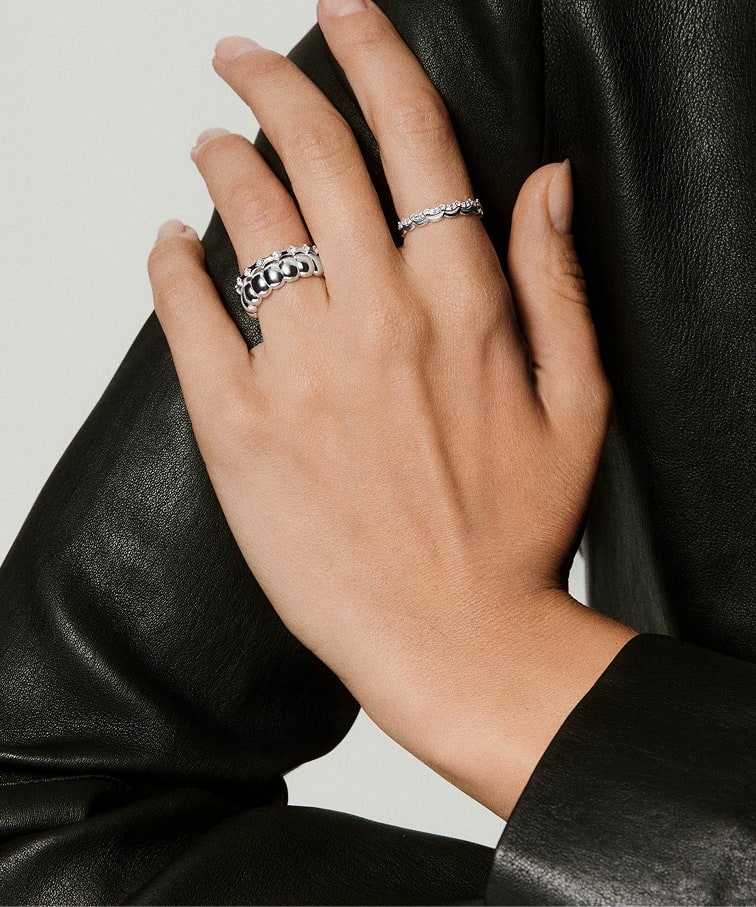
Wirecutter’s Black Friday Guide: East Fork Bowl, Mejuri Ring, Leather Wallet
Wirecutter published its Black Friday guide, spotlighting a handful of products its testing found worth the money. The...

Augusta to Honor Namesake Princess Augusta With Sculpture Unveiling Nov. 30
The City of Augusta will honor its namesake, Princess Augusta of Saxe-Gotha, with a sculpture unveiling and celebration...