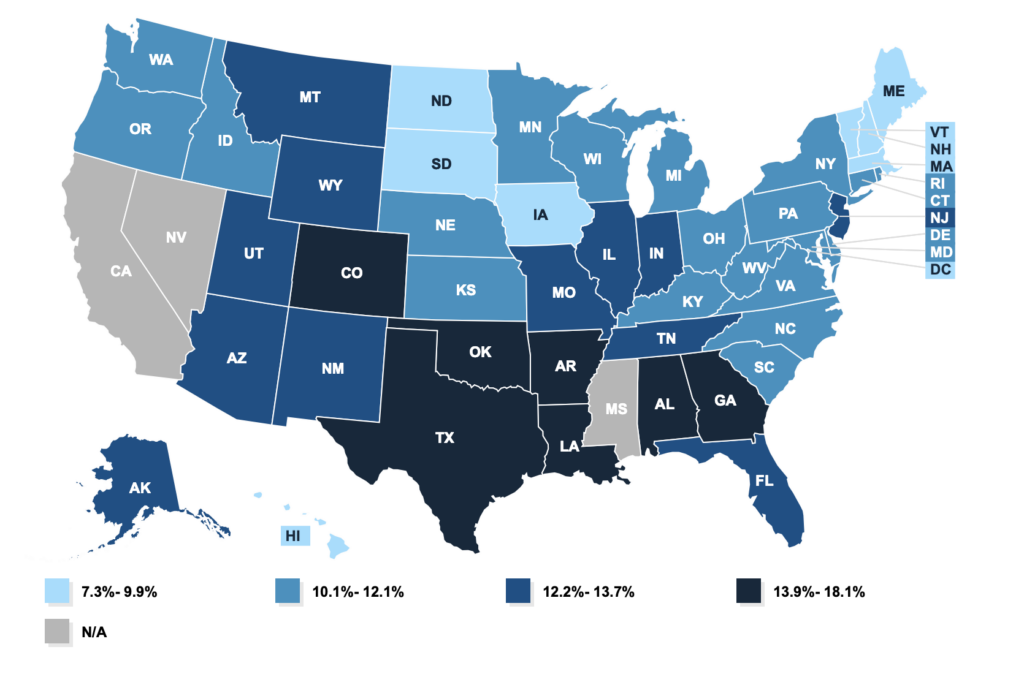
Nationally, one in eight adults skipped a doctor visit last year due to cost. In South Dakota, that rate was significantly lower, at 9.5%, making it the ninth-lowest in the nation.
The data, released on November 28, 2026, comes from a KFF analysis of 2025 CDC data from 47 states. The national average for avoiding doctor visits due to cost was 12.8%, with insured adults at 9.9% and uninsured adults at 42.8%.
South Dakota’s rate bucks the expectation of “Daugaardian frugality,” which might suggest higher avoidance. Instead, the state joins a cluster of Plains and New England states with a lower tendency to skip care for financial reasons.
The highest rates of avoidance were concentrated in the Rocky Mountains and the South. Colorado had a rate of 13.9%, while Texas led the nation with 18.1%.
The pattern shifts when focusing only on uninsured adults. South Dakota’s uninsured population still has a below-average rate of avoiding doctors, at 34.0%, the fifth-lowest in the country.
Hawaii reported the lowest rate of uninsured doctor avoidance in the nation, at 26.2%, the only state below 30%. Other states with notably low rates for the uninsured included North Carolina, New Mexico, and Pennsylvania. In contrast, New Hampshire, Rhode Island, and Connecticut had some of the highest rates for uninsured residents avoiding care, all above 50%.
The finding is particularly striking given that South Dakota had the second-highest cost of health care in the country in 2025, according to a report by Consumer Affairs. This creates a puzzle for observers, as higher costs might be expected to deter more people from seeking care.
“I can’t explain South Dakota’s below-average rate of doctor avoidance as a matter of more affordable health care,” the report from Dakota Free Press stated.
The figures leave open the question of why South Dakotans, facing high medical costs, still prioritize doctor visits more than residents of many other states. The report asks readers to see if they can align these figures with their own sociological observations.
The data was retrieved from the KFF report, “Adults Who Report Not Seeing a Doctor in the Past 12 Months Because of Cost by Insurance Status,” based on 2025 CDC data.
Related reading

Three Brothers Lounge Proposes Sports Lounge at Former Therapy Space in West Hartford Center
Three Brothers Lounge has filed alterations and additions permit paperwork to convert a 930-square-foot therapy office at 1000...

Panamanians in Chicago Organize for Cultural Visibility
Chicago is home to a community of several hundred Panamanians, a population long obscured by a lack of...

Oregon’s Covered Bridges Need Up to $51 Million for Urgent Repairs and Stabilization
Oregon’s 50 remaining covered bridges need $16 million to $51 million in repairs after dedicated state and federal...
Rent Freeze Covers Less Than Half of Renters the Rent Guidelines Board
Rent Guidelines Board approved a 0% increase for one- and two-year leases starting October 2026, covering about 1...