
A fugitive linked to an Olympic athlete faces federal charges
A 51-year-old man from South Los Angeles has been federally charged for allegedly assisting an international drug trafficking ring and helping its suspected leader evade law enforcement, according to the U.S. Department of Justice.
Roberto Gomez, originally from the Central-Alameda neighborhood, is believed to have been hiding in Mexico to avoid prosecution for a second-degree robbery case dating back to 2000, NBC Los Angeles reported.
The federal indictment adds a new layer to the ongoing legal saga of Ryan Wedding, a former Canadian Olympian who is accused of running a massive criminal enterprise. While Wedding's trial has been postponed due to the complexity of the evidence, the charges against Gomez show authorities are targeting the alleged drug kingpin's support network.
The logistics of a transnational network
Federal investigators allege that Gomez served as a vital go-between for transnational drug suppliers. Using various aliases—including Rob Flores, Fat Boy, Fats, and Rooster—Gomez reportedly managed the movement of narcotics across borders, NBC Los Angeles reported.

The operation utilized a multi-modal transportation strategy to move cocaine, methamphetamine, and fentanyl. According to the DOJ, Gomez allegedly used planes and boats to transport drugs from Central America to Mexico, before transitioning to “land-based transportation” to move the substances into the United States and Canada.
The alleged operation is large. Authorities estimate the drug ring moved approximately 60 tons of cocaine annually, utilizing semi-trailer trucks to move product between Colombia, Mexico, Southern California, and Canada.
Gomez’s role extended beyond simple logistics into high-level brokerage and intelligence. The DOJ claims Gomez brokered a sale of 1,000 pounds of methamphetamine between a supplier and Wedding for $500,000 in cryptocurrency.
Perhaps most damaging to the defense is the allegation that Gomez used his network to compromise law enforcement. Investigators believe Gomez built relationships with individuals who had access to “sensitive” information from both Mexican and American agencies, allegedly allowing him to stay ahead of drug seizures, arrests, and warrant executions.
The fall of an Olympian
The investigation highlights the stark contrast between Ryan Wedding’s athletic past and his alleged criminal present. Born in Thunder Bay, Canada, Wedding represented his country in the 2002 Winter Olympics in Utah, where he finished 24th in the parallel giant slalom.
Since that period, Wedding has allegedly transitioned into a central figure in a billion-dollar cocaine operation. Authorities suspect Wedding orchestrated various killings tied to the enterprise, including the murder of a federal witness. He is currently facing federal charges of running a criminal enterprise, murder, and conspiring to distribute cocaine.
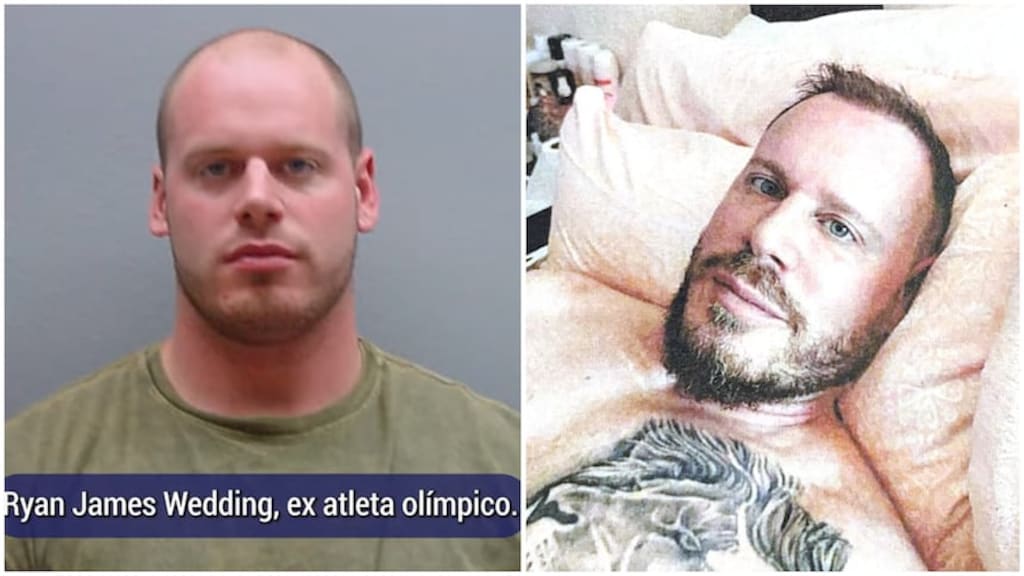
The following table summarizes the key figures and allegations presented by federal authorities in these interconnected cases:
| Individual | Alleged Role | Primary Charges/Status |
|---|---|---|
| Ryan Wedding | Alleged Drug Kingpin | Criminal enterprise, murder, cocaine conspiracy |
| Roberto Gomez | Alleged Accomplice/Go-between | Drug trafficking, money laundering, aiding evasion |
| Edgar Aaron Vazquez Alvarado | Cartel Founder (El Cártel Nuevo Imperio) | Cocaine trafficking; deceased |
Gomez was also facing a 2018 federal grand jury indictment for drug trafficking and money laundering. Between October 2024 and January 2026, authorities allege Gomez actively helped Wedding evade investigators while they attempted to track him down.
Wedding was eventually arrested and brought to the United States in January 2026. As the legal proceedings move forward, the complexity of the evidence continues to delay the trial, leaving the full extent of the network’s reach a central focus for federal prosecutors.
Related reading

Former Stoughton Police Officer Matthew Farwell Found Guilty of Killing Sandra Birchmore
A long-awaited verdict for the family of Sandra Birchmore “I’ve been holding my breath for six years,” Barbara...

Ukraine Embassy Urges MSU to Cancel Russian Violinist Vadim Repin
The Embassy of Ukraine in the United States is requesting Michigan State University cancel a scheduled virtual masterclass...

Augusta Administrator Retires as Commissioners Review 2027 Budget
The Augusta city administration is changing leadership following the announcement that its administrator will retire. This leadership change...

EKU Women’s Soccer Faces Tarleton State in UAC Semifinals
The No. 1-seeded Eastern Kentucky University women's soccer team begins its quest for a United Athletic Conference Tournament...