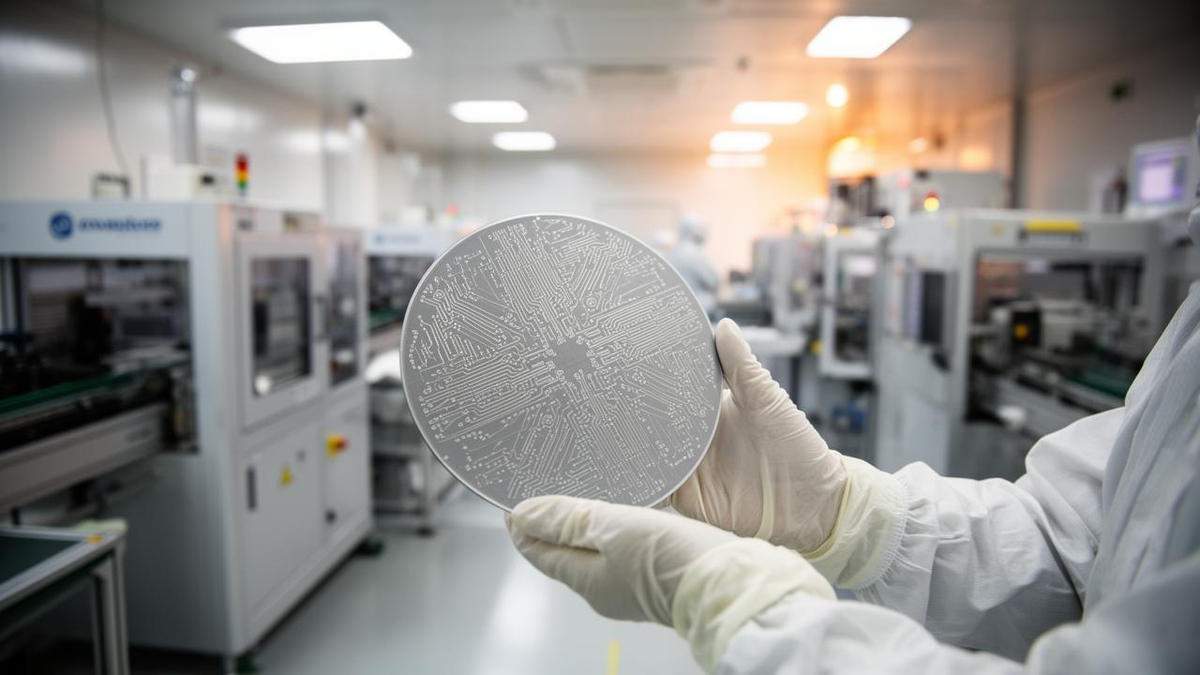
Southeast Asia is moving to consolidate its role in the global semiconductor hierarchy, shifting away from fragmented national efforts toward a unified regional production model.
At the ASEAN Business and Investment Summit (ABIS 2026) in the Philippines, industry leaders and policymakers proposed a 2026-2030 roadmap designed to integrate the bloc’s distinct industrial strengths into a singular, cohesive supply chain.
The push comes as demand for advanced chips surges on the back of the artificial intelligence wave. According to an IMARC Group report cited at the summit, the regional semiconductor market is growing 8.9% annually, with projections placing its total value at $55 billion by 2033.
The core of the strategy involves moving beyond simple assembly and packaging to capture higher-value stages of the design and manufacturing process. Rather than each nation attempting to replicate the entire semiconductor ecosystem, the ASEAN-BAC-led initiative seeks to use the specific comparative advantages of its member states.
“I think no single country needs to do everything,” said Tetsuya Watanabe, President of the Economic Research Institute for ASEAN and East Asia (ERIA), during the summit’s “ASEAN’s Next Industrial Revolution” panel. Watanabe argued that the bloc’s true competitive edge lies in the ability to bridge national capabilities, allowing a chip designed in Singapore to be integrated into automotive components manufactured in Thailand.
The proposed division of labor aligns with the current industrial landscapes of member nations. Malaysia has already established a relatively complete semiconductor testing, packaging and design ecosystem, while Vietnam is advancing innovation through policy. Singapore possesses advanced research and development capabilities, while Indonesia has an advantage in mineral resources.

Patricia Buenaventura Nichol, an expert at Bain & Company, said that the Philippines and Vietnam are working to add value in the electronics and semiconductor sectors. However, she emphasized that the transition requires more than just goodwill. “ASEAN already has the necessary foundations to successfully develop the semiconductor industry. What remains is to turn potential and commitments into substantive results,” she said.
The roadmap specifically targets the development of power semiconductors, sensors, space technology, and quantum technology. By specializing in these sectors, the bloc hopes to integrate more deeply into the supply chains of multinational corporations.
The ambition to connect more than 300,000 engineers and technicians across the region remains a primary hurdle. Boon Keng Lok, Asia Strategy Director at the international semiconductor industry association SEMI, highlighted the necessity of labor mobility, startup support, and the harmonization of production, sustainability and cybersecurity standards to make this cross-border integration functional.
The current reality remains defined by technical barriers.

| Metric | Projection/Status |
|---|---|
| Annual Market Growth | 8.9% |
| Projected 2033 Market Size | $55 Billion |
| Targeted Technical Workforce | More than 300,000 Engineers and Technicians |
Miles Thaddeus Ramirez, Country Director of Analog Devices in the Philippines, advocated for a strategy of “industrial transparency.” He proposed that member states aggregate their collective demand for AI infrastructure, effectively creating a self-serving intra-bloc ecosystem that drives technological development.
Despite the optimism expressed at ABIS 2026, the path forward is complicated by significant operational obstacles. The IMARC Group report identified talent shortages, complex regulatory systems, and tariff volatility as short-term challenges. Gaps in power infrastructure and technical standards among countries remain barriers that must be addressed before the value-chain division model can operate in sync.
“Cooperation must produce concrete and measurable results,” Nichol said, noting that success for individual nations will be measured by their ability to upgrade existing infrastructure, develop talent and remove constraints in supplier networks.

Gérard Depardieu Drops Appeal Against Sexual Assault Conviction
French actor Gérard Depardieu abruptly dropped his legal challenge against a sexual assault conviction on Monday accepting his...

ASEAN Trade Growth Highlights Paradox for UK NHS Innovation
British trade with Southeast Asian economies reached £62.1 billion in the year to the end of the fourth...

EU to Agree 113 New Sanctions Listings on Russia, Says McEntee
Stepping up economic pressure against Moscow, the European Union will agree on 113 new listings targeting Russia, Foreign...

ASEAN Unveils New Emblem With 11 Rice Stalks to Mark Timor-Leste Membership
Timor-Leste officially stepped into its role as the 11th member of the Association of Southeast Asian Nations on...