
St. George outdoor advocates have pushed for more than a year to create a city advisory committee that would weigh in on how development affects trails and open space, but Mayor Jimmie Hughes has not formed one despite dozens of public pleas at City Council meetings, The Salt Lake Tribune reported.
Construction on the Divario housing development has reshaped the approach to the Zen Trail, a mountain biking path Todd Perkins and his brother built after their father’s death. “I named it the Zen Trail because it was kind of like our little piece of zen,” Perkins said.
“We’d go out there and find some peace and quiet, solace, and process the whole passing of our father.” The developer agreed to maintain access and named part of the project “Desert Zen,” yet noisy machinery and transformed terrain illustrate the pressure rapid growth puts on recreation areas, The Salt Lake Tribune reported.
Why has the mayor not created the committee?
Hughes proposed a board focused only on Moe’s Valley, a popular climbing area entangled in the Northern Corridor highway fight, but the idea collapsed after a few meetings. “There was some pretty strong opinions with some of the people we wanted to be on that board,” Hughes said.
“And quite frankly, they kind of weren’t willing to compromise on some things.” He also worried there would not be other contentious areas for a broader group to tackle and said a city board could “dampen” the advocates’ activism, he told The Salt Lake Tribune.

What do advocates want the committee to cover?
Climbers, bikers, hikers, equestrians and local gear-shop leaders want a standing body that addresses not only Moe’s Valley but also future development threats across Washington County.
“When you get that diverse of a crowd coming to the powers that be to talk about it, it makes a way bigger impact, and it demonstrates to the city that hey, a lot of our constituents care about this area,” said Supe Lillywhite, manager of The Desert Rat and an organizing force behind the effort.
How are advocates working without formal recognition?
The coalition has built relationships with the Utah Trust Lands Administration to learn which parcels may be leased or sold next. “I’ve learned more acronyms than I’ve ever wanted to know,” Lillywhite said.
At the Zen Trail, advocates met with Divario, county staff and the Red Cliffs Desert Reserve to extend the reserve fence around open space inside the development, protecting Mojave desert tortoises without relocating them. “It was a win-win for everybody,” Lillywhite said.
What is at stake as the county grows?
Perkins moved to St. George in 1982 when “lots of open space, lots of places to roam and adventure” defined the area. Today housing abuts bouldering zones in Moe’s Valley and trails like Bearclaw Poppy.
“I don’t just want to be a historical figure that talks about the glory of the old days,” Perkins said. “Rather, he hopes St. George develops in a way so future generations can also find joy in open space.”
Council member Dannielle Larkin said the city needs an “ideological shift” away from large-lot sprawl. “That’s a really terrible development pattern in the desert,” she said. “It would cover up a lot of our open space, and it would also create an unaffordable community because our infrastructure would be so expensive.”
Real estate agent Misty Murphy, founder of the Southern Utah Climbers Alliance, said nearly all her clients are cyclists, hikers or climbers drawn by the same outdoors now under pressure. “I would say 99% of my clients are cyclists or hikers or climbers or mountain bikers,” she told The Salt Lake Tribune.
St. George, Utah’s fifth-largest city with 95,342 residents in 2020 and a metro population of 208,000, anchors the fastest-growing region outside the Wasatch Front.
This rapid expansion has pushed housing developments like Divario directly against recreation corridors such as the Zen Trail and bouldering zones in Moe’s Valley and Bearclaw Poppy, transforming terrain that once offered “lots of open space, lots of places to roam” into an urban-wildland interface where advocates must negotiate parcel-by-parcel with developers and the Utah Trust Lands Administration to preserve access and protect species like the Mojave desert tortoise.
What happens next?
Advocates continue to meet, map threatened areas and press the mayor and council for a permanent recreation advisory board. “Most of us have nine-to-five jobs,” Perkins said. “We keep doing this because we really care about the area and want to preserve it.”
Worth a look
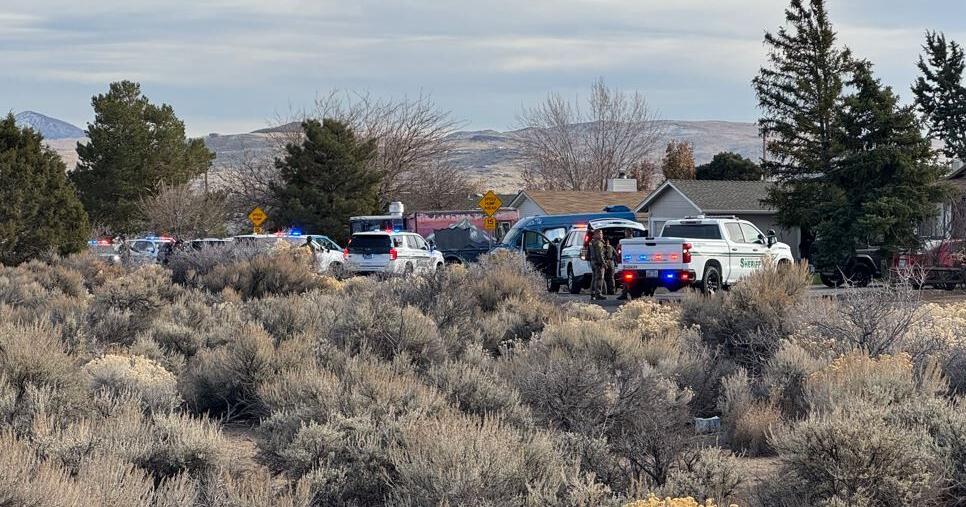
One Dead in Spanish Springs Shooting; Washoe Sheriff Says No Threat to Public
One person was shot and killed Friday afternoon in Spanish Springs, prompting a homicide investigation by the Washoe...
The Jerz Group Offers Wyoming C-Corp Formation for $750 to Target Venture Capital
The Jerz Group is offering Wyoming C-Corporation formation packages for $750, targeting founders who plan to raise venture...

Columbus Crew Eliminate Inter Miami with Stoppage-Time Winner to End Messi’s Title Defense
Columbus Crew knocked out defending champions Inter Miami from the MLS Cup playoffs via a dramatic 1-0 victory...

Unpaid Commissions in Maryland: When Are They Legally Earned Under State Law
Maryland workers who are owed commissions can rely on the Maryland Wage Payment and Collection Law when those...