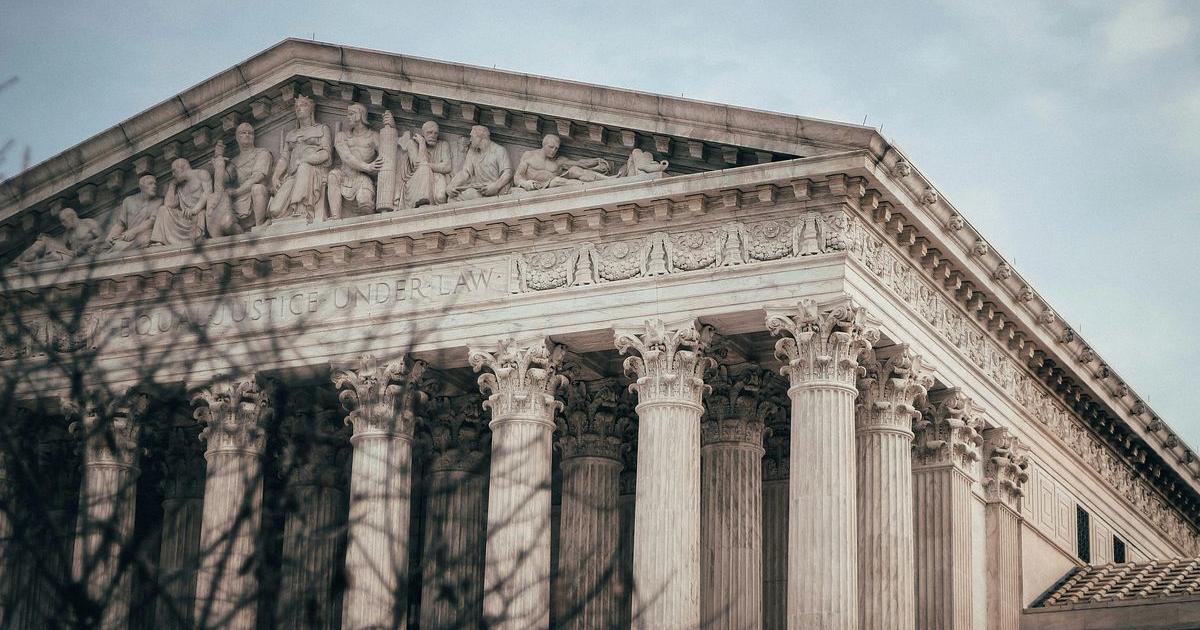
The U.S. Supreme Court will hear arguments Tuesday in a case testing whether Alaska can seize a bush pilot’s plane after a passenger brought a six-pack of beer into a dry village.
Kenneth Jouppi, who runs a business flying people to remote locations, lost his aircraft, valued at $95,000, after a passenger carried Budweiser into Beaver, Alaska, where local law bans alcohol transport. His lawyers argue the forfeiture violates the Eighth Amendment’s excessive fines clause, The Center Square reported.
“The excessive fines clause just sets the default as: ‘You got to have a fine that respects the ability of a person to pay and that recognizes the specific contribution of that person’s wrongdoing due to the social problem,’ rather than saddling one person unfairly with the burden of a much larger social problem,” said Matthew Cavedon, director of the Cato Institute’s project on criminal justice. He told The Center Square the penalty “falls squarely into the category of an excessive fine” and economically disables Jouppi.
Alaska’s lawyers countered that the state faces unique challenges with alcoholism, citing substantially higher mortality rates and limited medical resources in rural areas.
“Alcohol abuse in rural Alaska leads to increased crime; disorders, such as alcoholism; conditions, such as fetal alcohol spectrum disorder; and death, imposing substantial costs on public health and the administration of justice,” the state wrote in its brief. It argued the forfeiture is not grossly disproportional because “the illegal importation of even a six-pack of beer causes grave societal harm.”
The state also disputed the hardship claim, writing that Jouppi owned a second plane, was “pretty much retired,” and would “probably just sell” the aircraft at issue.
“It is undisputed that the forfeiture of one of Jouppi’s planes would not deprive him of his livelihood,” the brief said.
Cavedon said he would be surprised if the justices sided with Alaska, noting the court typically takes such cases to set a standard or reverse a decision.
“I might be mistaken, but I’m feeling optimistic about this,” he said. “I am curious to see if they are going to say more about civil forfeiture as a regime because we’ve got concerns about civil forfeiture that go beyond this case.”
Worth a look

Matika Wilbur Completes Project 562 Book on Every Federally Recognized Tribe
Native American photographer Matika Wilbur has completed a yearslong project photographing members of every federally recognized tribe in...

Mark Madsen’s Cal Basketball Team Has Started the Season With a 5-2 Record
Mark Madsen’s Cal basketball team has started the season with a 5-2 record, but now the Bears confront...

Sacramento entered the season with low hopes and has fallen further
Sacramento entered the season with low hopes and has fallen further, sitting 2-16 through 18 games with a...
Idaho State vs. North Dakota Prediction, Odds, and FCS Playoff Picks
North Dakota will host Idaho State in an FCS playoff opening-round game at the Alerus Center on Saturday...