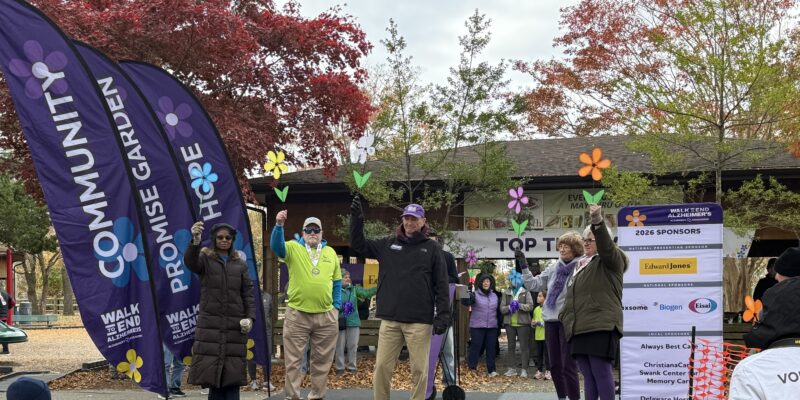
The Swank Center for Memory Care stepped into the Rehoboth Beach community on Saturday, Nov. 14, to sponsor the local installment of the Alzheimer’s Association’s Walk to End Alzheimer’s.
The event drew hundreds of participants to the Delaware coast, serving as a visible rallying point for families and medical professionals tasked with the daily challenges of cognitive decline.
According to ChristianaCare News, the gathering was more than a symbolic gesture. More than 400 participants successfully raised $128,000 toward the event’s $185,000 fundraising goal, with organizers noting that donations remain under active tally.
“The walk is a powerful reminder that no family should navigate Alzheimer’s or another dementia alone,” said Adrienne Holloway, Ph.D., who represented the Swank team during the opening ceremony.
The economic and emotional stakes of such events are high. As the population ages, the burden of care for those with Alzheimer’s and related dementias often falls heavily on local healthcare systems and unpaid family caregivers. For those navigating these health changes, access to clinical guidance is the primary barrier to maintaining quality of life.
The Swank Center, led by Steven Huege, M.D., MSEd, who serves as The Swank Foundation Endowed Chair in Memory Care and Geriatrics, provides specialized diagnostic and supportive services across Rehoboth, Smyrna, and Wilmington. Their presence at the event was designed to bridge the gap between clinical expertise and the families currently seeking resources.
At the Swank outreach table, Holloway engaged directly with participants, offering information on how to access comprehensive memory care services. The location of the booth near the event’s Tribute Area—where attendees left messages for loved ones—placed the medical team in the center of the community’s emotional response to the disease.
While the walk provided a moment of public solidarity, the reality of dementia care remains complex. Critics of current healthcare policy often point to the high cost of long-term care and the lack of robust, nationalized support for caregivers as systemic failures.
The reliance on private foundations and nonprofit fundraising to supplement care services highlights a broader tension: the medical system is increasingly dependent on community-led financial support to fill the gaps in Alzheimer’s and dementia research and support.
Holloway’s participation in the ceremony included raising a blue flower, a ritual representing those living with the disease. Other participants followed suit, creating a visual representation of the scale of the crisis in Delaware. The act served as a reminder that behind the fundraising totals are individuals requiring consistent, specialized medical intervention.
The Swank Center’s involvement underscores a shift toward more integrated, community-based care models. Rather than operating in isolation, the center is positioning itself as a hub for both clinical treatment and public advocacy. For the families in attendance, the event provided a rare opportunity to connect with the professionals who guide their care plans outside the walls of a doctor’s office.
As the final donation tallies continue to grow, the focus for the Swank team shifts back to the daily requirements of patient support. The success of the walk in reaching its financial targets will determine the extent of the resources available for upcoming outreach and education initiatives in the region.
“We’re proud to be raise awareness with our Sussex County neighbors and help connect families with the care and resources they need,” Holloway told ChristianaCare News.
Keep reading

UN Regents Vote to Sell Property to Nebraska Medicine for Project Health
The University of Nebraska Board of Regents voted unanimously Friday to sell certain property that Nebraska Medicine uses...

No. 3 Louisville Travels 12 Hours to Alaska for Great Alaska Shootout
The University of Louisville women’s basketball team traded the comforts of home for a grueling 12-hour travel day...

Virginia Cavaliers Finish Third Behind Tennessee, North Carolina at Tennessee Invite, Official Site Says
Virginia left Knoxville with eight wins but a familiar problem: depth beat stars. The Cavaliers dominated the highlight...

Concord Returns to Annual Tree Lighting One Year After Shooting Disrupted Celebration
Downtown Concord returned to its annual holiday tradition on Friday night, as thousands of residents gathered for the...