
Taiwan has ascended to become the world’s fourth-largest stock market, driven by a massive surge in artificial intelligence exposure and a rapid expansion of its capital markets, according to reports from the Taipei Times and BigGo Finance. This shift comes as the nation’s benchmark Taiex index rose more than 55% in 2026, fueled by a dominant electronics sector that is central to the global AI supply chain. While the macroeconomic indicators suggest unprecedented resilience, the rally is creating a distinct divergence between liquid, high-performing public stocks and the domestic venture capital ecosystem.
The Economic Intelligence Brief:
- Market Ascendancy: Taiwan’s stock market capitalization has surpassed that of the United Kingdom and India, ranking fourth globally.
- AI Concentration: Research cited by Nasdaq executive Edward Knight indicates Taiwan’s AI exposure is as high as 79%, the highest globally.
- Index Performance: The Taiex index surged 55.81% since the start of the year, closing at 45,211.83 on October 30, 2026, as reported by Focus Taiwan.
The AI Surge Drives Market Capitalization and Asset Growth
President William Lai highlighted the nation’s economic momentum at the Taiwan Weeks event, noting that the economy grew 8.76% last year and is projected to exceed 11% this year. According to the Taipei Times, assets under management in Taiwan have reached NT$48.38 trillion (US$1.48 trillion). This growth is anchored by Taiwan’s position in the global semiconductor and AI infrastructure sectors. BigGo Finance reports that Taiwan Semiconductor Manufacturing Co. (TSMC) has seen its market value approach $2 trillion, making it the world’s seventh-largest company and the largest entity outside the United States.
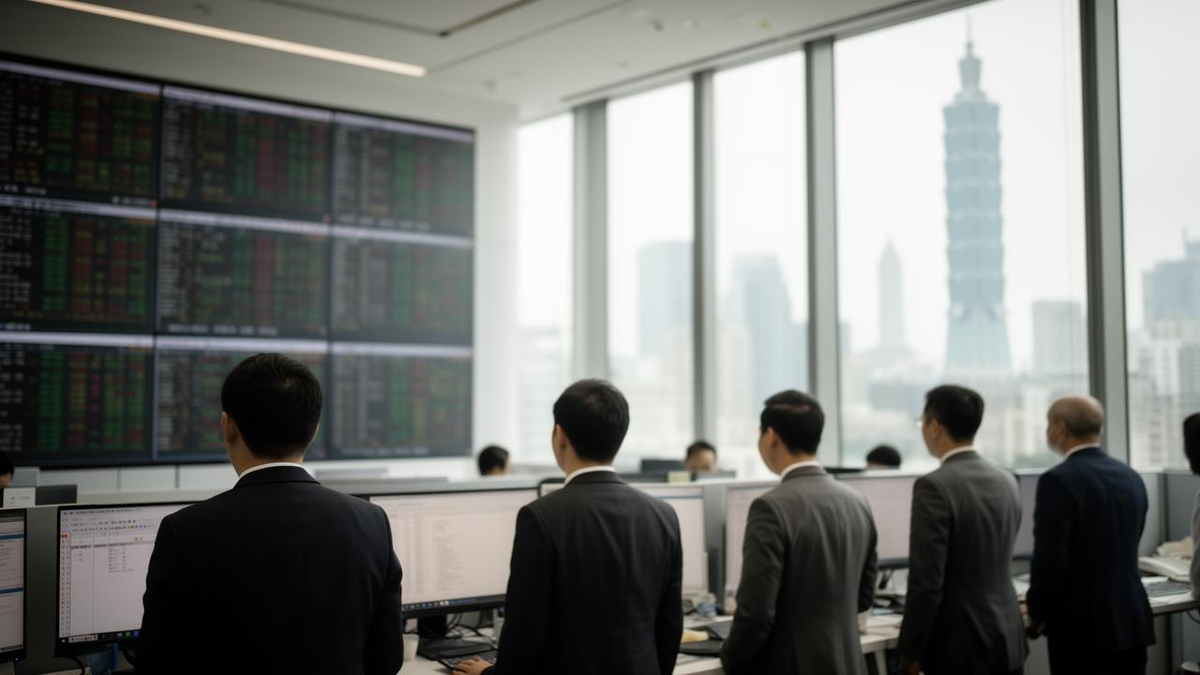
The concentration of this growth is significant. While one research report placed Taiwan’s AI participation at 71%—the highest in the Asia-Pacific region—another report cited by BigGo Finance placed AI exposure as high as 79%. Edward Knight, Nasdaq Executive Vice Chairman, noted that Taiwan sits at the center of the AI story because the technology requires rapid, transparent capital allocation to fund research, facilities, and labor. He observed that equity markets are successfully directing that capital toward productive investments.
Liquidity Shifts Create a Crowding-Out Effect for Startups
The rapid appreciation of the Taiex index is not without secondary consequences for the local innovation economy. Dataconomy reports that the stock market rally has pulled many Taiwanese investors toward listed AI supply chain companies, creating tougher conditions for early-stage startups seeking domestic capital. This “crowding-out effect,” a term noted in a March report by KPMG Taiwan, describes how investors favor liquid public AI stocks over private funds that carry longer lockup periods and less certain exit paths.
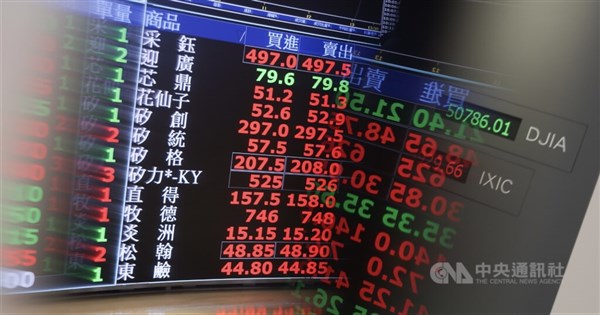
Data from the government-commissioned platform Findit illustrates a sharp decline in early-stage domestic investment. In 2021, seed and angel rounds accounted for 38.4% of investment deals by Taiwanese venture-capital firms; by 2024, that share had fallen to 17.1%. Caleb Chu, founder of Nova Studio, observed that while the global trend leans toward early-stage investing to capture higher returns, Taiwan is seeing the opposite as investors move toward B- and C-round deals or pre-IPO companies where the path to returns is clearer. Dataconomy reports that B- and C-round deals accounted for 29.1% of Taiwan’s venture deals in 2024.
This shift has forced many deep-tech founders to look toward Silicon Valley for survival. Anderson Chen, founder and CEO of Operon Solutions, stated to Dataconomy that while it has become easier for Taiwanese startups to fundraise overseas due to the island’s technical expertise, domestic fundraising remains difficult because the returns in the semiconductor stock market are simply too high to ignore.
Comparative Market Data: 2026 Performance Indicators
| Metric | Data Point | Source Attribution |
|---|---|---|
| Taiex Year-to-Date Increase | 55.81% | Focus Taiwan |
| Taiwan AI Exposure (Global High) | 79% | BigGo Finance |
| Taiwan AI Participation (Asia-Pacific High) | 71% | BigGo Finance |
| Taiwan Stock Market Global Rank | 4th | Taipei Times / BigGo Finance |
Demographic Shifts in Retail Trading
The surge in market activity is also reshaping the profile of the Taiwanese investor. According to data from the Taiwan Stock Exchange (TWSE) released via Focus Taiwan, the number of stock trading accounts hit a new peak of 14.827 million at the end of October. A notable trend is the influx of younger participants: investors aged 30 and under accounted for 56.3% of all new accounts opened in October. This shift suggests a long-term change in how the younger generation in Taiwan engages with capital markets and wealth accumulation.
The Main Street Bridge: Impact on Global Tech Supply Chains
For the American consumer and investor, Taiwan’s market dominance is a direct indicator of the stability and cost of the global AI ecosystem. Because Taiwan functions as the primary nexus for AI hardware, the liquidity and capital efficiency of its markets directly influence the speed at which new chips, servers, and networking components reach the global market. If Taiwan’s capital markets successfully lower financing costs for its industrial giants, it can mitigate inflationary pressures on high-tech goods. Conversely, the “crowding-out” of domestic startups could potentially limit the next generation of AI software or specialized hardware innovators emerging from the region.
Institutional investors are closely monitoring these developments. A September Bank of America survey, cited by Dataconomy, found that 35% of fund managers expect Taiwan to benefit most from the next phase of the AI cycle, tying it with the United States. This sentiment underscores the belief that Taiwan’s industrial foundations provide a floor for its market volatility.
Government Strategy for Financial Internationalization
To sustain this momentum, the Taiwanese government has outlined three strategic priorities. As reported by the Taipei Times, President Lai intends to further internationalize the financial sector by liberalizing the industry and attracting more global asset management firms. The goal is to position Taiwan as a primary platform for international capital seeking Asian exposure. Additionally, the administration is pushing for greater innovation by encouraging high-quality international companies to list on the local exchange and strengthening the ties between venture capital and capital markets. To improve transparency and attract long-term institutional capital, Taiwan is also phasing in the IFRS Sustainability Disclosure Standards to align local reporting with international norms.
The trajectory of the Taiex will likely depend on whether the government can successfully bridge the gap between its booming public equity markets and its tightening private venture ecosystem. As AI demand continues to dictate global capital flows, Taiwan’s ability to maintain its “innovation financing hub” status will be the critical metric for its long-term economic resilience.
Disclaimer: The information provided in this article is for educational and market analysis purposes only and does not constitute financial, investment, or legal advice. Always consult with a certified financial professional before making investment decisions.
Keep reading

GSW Awards Posthumous Degree to Brenton Truitt Honoring Family Legacy
A legacy honored at Georgia Southwestern Homecoming The tradition of homecoming often centers on the excitement of football...

Charles Orlando Hovey Jr., 96, Veteran and Yacht Broker
Charles Orlando Hovey Jr. passes away in Laguna Beach at age 96 Charles Orlando Hovey Jr., known to...

Bishop Caggiano Honors the Departed at All Souls Day Mass in Greenwich
A Sunday Ritual of Faith and Memory in Greenwich Bishop Frank J. Caggiano stood under a white tent...

Sacramento County Turns Green for Operation Green Light for Veterans
Sacramento County illuminates Administration Building in green for veterans Starting November 4, the Sacramento County Administration Building at...