389 Fatal Falls Show Tennessee Construction Safety Needs a 2027 Overhaul
389. In 2024, 389 of the 1,034 fatal workplace injuries in private-sector construction nationally were attributable to falls, slips, and trips, with 95.9% of those fatalities resulting from falls to a lower level. In Tennessee, the toll was 16 workers lost in 2023. These are not statistics. They are reasons why foremen in Nashville and Knoxville are rethinking everything they thought they knew about safety on the job. As ABC Greater Tennessee reported, the practices that worked in 2022 are not enough for the job sites contractors are building on today.
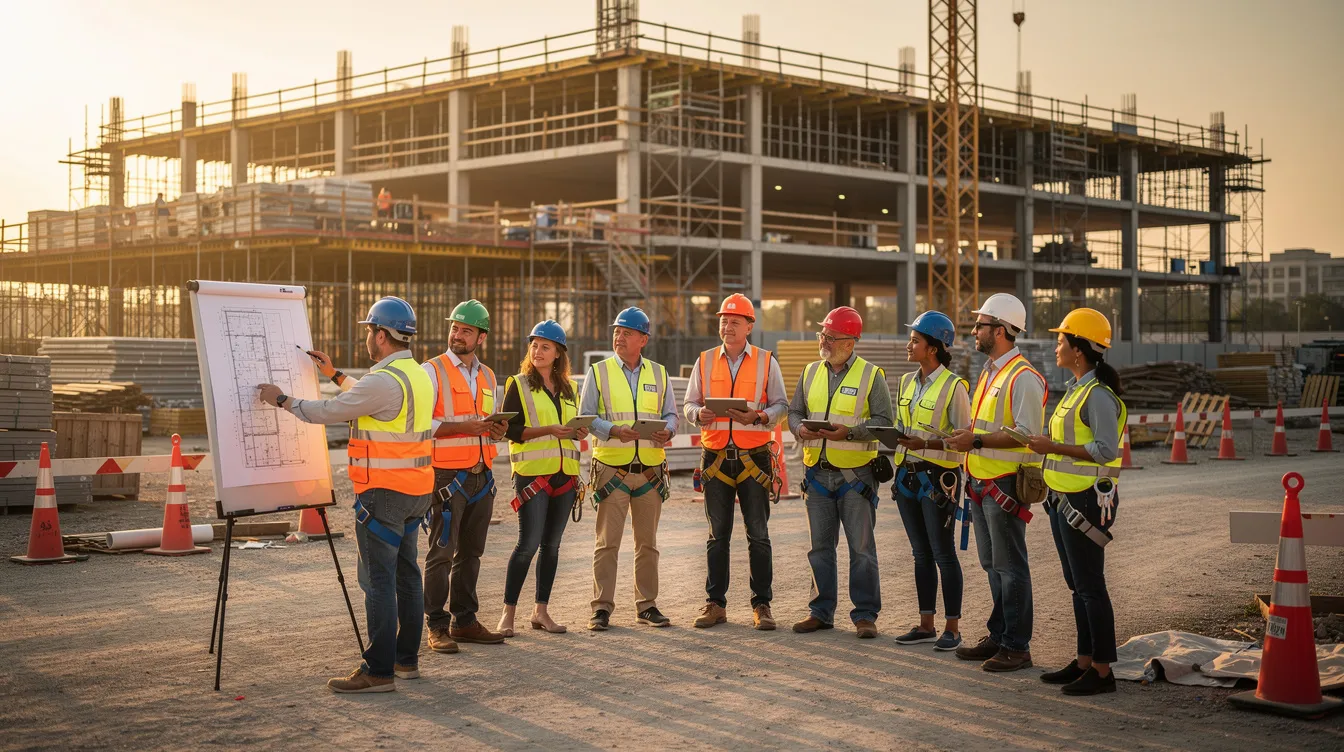
A construction site is a living thing. Temporary stairs open and close, fences move, cranes relocate. A safety binder written on day one can’t account for that. You can’t file it away and hope it works. By 2027, effective safety plans will have to be as dynamic as the job sites they protect. This is no longer a suggestion.
For Tennessee projects, from mid-rise buildings in Nashville to hospital expansions in Knoxville, the layout and access points can change weekly. A static plan is a liability. The new model is proactive. It means scheduled hazard reviews at every major phase change, documented evacuation routes that are updated with every significant site shift, and quick safety huddles the moment new equipment or crews arrive.
Dynamic Plans, Dynamic Routes
When the site environment changes, the safety infrastructure must evolve with it. That means integrating safety into the design phase, not tacking it on as an afterthought. It means tracking near-miss reports as a key leading indicator. On a practical level, it means a foreman in Chattanooga should be able to point to a map this week that is different from the map last week, because the way off the site has changed. The old way is to write a plan and hope the site doesn’t change. The new way is to write a plan that assumes the site will change.
Which brings us to the second critical trend: emergency wayfinding. By 2027, clear emergency wayfinding on construction sites will be treated as seriously as fall protection. Workers need to find safe exits in seconds, not minutes. Research shows that cognitive performance plummets in high heat and humidity. A worker struggling to remember a route from a six-month-old binder is a danger to themselves and everyone around them. Traditional fixed exit signs are useless on an active site.
The solution is visual guidance that moves with the work. Contractors can deploy color-coded arrows, floor-by-floor muster point maps, and temporary illuminated markers that update as the site changes. A Tennessee foreman’s weekly checklist should include a simple question: Can every single worker on this site, especially the new ones, explain how they would get out right now? If the answer is no, the plan is already failing.
A Common Language for Safety
But a plan is only as good as the communication that supports it. This leads to the third trend: safety communication that works across languages and experience levels. Tennessee construction sites are increasingly diverse. Reliance on written English text alone is a recipe for disaster in an emergency. The answer is visual communication—simple icons, color coding, and diagram-based signs that show where to assemble, how to report an incident, and how to avoid specific hazards. These signs should be standard at every entry point, supplemented by multilingual briefings and buddy systems for new workers.
Stress, fatigue, and heat make it harder for anyone to process complex instructions. A clear, visual message cuts through the noise. It’s not about dumbing things down; it’s about making them understandable under pressure. When a worker is scared or disoriented, they don’t need a manual; they need a sign that points the way.
When Everyone is on the Same Team
This brings us to the most complex challenge: subcontractor coordination. In 2027, this isn’t just about schedules and budgets; it’s a core safety responsibility. On a large commercial project in Nashville or an industrial site along I-24, multiple subcontractors operate side-by-side, each with their own procedures. When an emergency strikes, they all have to respond as one team. If each subcontractor maintains its own separate emergency plan, confusion can turn a manageable situation into a tragedy.
The solution is unified standards. Project teams must implement joint orientations for all subcontractors before work begins. They need shared emergency maps that are updated at every phase change. They must agree on radio channels or mobile alert systems and have a clear designation of who leads an evacuation. The merit shop model, which thrives on open competition, still requires common safety standards on complex, multi-employer sites. When employers coordinate safety expectations across subs, they protect workers and improve project outcomes.
Preparing for the Unexpected
Emergency preparedness in 2027 also means expanding beyond “typical” jobsite accidents. Planning must now cover extreme weather, utility failures, and hazardous material incidents. In Tennessee, this means tornado warnings in the spring, sudden thunderstorms that shut down crane operations, and extreme heat days that compound worker fatigue. A power outage can render tower lights and hoists useless in an instant, creating new hazards.
Emergency procedures must be straightforward enough for numerous workers to carry out under duress, even if key leaders are absent or harmed. Wearable technology like smart helmets can support emergency response through location tracking and man-down alerts, but they cannot replace rehearsed procedures. Regular drills and after-action reviews should happen at least quarterly, or whenever a major site reconfiguration occurs. The goal is to build muscle memory for the unexpected.
Technology as a Tool, Not a Crutch
Which brings us to the technology itself. By 2027, wearable technology will move from pilot projects to mainstream use. Smart helmets can detect falls and call for help. Biometric bands can monitor vital signs, alerting supervisors to heat stress or fatigue before it becomes a medical emergency. Exoskeletons can reduce the physical strain of heavy lifting, while smart glasses can provide real-time instructions through augmented reality.
These tools are powerful, but they come with challenges. Companies face data privacy concerns, battery life issues, and the need to train field leaders to interpret alerts instead of ignoring them. Fewer than half of contractors nationally currently use wearable sensors or predictive analytics. For smaller Tennessee firms, a targeted pilot program makes more sense than a full-scale rollout. The key is to remember that wearable technology enhances safety; it doesn’t replace competent supervision and field leadership. A smart helmet is a great tool, but it’s no substitute for a foreman who walks the site and knows his crew.
The Human Factor
Ultimately, all these trends point to one central truth: the human factor is the most important variable in construction safety. Mental health support, fatigue management, and personal risk factors like heat stress are moving from the periphery to the core of safety programs. A tired worker is a risky worker, just as a stressed worker is a distracted one. Acknowledging this isn’t a soft HR policy; it’s a hard safety reality.
Construction safety is evolving from a reactive checklist to a proactive, human-centered system. It’s about dynamic plans that adapt, clear visuals that guide, and coordinated teams that protect each other. The trends of 2027 are not a distant forecast; they are a response to the deadly realities of 2024 and 2023. For Tennessee contractors, the question is no longer if they should change, but how quickly they can adapt to keep their workers alive.
The trends are clear, but the path forward is not. Who will be the first contractor in Middle or East Tennessee to implement a fully dynamic safety plan from the ground up? Which company will successfully integrate wearable technology without sacrificing the human touch that makes a site safe? The answers will be written not in reports, but in the lives of the workers who go home safe.
Keep reading
Anchorage Police Shoot Burglar Who Fired Gun During Arrest
Anchorage Police Chief Reveals Suspect Stole Hundreds of Keys Before Fatal Shooting On October 29, 2026, a 33-year-old...

S&P 500 Loses $3 Trillion on Fears of AI Regulatory Crackdown
SINGAPORE – Asia's tech-heavy markets face a brutal Friday after a rout in US AI stocks, triggered by...

Alabama Appeals Court to Decide if Panhandling Laws Violate First Amendment
Alabama Fights to Revive Panhandling Bans After Unconstitutional Ruling Alabama is making a legal push to reinstate its...
It’ll affect schools and teachers and part of those families that are working in other industries
"It'll affect schools and teachers and part of those families that are working in other industries that aren't...