
Twenty. The Tennessee Supreme Court on Monday upheld a 2023 state law capping the Metro Nashville Council at 20 members—half the 40 seats the body has held since 1963, Holland & Knight reported. The ruling, issued November 3, 2026, marks the most consequential decision for Nashville’s government since city-county consolidation took effect six decades ago, and it arrives with no implementation date attached, leaving the August 2027 elections hanging in uncertainty.
The practical stakes are immediate. Right now, 35 district representatives and five at-large members govern a city of roughly 700,000 residents. Under the court’s decision, that number must shrink to no more than 20, doubling the average district size from about 20,000 constituents per member to more than 40,000. What remains unresolved is whether that reduction happens in nine months or waits until 2031.
From 40 Seats to a Legal Showdown
The fight began in August 2022, when the Council voted down a proposal to host the 2024 Republican National Convention. The General Assembly responded in 2023 with legislation capping metropolitan councils at 20 members—a limit written to apply statewide but practiced only by Nashville. Metro sued within days, arguing the law violated the Home Rule Amendment and the constitution’s Exemption Clause, which exempts consolidated governments from the 25-member limit on county legislative bodies.
The legal battle wound through three courts over three years. A three-judge trial court sided with Metro in July 2024 and struck down the cap. The Court of Appeals reversed that decision in June 2025. Then, in April 2026, while the case awaited the Supreme Court’s ruling, the General Assembly amended the law to delete the deadlines and language at the center of Metro’s Home Rule argument. That amendment proved decisive: the Supreme Court ruled unanimously on November 3 that the constitution does not prevent the legislature from setting its own size limit, finding the Home Rule claim moot and remanding the case to the trial court. Nashville Scene noted that both opinions were authored by Justice Sarah K. Campbell, who wrote that the Exemption Clause does not create “freestanding immunity from restrictions originating elsewhere.”
The 1963 Compromise That Built Modern Nashville
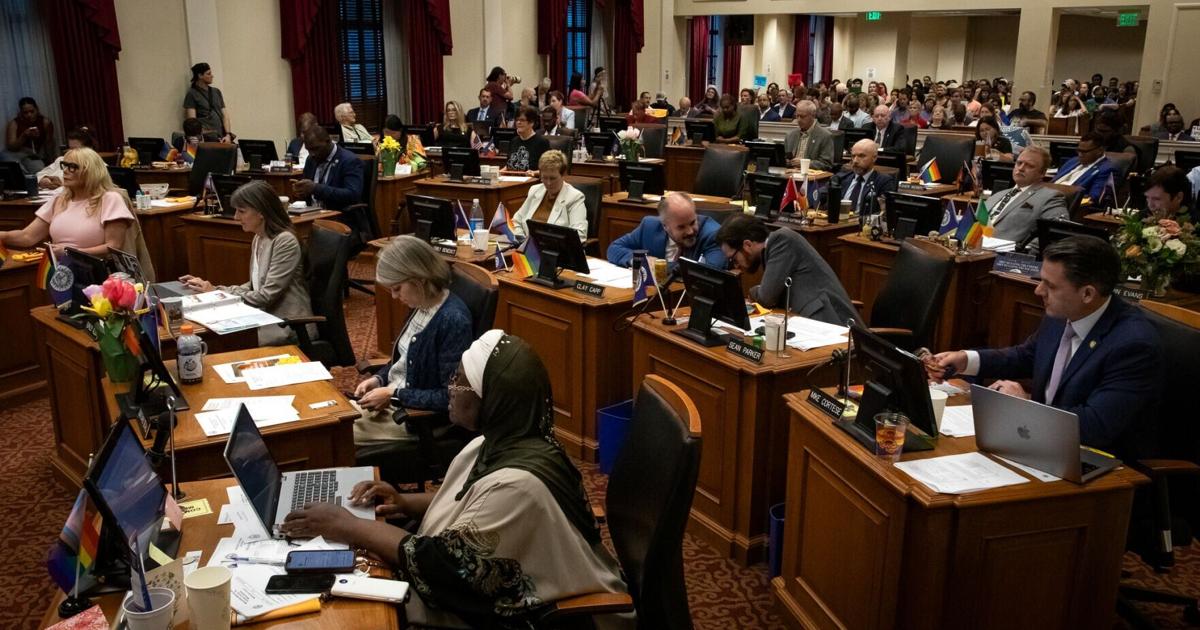
To understand why halving the Council matters, look at why it was built this large. When voters rejected a 21-member charter in 1958, the 1962 consolidation proposal nearly doubled the size to 40. That expansion gave sitting city and county leaders room to keep serving without running against one another, created more opportunities for Black representation, and kept land-use decisions close to home—the Council holds final say on zoning, with members largely steering those decisions in their own districts. Nashville’s 40-member body became the third-largest city legislative body in the country, behind only New York City and Chicago, a structure that has shaped the city’s governance and much of its success for decades.
2027 or 2031? The Timeline Nobody Set
Here is where the ruling gets strange: neither the opinion nor the amended statute sets an implementation date. The 2026 amendment deleted the provisions that would have made the reduction effective at the next general metropolitan election and required the Planning Commission to draw new districts within 30 days. What survived is a 20-member cap and one sentence directing that “the Council shall take any legislative action required by resolution, on a majority vote of those present and voting, regardless of any charter provision to the contrary.”
🚨 BREAKING Tennessee Supreme Court upholds the 2023 state law cutting Nashville’s Metro Council from 40 members to no more than 20.
Mayor Freddie O’Connell said in September 2026 that he had a hard time imagining a ruling this late could materially affect the 2027 elections, but the state is expected to see it differently. Metro could ask for time, seeking a court order or agreement that keeps the 40-member council through 2027 and delays the reduction to 2031. Yet the state would likely oppose any delay, and the General Assembly returns in January 2027 with a demonstrated willingness to rewrite statutes mid-litigation. Until resolved, the city must prepare for both outcomes.
“Nashville’s Council size was set by our community, and our charter should only be changed by our voters — not by the state legislature. We’ll review our options and keep fighting for Nashville’s right to govern itself.” — Metro Nashville Mayor Freddie O’Connell, November 3, 2026
Redrawing the Map, Redefining the Job
If the cap takes effect, the Council faces a cascade of structural decisions. The law caps the body at 20 but does not mandate exactly 20, nor does it dictate the split between district and at-large seats. Metro officials previously considered 17 district and three at-large members, but this Council has shown less appetite for countywide seats than its predecessor. A super-district model—four geographic quadrants each served by four district members and one regional member—has also circulated as a way to preserve geographic coalitions and institutional knowledge.
Redrawing 35 districts into 15, 16, or 17 will more than double the average district size, and every sitting member will calculate electoral survival under each proposed map. The Metro Department of Law maintains that the two-term limit applies to council membership generally, not specific seats, meaning redistricting would not reset term clocks—about half the current council is already term-limited. And at 20 members representing 40,000 constituents each, the part-time, $25,000-a-year model becomes almost certainly unsustainable, raising the question of whether the Council should professionalize with full-time salaries and staff.
Metro’s options at the state level are nearly exhausted—it has 10 days to petition for rehearing—but a separate federal challenge under the Voting Rights Act remains possible, filed by private parties rather than the city itself. For now, the 40-member Council remains in place, but its days are numbered, and the shape of Nashville’s government for the next generation is being decided in courtrooms and committee rooms right now.

Warner Wins 4th Term, Luria and Taylor Flip Seats, Amendments Approved
"Wait till you see an untethered Mark Warner," U.S. Sen. Mark Warner told supporters at his victory party...

No Charges Filed Against UW-Madison Students in Alpha Epsilon Pi Hazing Case
When Madison police arrested two University of Wisconsin-Madison students in September following a disturbing hazing incident at an...
GWU opens Teaching Assistant Professor role in Psychological and Brain Sciences for August 2027
At $75,000 to $80,000 annually, the new teaching position at George Washington University carries seven classes every academic...

Rachel Apa, 24, Dies After Collapsing in NYC Marathon
Rachel Apa, 24, Charleston Southern MBA Student, Dies After Collapsing at Mile 24 of the NYC Marathon Rachel...