Trump still controls agencies that have threatened funding cuts and lawsuits to force institutions to end DEI programs.
State-level shift
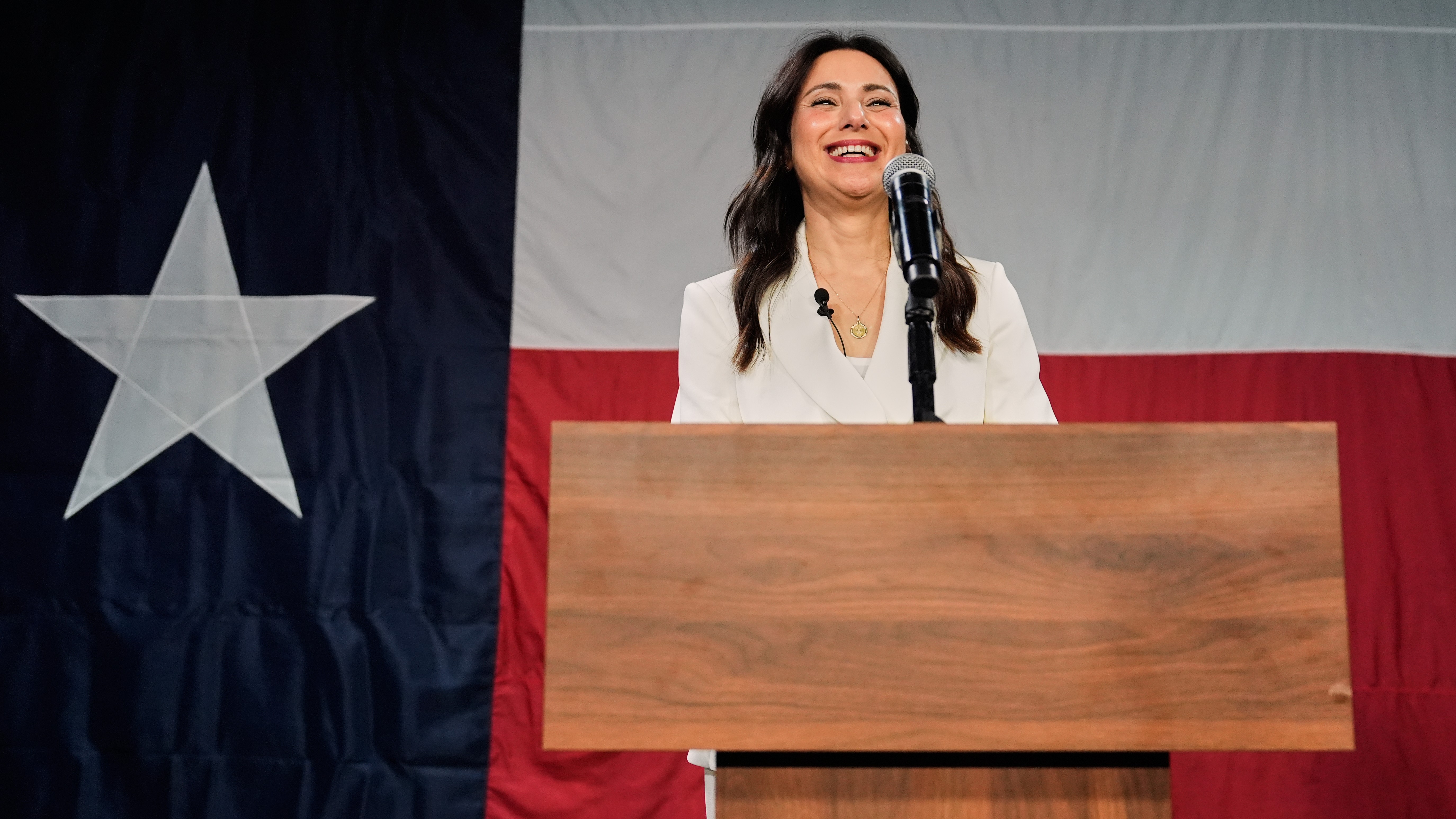
Texas Democrats won the governor’s office, attorney general and state House majority. Governor-elect Gina Hinojosa said she will not engage in culture wars.
Institutional caution
Experts say organizations are unlikely to quickly resume public DEI work after retreating rapidly over the past year.
Liliana Garces, a professor of education at the University of Texas at Austin, found that after the state’s Republican leadership banned diversity programs at public universities, administrators applied the law in overly restrictive ways, prohibiting programs not even covered by the statute. She told NPR that with new Democratic statewide leadership, including Governor-elect Gina Hinojosa, the pressure to remove readings or self-censor in classrooms will not be as strong.
Lily Zheng, a consultant who helps companies develop workplace diversity programs, told NPR that most firms have retreated from the work over the past year — some quietly, others ending it altogether. “It was fear of retribution. It was fear of political and regulatory pressure,” Zheng said.
Since the midterms, Zheng described a “noticeable vibe shift.” Some colleagues doing the work with a lower profile “have expressed relief, maybe, that now they don’t have to be tiptoeing on eggshells, likely,” Zheng told NPR.
Antonio Ingram, an attorney with the NAACP Legal Defense Fund, said Republican allies in Congress fostered a culture of fear around DEI, “summoning the leaders of universities, companies and nonprofits to hostile hearings” to “cross-examine them and to intimidate them from continuing to do the work they’re doing to create a multiracial democracy.”
With Democrats gaining committee control, Ingram said, “I think, with this new political landscape, that chilling effect is thawing out.”
Liliana Garces, a professor of education at the University of Texas at Austin, has studied the impact of state restrictions on DEI programs and race-based curricula. After Republican leaders banned diversity programs at public universities, she interviewed administrators implementing the bans.
“There was a lot of uncertainty about the consequences, which meant that administrators were applying the law in very restrictive ways and prohibiting programs that weren’t even covered by the law,” Garces told NPR.
With the new Democratic leadership, Garces said, “That pressure to remove certain readings from your classroom or self-censor is just not going to be as strong.” Governor-elect Gina Hinojosa has said she will not engage in culture wars.
Shaun Harper, who runs the Race and Equity Center at the University of Southern California, said he is hopeful organizations will find their way back to DEI work. But after watching so many retreat so quickly, he said, “I don’t expect them to overnight flip on a switch and, you know, declare that DEI is back.”
One reason: Trump still controls federal agencies that have used threats of funding cuts and lawsuits to pressure institutions. In a statement to NPR, White House spokeswoman Allison Schuster called DEI policies “racist and destructive.” The White House accused former President Joe Biden of letting them run rampant and said Trump was elected with a mandate to end these policies.
Related reading
Illinois Chancellor: AI Danger Is Humans Using Systems They Don’t Understand
University of Illinois Urbana-Champaign Chancellor Charles Isbell said the danger of artificial intelligence lies not in machines acting...

DSI Expands Westbury Railing Distribution in Midwest via K+R’s Tulsa Facility
Digger Specialties Inc. (DSI) announced an expanded distribution partnership with K+R Building Materials to stock Westbury aluminum railing...
Andrew Gelman: 2026 Midterms Could Open Door for Partisan Depolarization
In a column for Statistical Modeling, Causal Inference, and Social Science, Andrew Gelman argues that the 2026 midterm...

Tuberville Announces Inaugural Week, Parade Canceled Over Costs
Gov.-elect Tommy Tuberville has announced a week of inaugural celebrations across Alabama, beginning with regional events in Mobile...