
The Irish Times has named ten cinematic food scenes that have lingered in cultural memory from the silent era to the modern day, spanning comedy, drama and documentary.
Food has functioned as a movie star since at least 1898, when Biograph Pictures released How Bridget Served the Salad Undressed, a short featuring a maid who “brings in the salad in a state of déshabillé hardly allowable in polite society,” according to the original catalogue.
The list reaches through Chaplin’s dancing dinner rolls to the meticulous garlic slicing in GoodFellas and the improvised turkey-sandwich moment in When Harry Met Sally.
Silent comedy to Pixar precision
Charlie Chaplin’s Little Tramp turns two forks and a pair of bread rolls into a ballet in The Gold Rush (1925), a sequence “one of the most celebrated and enduringly imitated images in film history.” Johnny Depp revisited the gag in 1993’s Benny & Joon; Amy Adams echoed it in 2011’s The Muppets. For the film’s 1942 re-release, Chaplin composed a musical accompaniment titled Mother’s Dance.
Pixar’s Ratatouille (2007) built its climax around a dish that sends critic Anton Ego, voiced by Peter O’Toole in one of his final roles, “unexpectedly and tearfully” back to childhood. The vegetable arrangement on screen is not ratatouille but confit byaldi, “a far more elaborate preparation, with the vegetables arranged in painstakingly thin, precise slices.”
Cinema uses food rituals to reveal character power
Quentin Tarantino uses an apple strudel order in Inglourious Basterds (2009) to stage a seven-minute interrogation between Nazi colonel Hans Landa (Christoph Waltz) and Shosanna Dreyfus (Mélanie Laurent). In Five Easy Pieces (1970), Jack Nicholson’s character battles a “no substitutions” policy, settling for a chicken salad sandwich “hold the chicken.”

Juzo Itami’s Tampopo (1985) frames “slurping, squeezing food in supermarket aisles and egg-peeling so sensually” across a “cradle-to-grave chronicle of food.” Stanley Tucci and Tony Shalhoub’s immigrant brothers in Big Night (1996) risk everything on a timpano, yet the film’s final moments settle on a shared omelette.
Sofia Coppola secured Versailles access for Marie Antoinette (2006); Ladurée supplied “stacks of petit fours, ladyfingers, pistachios, strawberries and ice cream on gold-leafed almonds, washed down with champagne.” Fred Wiseman’s documentary Menus-Plaisirs – Les Troisgros records the “military discipline” behind a three-Michelin-star Loire Valley kitchen, where the elder chef rejects almond paste in a sauce of “mayonnaise, fromage blanc and elderberry vinegar.”
As Ireland’s newspaper of record and largest subscription news service, The Irish Times has long anchored national cultural discourse through dedicated arts coverage and influential critics such as Fintan O’Toole and the long-running An Irishman’s Diary column. Its 1994 launch of an online edition extended that authority into digital curation, positioning the paper to compile definitive retrospectives like this cinematic food survey.
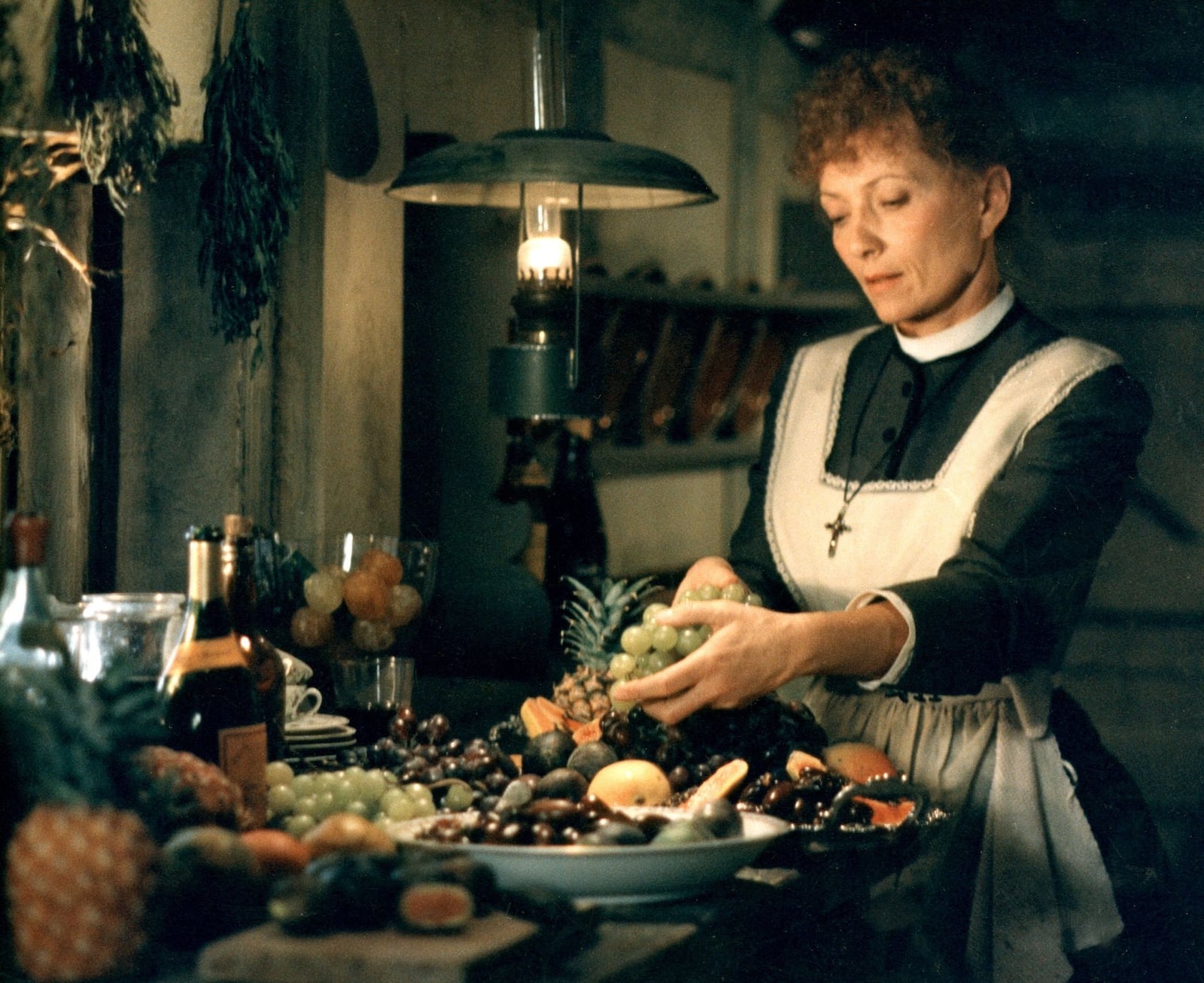
Gabriel Axel’s Babette’s Feast (1987) lists blinis with caviar, quail in pastry, truffles, figs, endive, grapes, pineapple, cheeses, bread, champagne, fine wines and coffee — “the unfashionably cruel inclusion of turtle soup and foie gras rather ruins the intended sumptuousness.” In Gigi (1958), Leslie Caron learns to eat ortolan, a ritual banned in France since 1999; the film “thankfully” skips the traditional napkin-over-head concealment “to hide your sin from God.”
Related reading

Anthropic’s Levent Alpöge Claims Claude AI Helped Prove Riemann Hypothesis
Anthropic mathematician Levent Alpöge announced on Nov.

Hunger Games: Sunrise on the Reaping’ Opens to $120M Domestically
“The Hunger Games: Sunrise on the Reaping” opened to $120 million domestically, claiming the top spot at the...

Russell Brand’s Wife Pledges to Stop Relaying Prison Messages After Government Demands YouTube Remove Video
Laura Gallacher, wife of convicted rapist Russell Brand, pledged on Sunday to stop relaying messages from inside HMP...

Peter Fluck, Co-Creator of Spitting Image, Dies Aged 85
Peter Fluck, co-creator of the satirical puppet show Spitting Image, died on Saturday at his home in Cornwall...