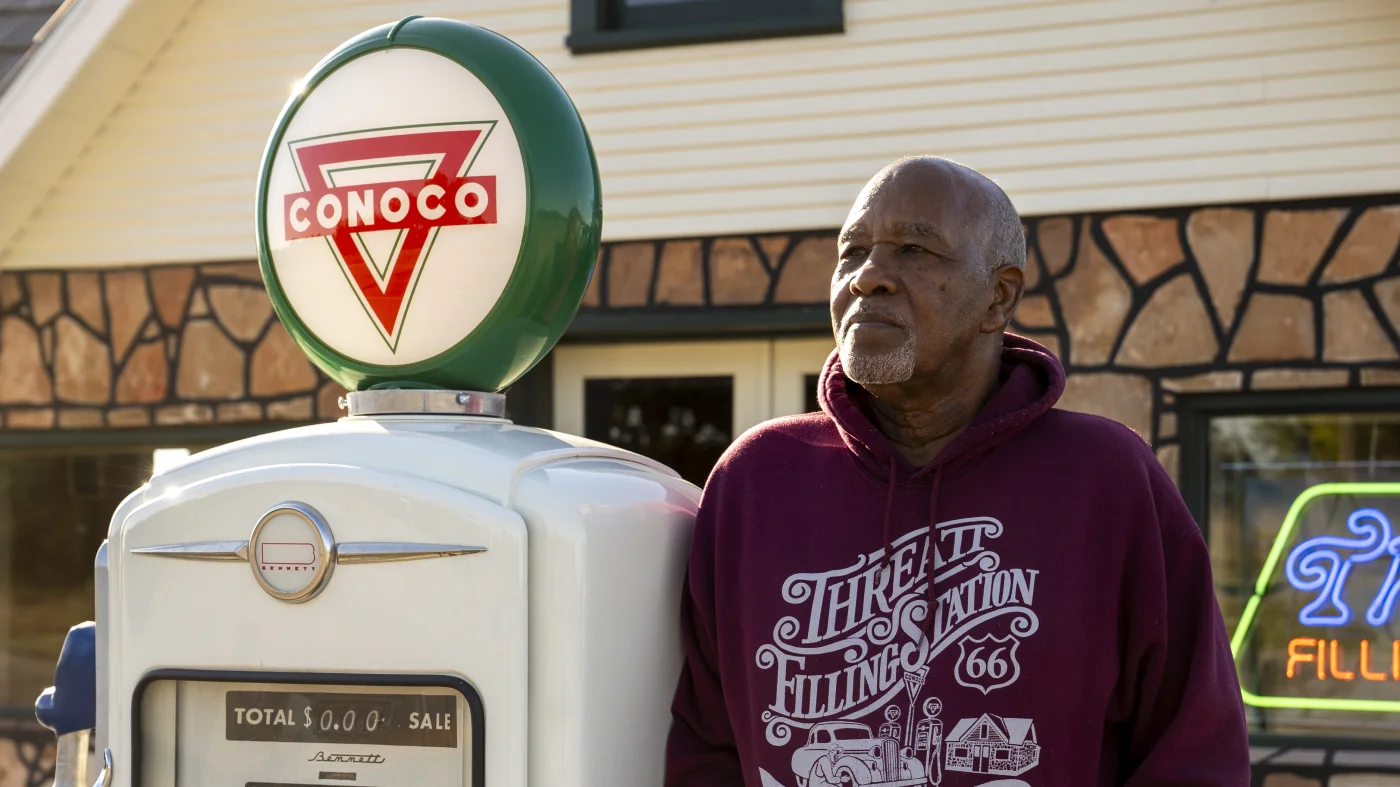
The Threatt Filling Station in Luther, Okla., stands as the only known Black-owned and operated gas station along the 2,000-mile stretch of Route 66.
For decades, the site served as a rare sanctuary for Black travelers who faced systemic exclusion from white-owned motels and restaurants while driving the highway between Chicago and Los Angeles.
Allen Threatt Sr. established the business in 1915 on what was then the Ozark Trail, long before the highway was designated as Route 66 in 1926. The station provided more than fuel; it functioned as a vital community hub, hosting social club meetings, barbecues, and baseball games played by members of the Negro Leagues. Threatt had relocated to Oklahoma from Alabama during the Great Migration, seeking opportunity in a state that had once been home to more than 50 “all-Black” municipalities.
Between 1865 and 1920, Black Americans settled more than 50 “all-Black” municipalities in Oklahoma, the largest number of any state. By the time of the Great Depression, however, the station sat precariously between two “sundown towns,” where Black travelers faced the threat of violence after dark.
Linda Fisher, the founder’s granddaughter, recalled how the family mitigated these dangers. Most restaurants, gas stations and motels wouldn’t serve them. But at the Threatt Filling Station, “everyone was welcome,” Fisher said.
“Grandpa took care of whatever they needed to have,” Fisher said.
“If they didn’t have any food, they fed them. If they needed some kind of shelter or blankets or those types of things, Grandpa and Grandma made sure they got those kinds of things,” Fisher said.

The rise of the Interstate Highway System in the mid-1970s effectively bypassed the station, leading to its closure. A half-century later, the building was derelict. By 2021, the structure had deteriorated to the point that the National Trust for Historic Preservation named it one of America’s 11 Most Endangered Historic Places.
Today, a restoration effort led by the founder’s grandchildren has revived the exterior, including the installation of restored 1940s-era Conoco gas pumps. The family is now working to transform the 150-acre property into a destination featuring a restaurant, an RV park, and a new baseball diamond to honor their ancestors’ legacy. A Route 66 sign welcomes visitors to the Threatt Filling Station.
“We’re all standing on Grandpa’s shoulders — Grandpa and Grandma’s shoulders,” Edward Threatt, a grandson and project leader, said.
By the time of the Great Depression, many of Oklahoma’s all-Black towns had ceased to exist, NPR reported.
After the original wooden building burned, Threatt replaced it with a sandstone structure that grew into a community hub, NPR reported. The property hosted dances in the adjacent restaurant, social club meetings, barbecues, and occasional baseball games played by members of the Negro Leagues on a diamond there.
“We have this property today because of Grandpa, and so we represent him, we represent our mothers, our fathers. And we’re just trying to do them proud, that’s all,” Threatt said.
Related reading

7 Knife, Stabbing Incidents Reported at Columbia-Area Schools in November
Columbia-area schools have recorded at least seven knife- or stabbing-related incidents since Nov. 1, according to law enforcement...
Pennsylvania Democrats Sweep Election but Analysts Warn Gains May Not Last
Pennsylvania Democrats expanded their legislative majorities and Gov. Josh Shapiro won reelection, but party strategists and analysts say...
New Hampshire Sues Roblox, Alleging Misleading Child Safety Claims
“Parents and guardians deserve to know the risks their children face when they log on to Roblox, and...

Luxury Bodega’ With $9.99 Cookie and $19 Lube Sparks Backlash Over Gentrification, Cultural Appropriation
A self-described “luxury bodega” opened Nov. 21 at 58 W. 8th St. in the West Village, listing a...