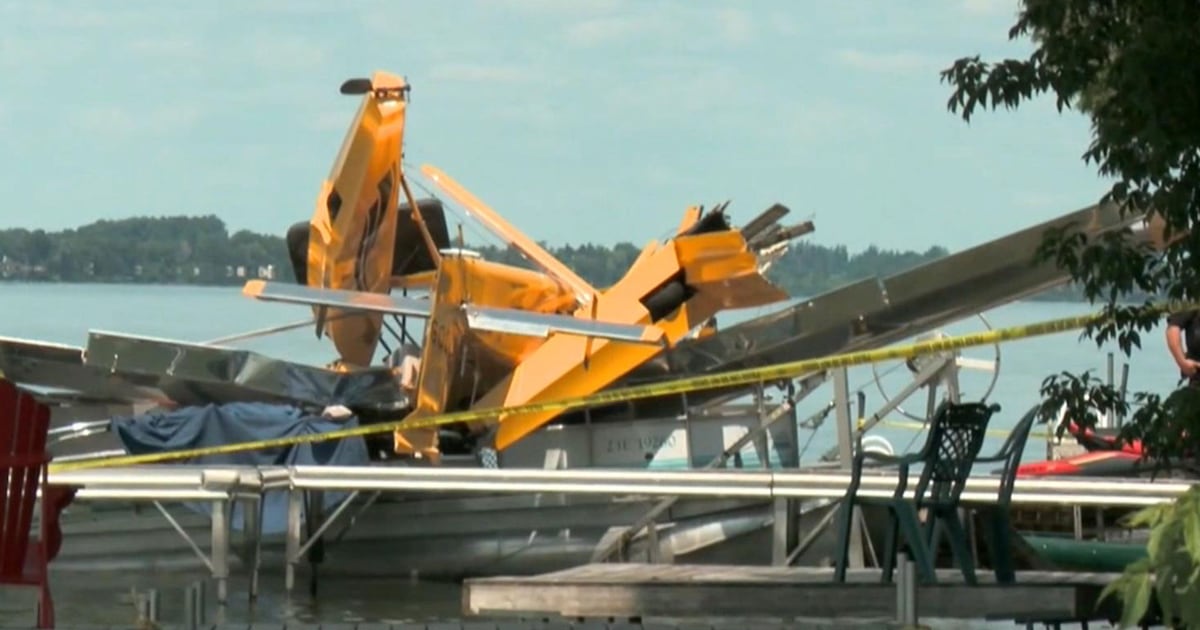
A Transportation Safety Board of Canada investigation released Thursday could not determine the exact cause of a July 2025 floatplane crash that killed a 16-year-old boy on Lake Scugog, though it identified several safety concerns including a tightened throttle friction lock and aircraft configuration differences.
The TSB report (A25O0099) found the Ultravia Pelican Sport 600 touched down about 202 feet from shore on glassy water with “no visible ripples,” bounced at least twice, then veered sharply left during a go-around attempt, striking two 32-foot docks and a moored pontoon boat, CP24 reported. The boy was standing on the second dock when struck at 12:26 p.m. on July 18, 2025, near Caesarea, Ont.
Glassy water hazards
Transport Canada’s Aeronautical Information Manual warns that in such conditions “pilots are unable to accurately judge their height above the water, which can lead them to stall high above the surface or fly into the water in a nose-low attitude.”
The pilot approached parallel and close to the shoreline — a recommended technique for glassy water — but the TSB noted this “near obstacles like docks, boats, and people can reduce safety margins.”
Mechanical and configuration findings
Investigators found a throttle friction lock in a tightened position, which “increases the force required to move the throttle and can make smooth, fine power adjustments more difficult,” INSAUGA Canada’s Local News Network reported.
The aircraft also differed from the pilot’s own plane: it had carbon fibre amphibious floats instead of aluminum, and different propeller blades. The pilot was experienced on the Pelican Sport airframe but the TSB “could not determine whether those differences caused the crash,” CBC reported.
TSB conducted limited class 4 investigation
The Transportation Safety Board conducted a limited-scope, class 4 investigation into the crash, INSAUGA Canada’s Local News Network reported.
Aircraft porpoised during second flight landing
The pilot conducted two flights — one solo and one with the prospective buyer — and the accident occurred during the landing on the second flight, when the aircraft began to porpoise after touchdown, the outlet said.
Demonstration flight context
The crash occurred during the second of two demonstration flights for a prospective buyer. The pilot conducted a solo flight first, then took the potential buyer up; the accident happened on landing during that second flight, INSAUGA Canada’s Local News Network reported. Both pilot and passenger suffered minor injuries.
As an independent agency, the TSB does not assign fault or determine civil or criminal liability. Durham Regional Police continue to investigate.
Keep reading

SC Secretary of State Honors Ten Nonprofits as 2026 Angel Charities
South Carolina Secretary of State Mark Hammond honored ten nonprofit organizations as the 2026 Angel charities during a...

Trail Blazers Beat Spurs 116-111 in NBA Cup Game
Portland defeated San Antonio 116–111 at the Moda Center on Wednesday night, handing the Spurs their second home...

Fairfax County Police Report Widespread Road Closures, Downed Trees, Signal Outages Across District Stations
Fairfax County police responded to widespread road closures, downed trees and traffic signal outages on Thanksgiving Day after...

State Works to Remove Grounded Atlantis Vessel Kapena From Fort DeRussy Beach
The Hawaii Department of Land and Natural Resources announced Thursday it is working to remove the 65-foot passenger...