- The previous record was November 20, 1953, when 1.5 inches fell the next day.
- Average first trace of snow is October 10; first measurable snowfall is November 4.
- Forecast calls for below-freezing temperatures Monday through Wednesday.
- A weak system may bring flakes to western Minnesota midweek; a stronger wave could bring a rain-snow mix Friday into the weekend.
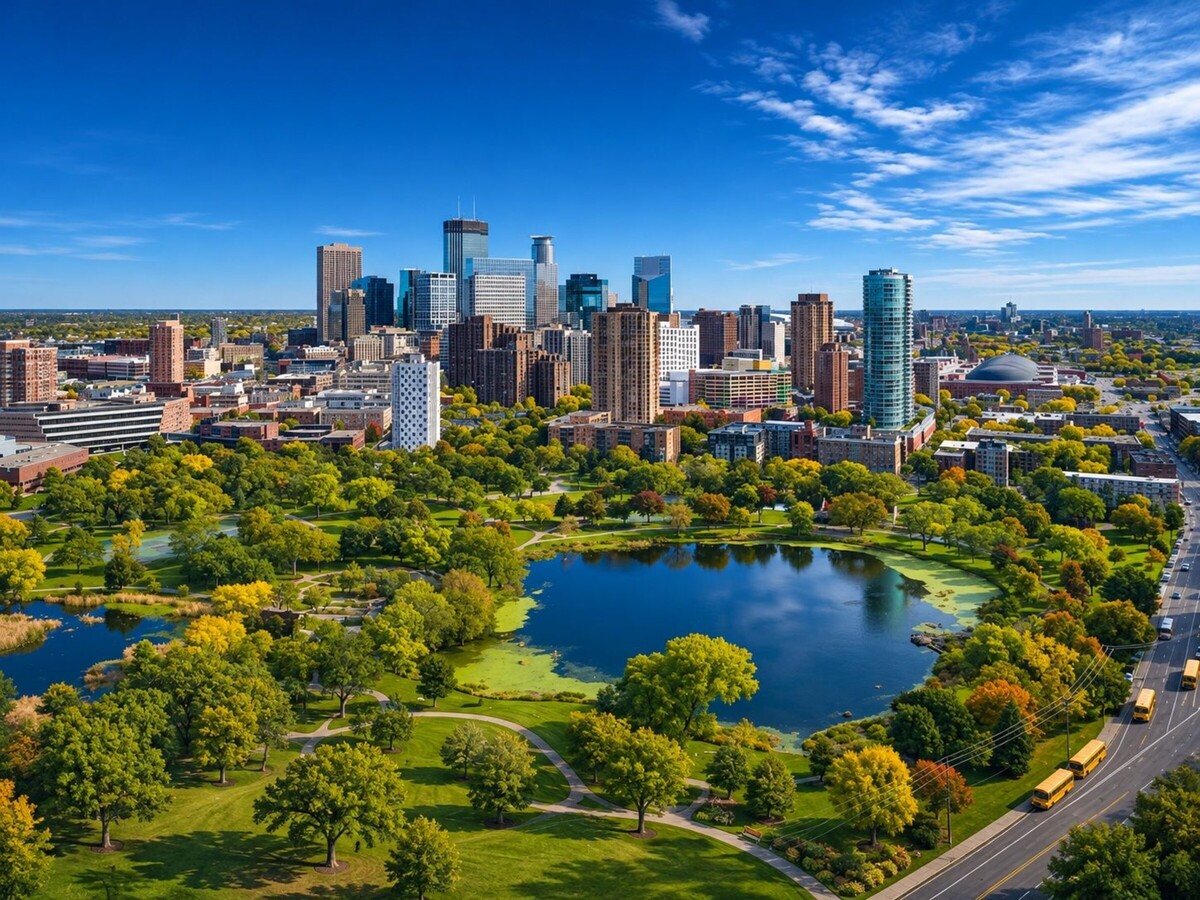
Minneapolis–St. Paul passed Friday without a trace of snow, surpassing the 1953 benchmark when the season’s first flakes arrived on November 21 with 1.5 inches of accumulation, MinneapoliMedia reported.
The National Weather Service Twin Cities office noted the milestone as the area approaches Thanksgiving with no snow on the ground.
How 1953 compares
The 1953–54 winter finished with just 25.7 inches of snow, less than half the typical seasonal total, according to National Weather Service data.
Cold air arrives, but snow chances remain low
Temperatures are expected to drop below freezing Monday and stay cold through Wednesday. “will approach Minnesota from the west on Wednesday, and it could” produce a few flakes in western Minnesota, the National Weather Service said, though it will more than likely stay dry.
Thanksgiving Day may reach near 40 degrees. A stronger system Friday into the weekend carries a 15–20% chance of a rain and snow mix, but the forecast remains uncertain.
The National Weather Service treats Minneapolis–Saint Paul as a single forecast area — Twin Cities — because the office serves the combined metropolitan region centered on the confluence of the Mississippi, Minnesota, and St. Croix rivers, covering the seven-county area governed by the Metropolitan Council and the 15-county Minneapolis–St. Paul–Bloomington, MN–WI Metropolitan Statistical Area of 3,690,261 people (2020), with the larger 21-county Combined Statistical Area reaching 4,078,788 (2020).
Urban geography shapes snowfall records through the river-defined split: Minneapolis lies mostly west of the Mississippi, anchored by the water power of Saint Anthony Falls, while Saint Paul grew east of the river around Lambert’s Landing, the last accessible upriver unloading point seven miles downstream from the falls.

Travel and what comes next
The Minnesota Department of Transportation’s 511 service provides current road conditions. The National Weather Service emphasizes that a late first snow does not rule out significant winter storms later in the season. “Winter has not been canceled,” the MinneapoliMedia report concluded, noting that December through March can still bring substantial snowfall and extreme cold.
Related reading
- UNMC Hands Out 300 Free Turkeys in North Omaha for Third Annual Giveaway
- 400,000-Gallon Diesel Leak at City H-POWER Plant Dwarfs Red Hill Spill
- Credit Card Debt Hits Record $1.29 Trillion but Trails 2008 After Inflation (daybreakwire.com)
- England inflict misery on New Zealand with record win over All Blacks (newsarchyuk.com)

UNMC Hands Out 300 Free Turkeys in North Omaha for Third Annual Giveaway
The University of Nebraska Medical Center's Community Wellness Collaborative distributed 300 free turkeys in North Omaha on Friday,...

400,000-Gallon Diesel Leak at City H-POWER Plant Dwarfs Red Hill Spill
Honolulu Civil Beat reported Thursday that a diesel leak of roughly 400,000 gallons occurred at the city-owned H-Power...

Louisville, Kentucky on Opposite Trajectories Before Rivalry Game
Louisville defensive back Ben Perry dismissed the relevance of recent streaks ahead of the Cardinals' Nov. 28 matchup...

Falcons Mock Draft: Sellers Projected as QB Target at No. 8
The Falcons enter the bye at 3-7, a record that currently slots them eighth in the draft order...